Iran’s Influence Suspected in Violent Attack on Sydney’s Jewish Community During Hanukkah Celebration
Published on: 2025-12-15
AI-powered OSINT brief from verified open sources. Automated NLP signal extraction with human verification. See our Methodology and Why WorldWideWatchers.
Intelligence Report: Khamenei’s tentacles have reached Australia
1. BLUF (Bottom Line Up Front)
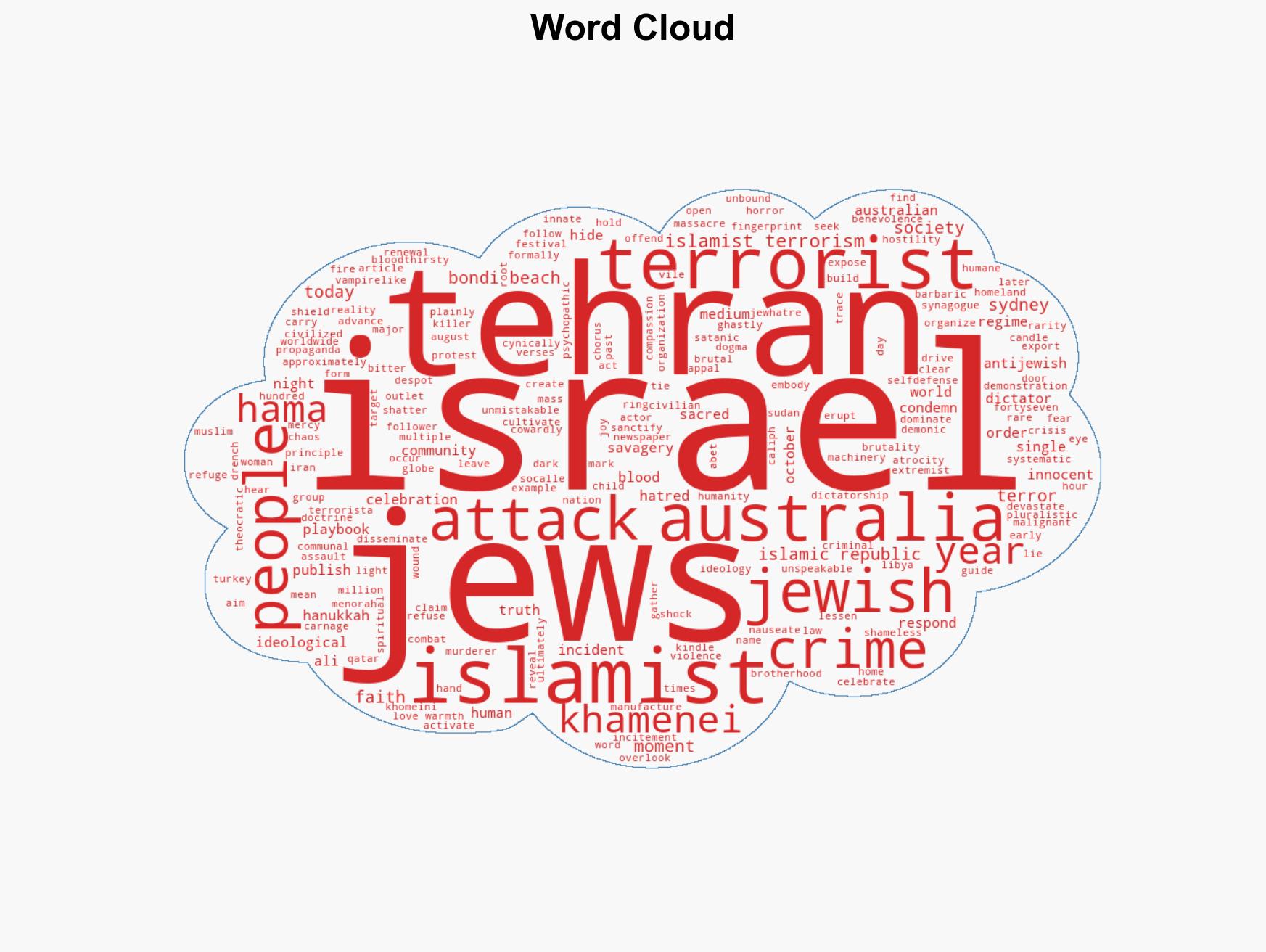
The recent attack on Sydney’s Jewish community during Hanukkah celebrations is suspected to be influenced by Islamist extremist ideologies potentially linked to Tehran. While direct evidence of Iranian involvement is lacking, the ideological alignment suggests a broader pattern of anti-Jewish terrorism. This incident highlights vulnerabilities in multicultural societies to external extremist influences. Overall confidence in this assessment is moderate.
2. Competing Hypotheses
- Hypothesis A: The attack was orchestrated by local Islamist extremists inspired by Tehran’s anti-Jewish rhetoric. Supporting evidence includes the ideological alignment with known Iranian-sponsored groups, but there is no direct evidence linking Tehran to this specific attack. Key uncertainties include the lack of formal attribution and potential local motivations.
- Hypothesis B: The attack was conducted by independent actors with no direct connection to Tehran, motivated by local grievances or personal radicalization. This is supported by the absence of direct evidence tying the incident to Iranian directives. However, the ideological similarities to Tehran’s known rhetoric are notable.
- Assessment: Hypothesis A is currently better supported due to the ideological alignment with Tehran’s known anti-Jewish stance, despite the lack of direct evidence. Indicators that could shift this judgment include credible intelligence linking the attackers to Iranian networks or evidence of local radicalization independent of Tehran.
3. Key Assumptions and Red Flags
- Assumptions: The attack was ideologically motivated by anti-Jewish sentiment; Iran continues to support global anti-Jewish terrorism; local extremist networks are susceptible to external influence.
- Information Gaps: Direct evidence linking the attackers to Iranian directives; detailed profiles of the attackers; intelligence on local extremist networks’ connections to international groups.
- Bias & Deception Risks: Potential confirmation bias in linking attacks to Tehran without direct evidence; source bias from media narratives emphasizing Iranian involvement; possible deception by attackers to mislead attribution.
4. Implications and Strategic Risks
This development could exacerbate tensions within multicultural societies and increase scrutiny on immigration and integration policies. It may also influence international relations regarding Iran’s role in global terrorism.
- Political / Geopolitical: Potential for increased diplomatic tensions between Australia and Iran; pressure on Australia to reassess its foreign policy towards Iran.
- Security / Counter-Terrorism: Heightened threat environment for Jewish communities; potential for increased security measures and counter-terrorism operations.
- Cyber / Information Space: Risk of misinformation campaigns exploiting the incident to polarize public opinion; potential cyber threats targeting Jewish organizations.
- Economic / Social: Possible impact on social cohesion and community relations; economic implications if security measures affect tourism or local businesses.
5. Recommendations and Outlook
- Immediate Actions (0–30 days): Increase security presence at vulnerable sites; enhance intelligence-sharing with international partners; monitor extremist communications for links to Tehran.
- Medium-Term Posture (1–12 months): Strengthen community resilience programs; develop partnerships with local communities to counter radicalization; invest in counter-terrorism capabilities.
- Scenario Outlook:
- Best: No further incidents; improved community relations and effective counter-terrorism measures.
- Worst: Escalation of attacks; increased domestic and international tensions.
- Most-Likely: Sporadic incidents with ongoing security challenges; gradual policy adjustments.
6. Key Individuals and Entities
- Not clearly identifiable from open sources in this snippet.
7. Thematic Tags
Counter-Terrorism, Islamist extremism, Iran, anti-Semitism, community security, geopolitical tensions, intelligence sharing
Structured Analytic Techniques Applied
- ACH 2.0: Reconstruct likely threat actor intentions via hypothesis testing and structured refutation.
- Indicators Development: Track radicalization signals and propaganda patterns to anticipate operational planning.
- Narrative Pattern Analysis: Analyze spread/adaptation of ideological narratives for recruitment/incitement signals.
Explore more:
Counter-Terrorism Briefs ·
Daily Summary ·
Support us