Mast Opposes Democrat Resolution Aimed at Restricting Trump’s Authority to Combat Cartel Threats to U.S.
Published on: 2025-12-18
AI-powered OSINT brief from verified open sources. Automated NLP signal extraction with human verification. See our Methodology and Why WorldWideWatchers.
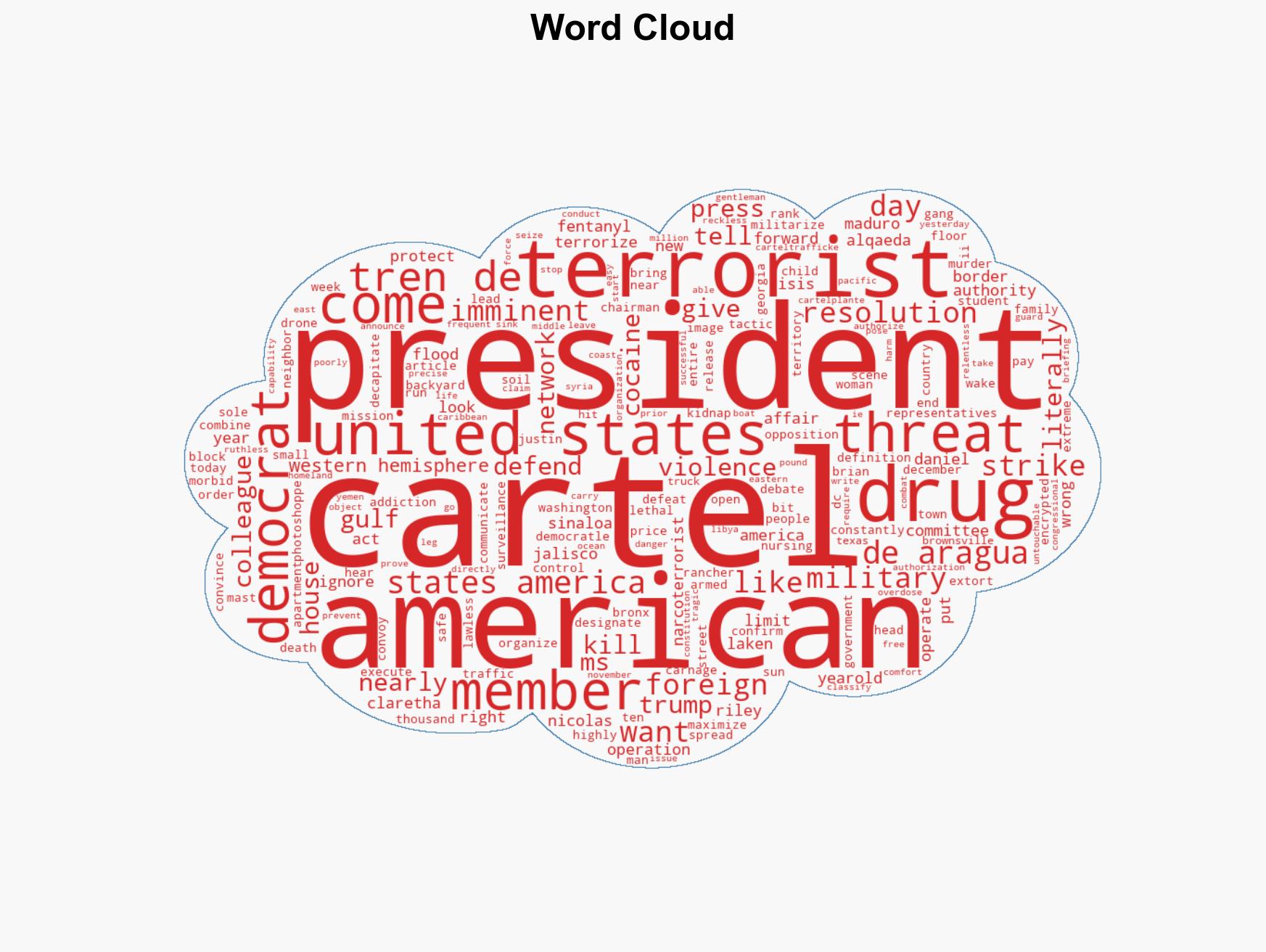
Intelligence Report: Chairman Mast Leads GOP Debate Against Democrats’ Ploy to Tie President Trump’s Hands From Defending the US From Cartel Terrorists
1. BLUF (Bottom Line Up Front)
The debate led by Chairman Mast highlights a significant partisan divide regarding the U.S. response to cartel activities classified as terrorism. The most supported hypothesis is that the GOP aims to maintain executive flexibility in countering these threats, while Democrats seek to impose restrictions. This situation affects U.S. national security policy and legislative dynamics, with moderate confidence in the assessment.
2. Competing Hypotheses
- Hypothesis A: The GOP is prioritizing national security by advocating for unrestricted executive action against cartel threats, viewing them as equivalent to terrorist organizations. Supporting evidence includes the emphasis on the cartels’ militarized operations and imminent threat narrative. Key uncertainties involve the actual level of threat posed and the effectiveness of current measures.
- Hypothesis B: Democrats are attempting to ensure checks and balances on executive power, potentially due to concerns over overreach or misclassification of threats. Supporting evidence includes the introduction of a resolution to block certain actions. Contradicting evidence is the lack of detailed alternative strategies presented.
- Assessment: Hypothesis A is currently better supported due to the detailed articulation of the threat by Chairman Mast and the framing of cartels as a clear and present danger. Indicators that could shift this judgment include new intelligence on cartel capabilities or bipartisan legislative proposals.
3. Key Assumptions and Red Flags
- Assumptions: The cartels are a direct and imminent threat to U.S. national security; the executive branch has the necessary authority to act; current intelligence accurately reflects cartel capabilities.
- Information Gaps: Detailed intelligence on the operational reach and coordination of cartels within the U.S.; clarity on the legal framework for executive actions against non-state actors.
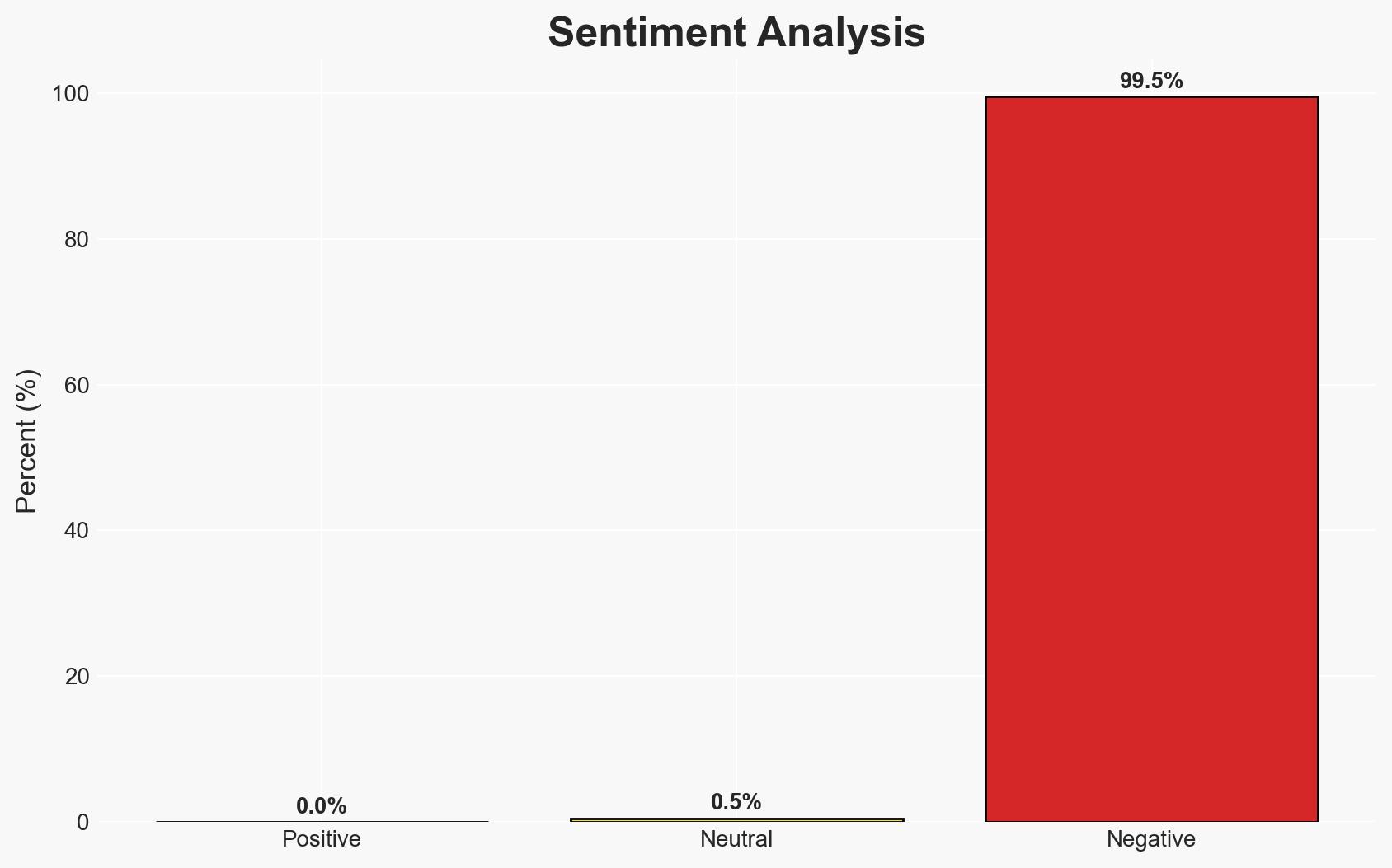
- Bias & Deception Risks: Potential partisan bias in framing the threat; risk of overestimating cartel capabilities due to political motivations; possible misinformation in public statements.
4. Implications and Strategic Risks
This development could lead to increased polarization in U.S. domestic politics and influence legislative processes related to national security. Over time, it may impact U.S. foreign policy and relations with Latin American countries.
- Political / Geopolitical: Potential for legislative gridlock; strained relations with countries perceived as harboring or supporting cartels.
- Security / Counter-Terrorism: Possible escalation in cartel violence if perceived as a direct target by U.S. actions; increased focus on border security.
- Cyber / Information Space: Potential for increased cartel use of cyber capabilities for communication and operations; information warfare to influence public perception.
- Economic / Social: Impact on U.S. communities affected by cartel activities; potential economic repercussions from increased security measures.
5. Recommendations and Outlook
- Immediate Actions (0–30 days): Enhance intelligence-sharing with local law enforcement; increase monitoring of cartel activities and communications.
- Medium-Term Posture (1–12 months): Develop resilience measures for affected communities; strengthen partnerships with regional allies to address root causes of cartel influence.
- Scenario Outlook: Best: Bipartisan agreement on a comprehensive strategy; Worst: Escalation of cartel violence and political deadlock; Most-Likely: Continued partisan debate with incremental policy adjustments.
6. Key Individuals and Entities
- Brian Mast (House Foreign Affairs Committee Chairman)
- Nicolas Maduro (Associated with Cartel of the Suns)
- Sinaloa Cartel
- Jalisco Cartel
- Tren de Aragua
- MS-13
- Gulf Cartel
7. Thematic Tags
Counter-Terrorism, U.S. politics, drug cartels, national security, executive authority, legislative dynamics, border security
Structured Analytic Techniques Applied
- ACH 2.0: Reconstruct likely threat actor intentions via hypothesis testing and structured refutation.
- Indicators Development: Track radicalization signals and propaganda patterns to anticipate operational planning.
- Narrative Pattern Analysis: Analyze spread/adaptation of ideological narratives for recruitment/incitement signals.
- Network Influence Mapping: Map influence relationships to assess actor impact.
Explore more:
Counter-Terrorism Briefs ·
Daily Summary ·
Support us