US greenlights historic $11 billion arms deal with Taiwan, heightening China tensions and regional defense dy…
Published on: 2025-12-19
AI-powered OSINT brief from verified open sources. Automated NLP signal extraction with human verification. See our Methodology and Why WorldWideWatchers.
Intelligence Report: US approves 11 billion arms package for Taiwan escalating tensions with China
1. BLUF (Bottom Line Up Front)
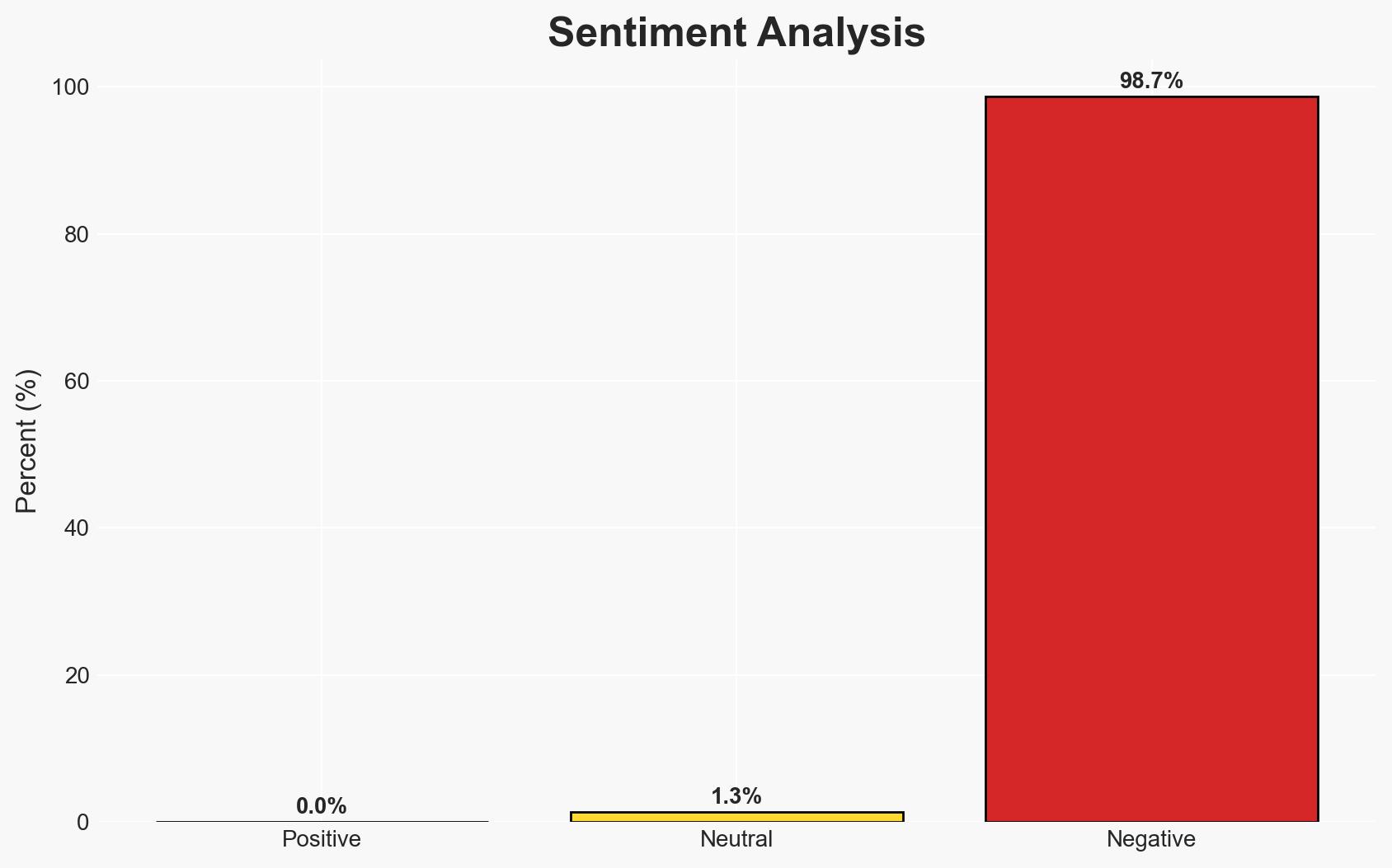
The approval of an $11 billion arms package to Taiwan by the US is likely to escalate tensions with China, potentially increasing the risk of military confrontation in the Taiwan Strait. The move strengthens Taiwan’s defense capabilities but may provoke retaliatory measures from China. Overall, there is moderate confidence in the assessment that this development will heighten regional instability.
2. Competing Hypotheses
- Hypothesis A: The arms sale will significantly enhance Taiwan’s defensive posture, deterring Chinese aggression and maintaining regional stability. Supporting evidence includes the advanced nature of the weapons systems and Taiwan’s increased defense spending. Contradicting evidence includes China’s strong condemnation and threats of retaliation.
- Hypothesis B: The arms sale will provoke China, leading to increased military posturing and a higher likelihood of conflict in the Taiwan Strait. Supporting evidence includes China’s vow of retaliation and accusations of US interference. Contradicting evidence includes the US and Taiwan’s framing of the sale as a stabilizing measure.
- Assessment: Hypothesis B is currently better supported due to China’s immediate and strong response, indicating a higher risk of escalation. Key indicators that could shift this judgment include China’s actual retaliatory actions and any changes in US-Taiwan diplomatic engagements.
3. Key Assumptions and Red Flags
- Assumptions: The US will continue to support Taiwan’s defense; China will perceive the arms sale as a direct threat; Taiwan will effectively integrate the new weapon systems.
- Information Gaps: Details on China’s specific retaliatory measures and the extent of US-Taiwan diplomatic cooperation remain unclear.
- Bias & Deception Risks: Potential bias in US and Taiwanese statements emphasizing stability; China’s rhetoric may be aimed at domestic audiences rather than indicating actual intent to escalate.
4. Implications and Strategic Risks
This development could lead to increased military activities in the Taiwan Strait, affecting regional security dynamics. The arms sale may also influence US-China diplomatic relations and Taiwan’s international standing.
- Political / Geopolitical: Potential for diplomatic rifts between the US and China, with possible impacts on global alliances.
- Security / Counter-Terrorism: Heightened military readiness and potential for miscalculation in the Taiwan Strait.
- Cyber / Information Space: Increased cyber activities targeting Taiwan and US interests; information warfare to shape narratives.
- Economic / Social: Potential economic sanctions or trade disruptions affecting regional markets.
5. Recommendations and Outlook
- Immediate Actions (0–30 days): Monitor Chinese military movements and rhetoric; enhance diplomatic communications with regional allies.
- Medium-Term Posture (1–12 months): Strengthen regional defense partnerships; develop contingency plans for potential conflicts.
- Scenario Outlook: Best: Stabilization through diplomatic engagement; Worst: Military confrontation in the Taiwan Strait; Most-Likely: Continued tension with sporadic diplomatic efforts.
6. Key Individuals and Entities
- US Department of State
- Taiwan Defense Ministry
- Chinese Foreign Ministry
- Not clearly identifiable from open sources in this snippet.
7. Thematic Tags
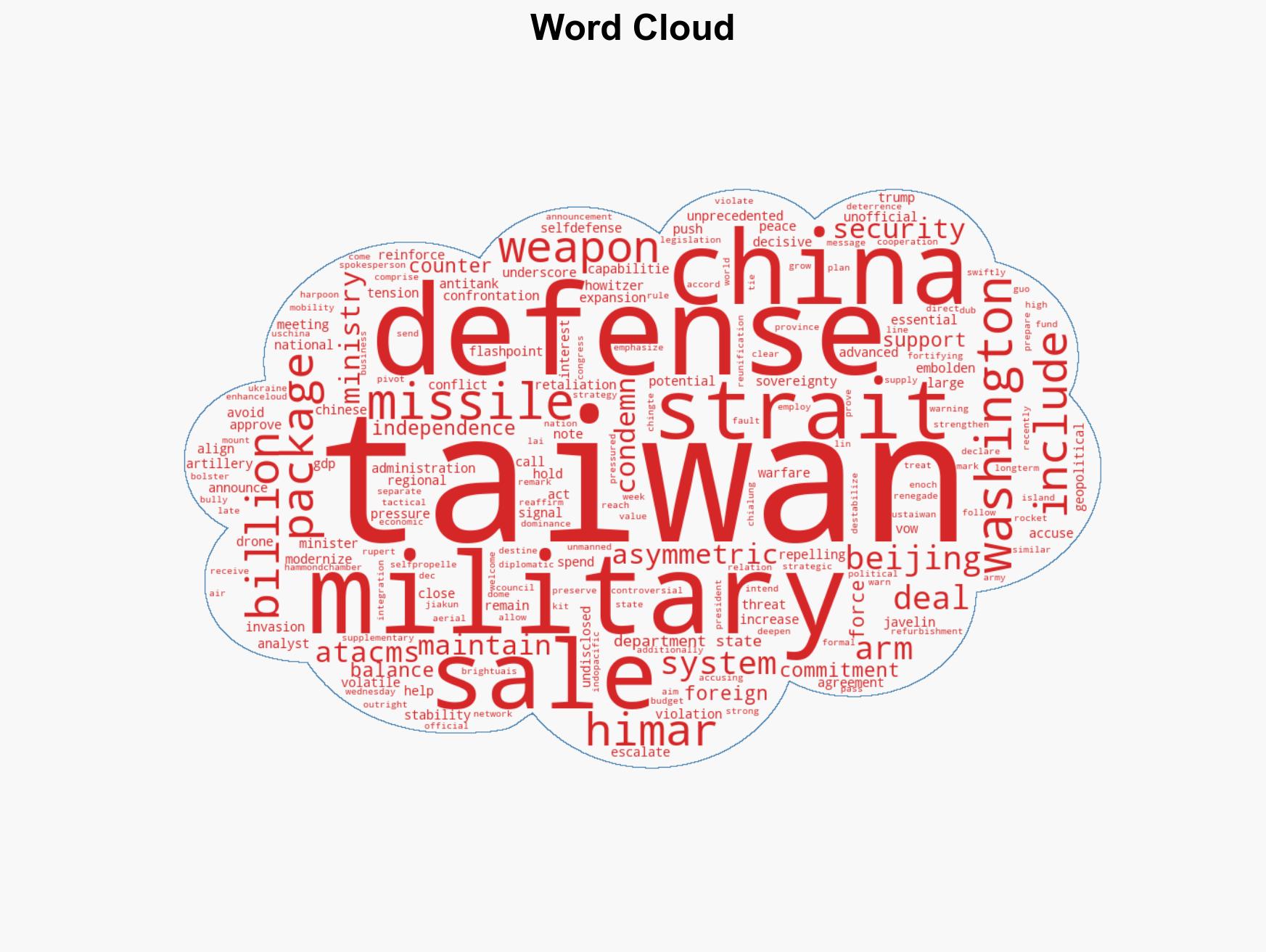
national security threats, arms sales, US-China relations, Taiwan Strait, regional security, military escalation, asymmetric warfare, diplomatic tensions
Structured Analytic Techniques Applied
- Cognitive Bias Stress Test: Expose and correct potential biases in assessments through red-teaming and structured challenge.
- Bayesian Scenario Modeling: Use probabilistic forecasting for conflict trajectories or escalation likelihood.
- Network Influence Mapping: Map influence relationships to assess actor impact.
Explore more:
National Security Threats Briefs ·
Daily Summary ·
Support us