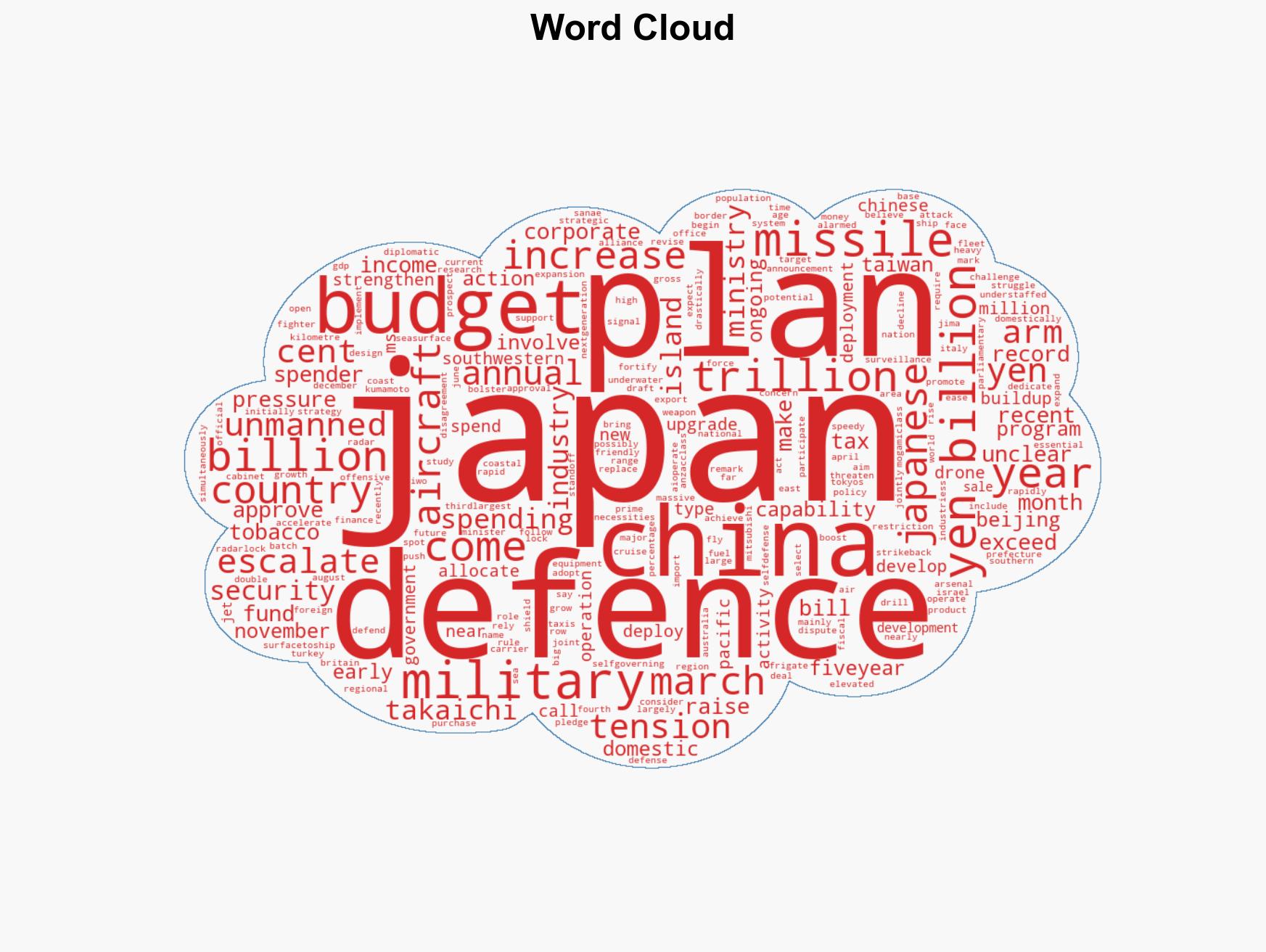
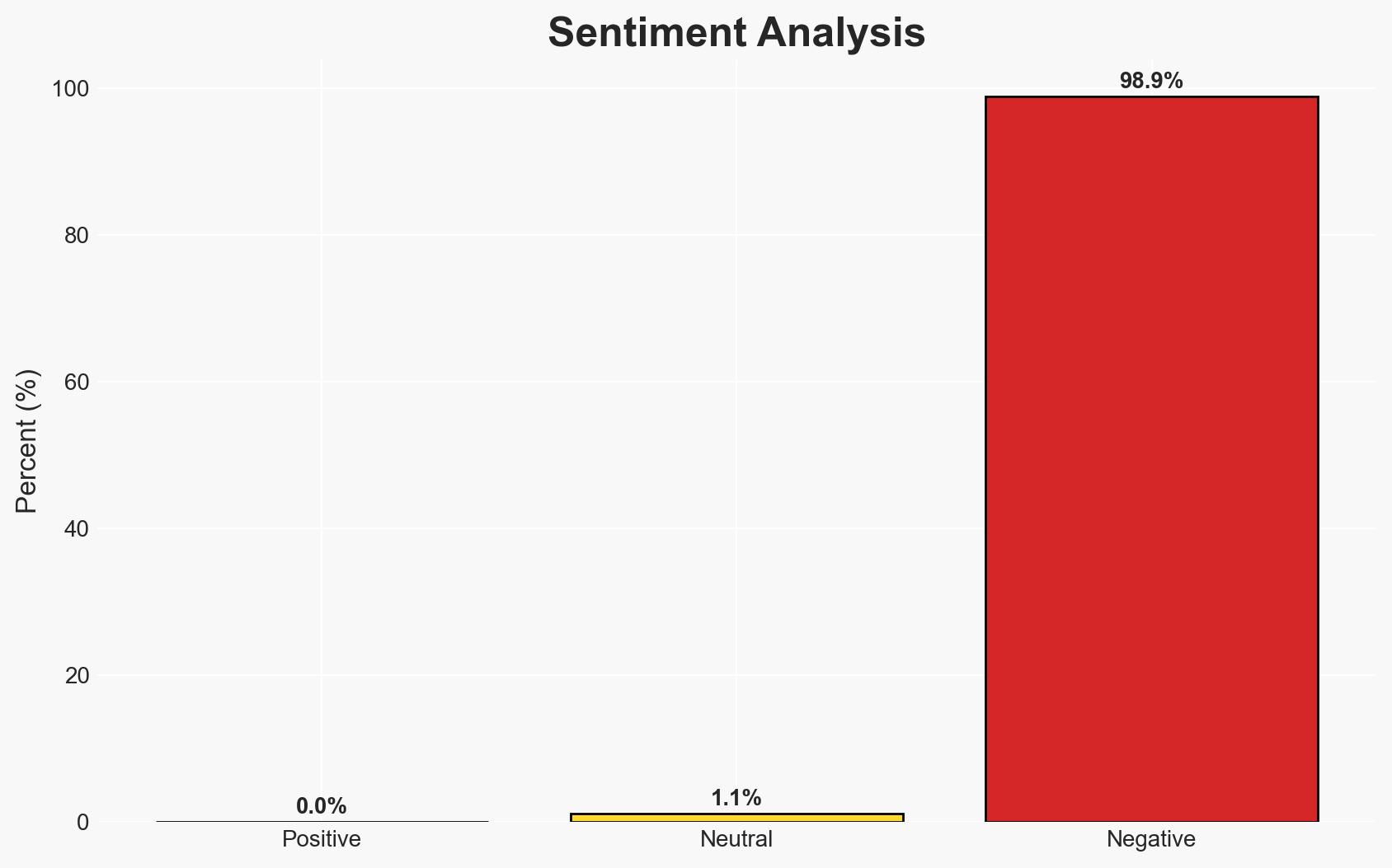
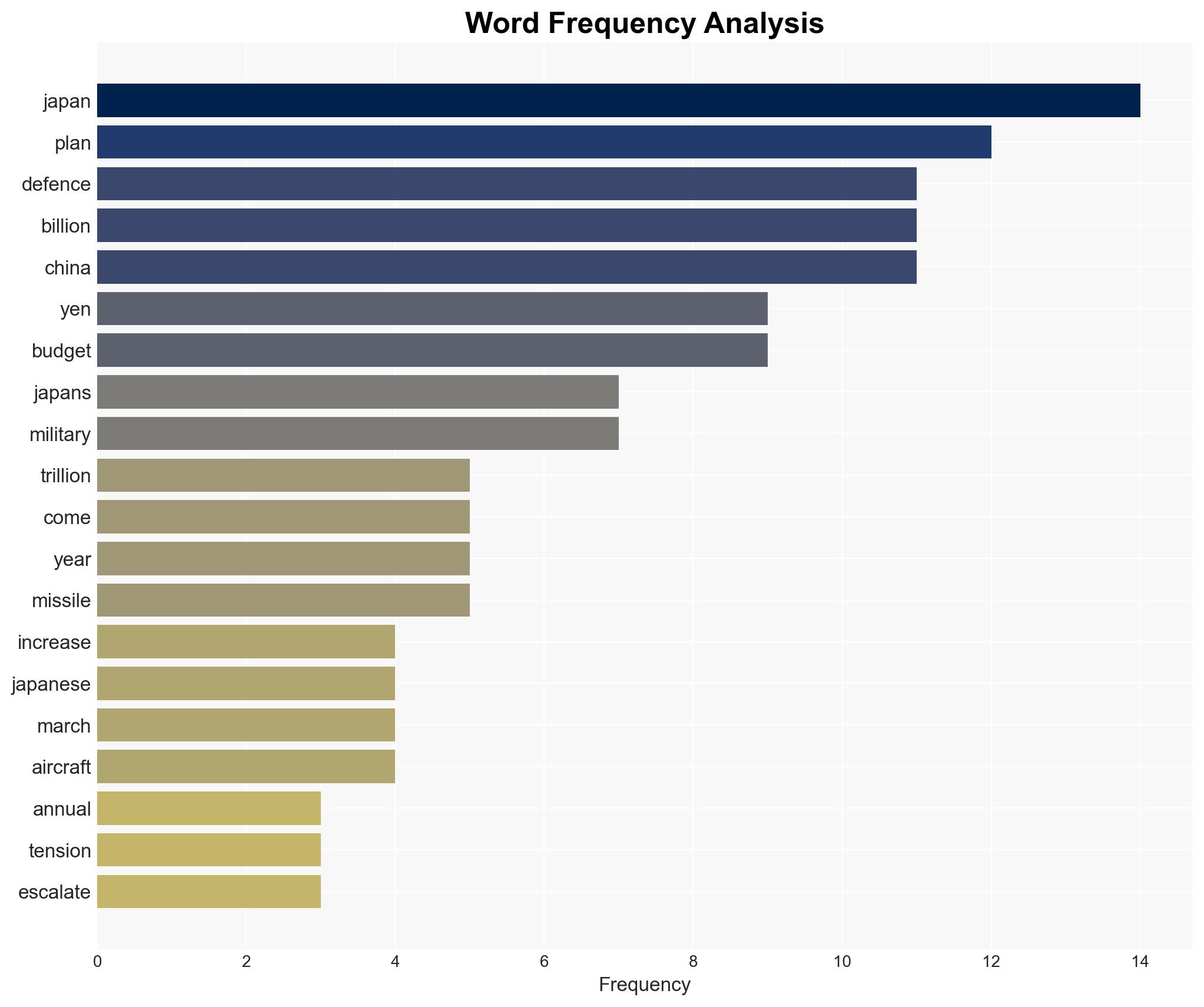
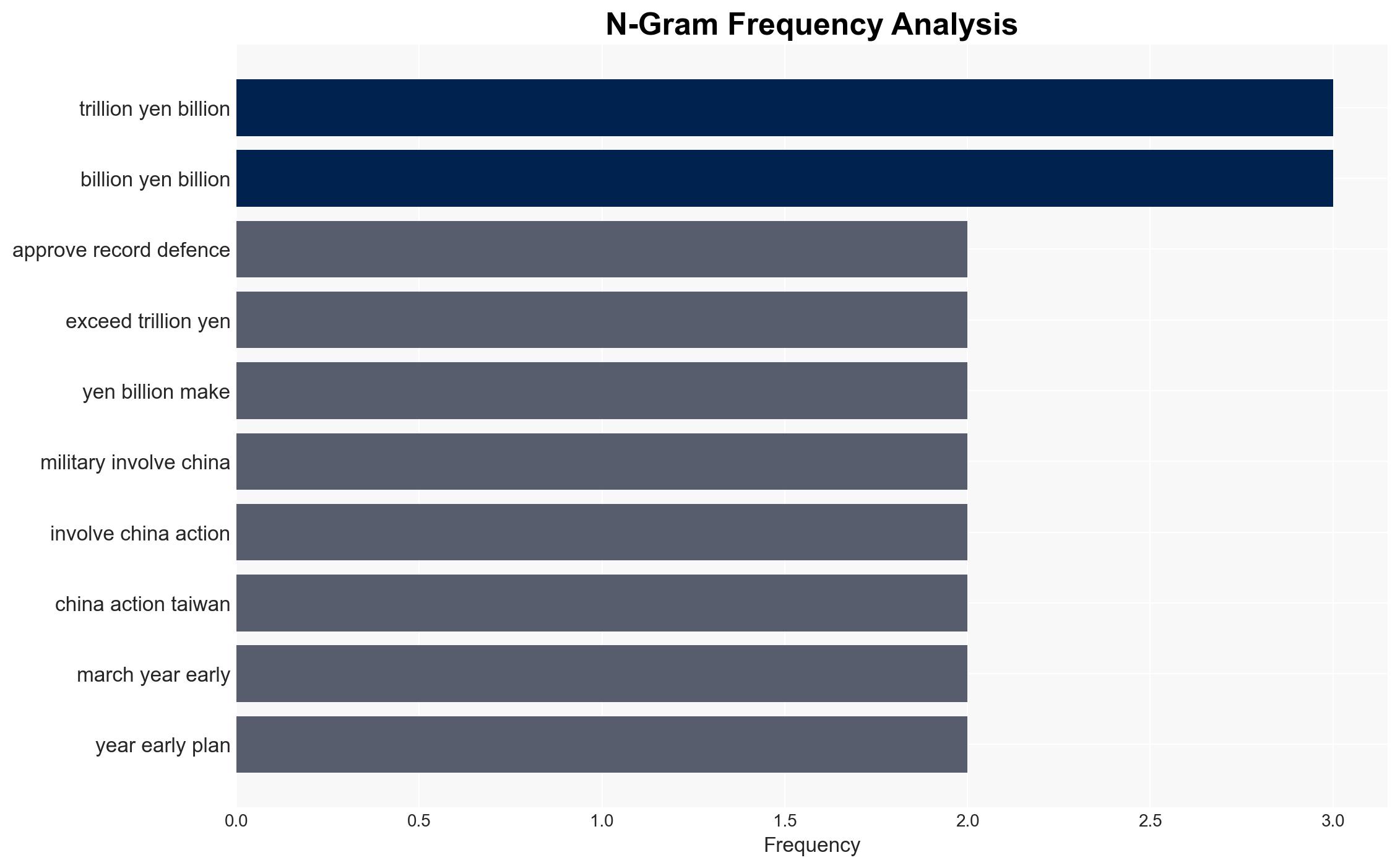
Japan approves unprecedented defense budget to enhance military capabilities amid escalating China tensions
Published on: 2025-12-26
AI-powered OSINT brief from verified open sources. Automated NLP signal extraction with human verification. See our Methodology and Why WorldWideWatchers.
Intelligence Report: Japan okays record defence budget amid rising tensions with China
1. BLUF (Bottom Line Up Front)
Japan has approved a record defense budget amid escalating tensions with China, aiming to enhance its military capabilities. The budget increase is driven by both regional security concerns and pressure from the United States. This development could significantly impact regional stability and Japan’s economic policies. Overall confidence in this assessment is moderate.
2. Competing Hypotheses
- Hypothesis A: Japan’s defense budget increase is primarily a response to rising threats from China, particularly concerning Taiwan. Supporting evidence includes Japan’s strategic focus on missile capabilities and coastal defense, as well as public statements by Japanese officials. Key uncertainties include the extent of actual threat perception versus political posturing.
- Hypothesis B: The budget increase is largely influenced by U.S. pressure on Japan to bolster its military spending. This is supported by the accelerated timeline to achieve the 2% GDP target and Japan’s reliance on imported military technology. Contradicting evidence includes Japan’s independent strategic assessments naming China as a primary challenge.
- Assessment: Hypothesis A is currently better supported due to Japan’s explicit strategic focus on countering China and the alignment of military enhancements with regional security concerns. Indicators that could shift this judgment include changes in U.S.-Japan diplomatic communications or shifts in regional threat levels.
3. Key Assumptions and Red Flags
- Assumptions: Japan perceives a genuine threat from China; U.S. influence is a significant factor in Japan’s defense policy; Japan’s economic capacity can sustain increased defense spending.
- Information Gaps: Details on Japan’s internal threat assessments and the specific nature of U.S. diplomatic pressure.
- Bias & Deception Risks: Potential bias in Japanese government statements aiming to justify budget increases; possible exaggeration of threat levels to gain public support.
4. Implications and Strategic Risks
This development could lead to increased regional militarization and heightened tensions, particularly with China. Japan’s economic policies may face challenges due to increased defense spending.
- Political / Geopolitical: Potential escalation in Japan-China tensions, influencing regional alliances and diplomatic relations.
- Security / Counter-Terrorism: Enhanced military capabilities may deter aggression but could also provoke adversarial responses.
- Cyber / Information Space: Increased risk of cyber espionage and information warfare targeting Japan’s defense infrastructure.
- Economic / Social: Possible public dissent over tax increases and economic strain due to defense spending.
5. Recommendations and Outlook
- Immediate Actions (0–30 days): Monitor Japan-China diplomatic interactions and military movements; assess public sentiment in Japan regarding defense spending.
- Medium-Term Posture (1–12 months): Strengthen regional alliances and partnerships; develop cyber defense capabilities to protect military assets.
- Scenario Outlook:
- Best: Stabilization of Japan-China relations through diplomatic engagement.
- Worst: Military confrontation or increased regional arms race.
- Most-Likely: Continued tension with periodic diplomatic and military posturing.
6. Key Individuals and Entities
- Japanese Prime Minister Sanae Takaichi
- Japan’s Ministry of Defense
- Japan’s Finance Ministry
- Not clearly identifiable from open sources in this snippet.
7. Thematic Tags
national security threats, defense budget, Japan-China relations, military strategy, regional security, U.S.-Japan alliance, economic impact, missile capability
Structured Analytic Techniques Applied
- Cognitive Bias Stress Test: Expose and correct potential biases in assessments through red-teaming and structured challenge.
- Bayesian Scenario Modeling: Use probabilistic forecasting for conflict trajectories or escalation likelihood.
- Network Influence Mapping: Map relationships between state and non-state actors for impact estimation.
Explore more:
National Security Threats Briefs ·
Daily Summary ·
Support us