US Warns of Russia’s Alarming Escalation in Ukraine Conflict Amid Trump’s Peace Efforts
Published on: 2026-01-13
AI-powered OSINT brief from verified open sources. Automated NLP signal extraction with human verification. See our Methodology and Why WorldWideWatchers.
Intelligence Report: US accuses Russia of ‘dangerous’ ‘inexplicable escalation’ of war in Ukraine as Trump seeks peace
1. BLUF (Bottom Line Up Front)
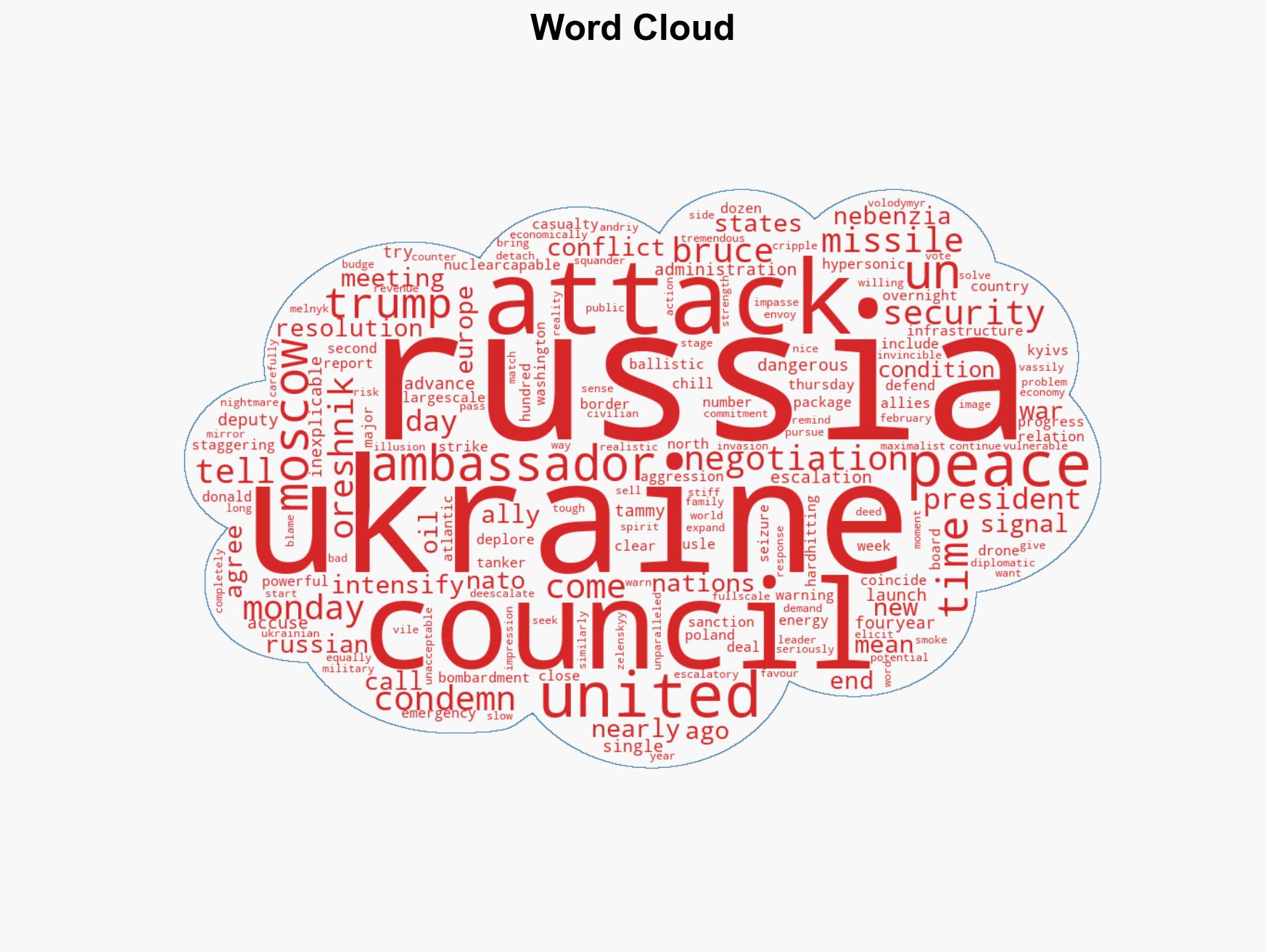
The United States has accused Russia of escalating the conflict in Ukraine by deploying a nuclear-capable missile near NATO borders, complicating ongoing peace efforts led by the Trump administration. The situation poses significant risks to regional stability and NATO security, with moderate confidence in the assessment that Russia is leveraging military actions to strengthen its negotiating position. Key stakeholders include the US, Russia, Ukraine, NATO, and European allies.
2. Competing Hypotheses
- Hypothesis A: Russia’s missile deployment is a strategic move to pressure Ukraine and its allies into concessions during peace negotiations. Supporting evidence includes the timing of the missile launch coinciding with peace talks and Russia’s historical use of military pressure to influence diplomatic outcomes. Key uncertainties involve Russia’s ultimate objectives and potential internal pressures.
- Hypothesis B: Russia’s actions are primarily defensive, aimed at deterring perceived NATO encroachments near its borders. This is supported by Russia’s narrative of responding to Western actions, but contradicted by the aggressive nature of the missile deployment and lack of immediate NATO provocations.
- Assessment: Hypothesis A is currently better supported due to the alignment of military actions with diplomatic timelines and Russia’s prior behavior patterns. Indicators that could shift this judgment include changes in Russia’s diplomatic posture or evidence of NATO provocations.
3. Key Assumptions and Red Flags
- Assumptions: Russia seeks to leverage military actions for diplomatic gains; NATO remains committed to Ukraine’s defense; US sanctions will impact Russia’s economy.
- Information Gaps: Details on internal Russian decision-making processes and the full scope of NATO’s response plans.
- Bias & Deception Risks: Potential US bias in framing Russia’s actions as aggressive; Russian narratives may exaggerate NATO threats to justify military actions.
4. Implications and Strategic Risks
The escalation could lead to increased military tensions in Eastern Europe, impacting NATO’s strategic posture and potentially leading to a broader conflict. Economic sanctions may further strain Russia’s economy, affecting global markets.
- Political / Geopolitical: Escalation risks drawing NATO into a more direct confrontation with Russia, complicating diplomatic resolutions.
- Security / Counter-Terrorism: Increased military activity heightens the risk of miscalculation or accidental engagements.
- Cyber / Information Space: Potential for increased cyber operations targeting NATO and Ukrainian infrastructure as part of hybrid warfare tactics.
- Economic / Social: Sanctions could exacerbate economic instability in Russia, potentially leading to social unrest.
5. Recommendations and Outlook
- Immediate Actions (0–30 days): Enhance intelligence monitoring of Russian military movements; engage in diplomatic efforts to de-escalate tensions; prepare contingency plans for potential NATO responses.
- Medium-Term Posture (1–12 months): Strengthen NATO’s eastern flank defenses; pursue multilateral sanctions enforcement; support Ukraine’s resilience against military and cyber threats.
- Scenario Outlook:
- Best Case: Diplomatic resolution achieved, reducing military tensions.
- Worst Case: Escalation into broader regional conflict involving NATO forces.
- Most-Likely: Prolonged standoff with periodic escalations and continued diplomatic efforts.
6. Key Individuals and Entities
- US Deputy Ambassador to the UN Tammy Bruce
- Russian UN Ambassador Vassily Nebenzia
- Ukrainian President Volodymyr Zelenskyy
- US President Donald Trump
- Ukraine’s UN Ambassador Andriy Melnyk
7. Thematic Tags
regional conflicts, conflict escalation, NATO security, Ukraine crisis, missile deployment, US-Russia relations, sanctions, peace negotiations
Structured Analytic Techniques Applied
- Causal Layered Analysis (CLA): Analyze events across surface happenings, systems, worldviews, and myths.
- Cross-Impact Simulation: Model ripple effects across neighboring states, conflicts, or economic dependencies.
- Scenario Generation: Explore divergent futures under varying assumptions to identify plausible paths.
Explore more:
Regional Conflicts Briefs ·
Daily Summary ·
Support us