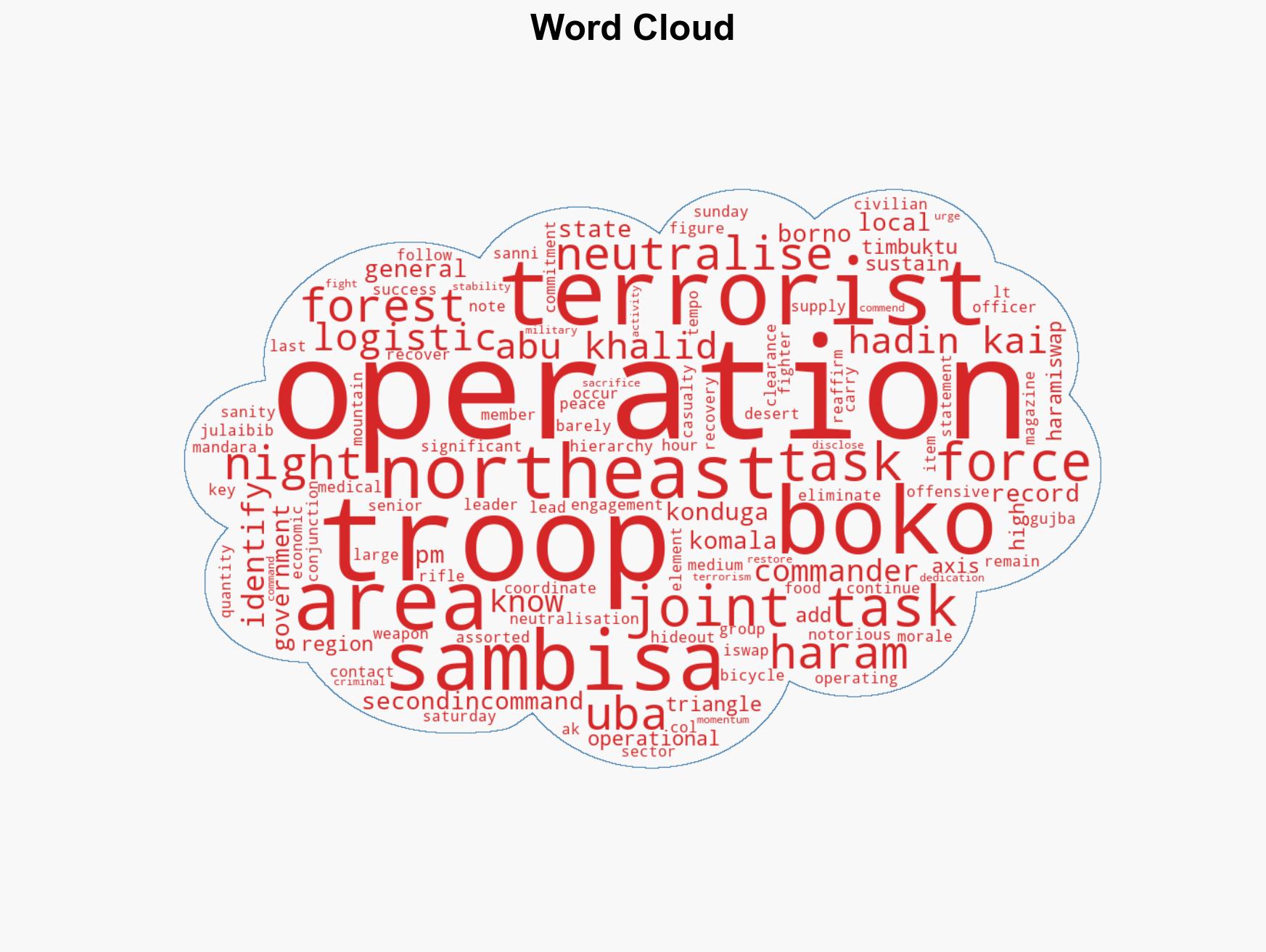
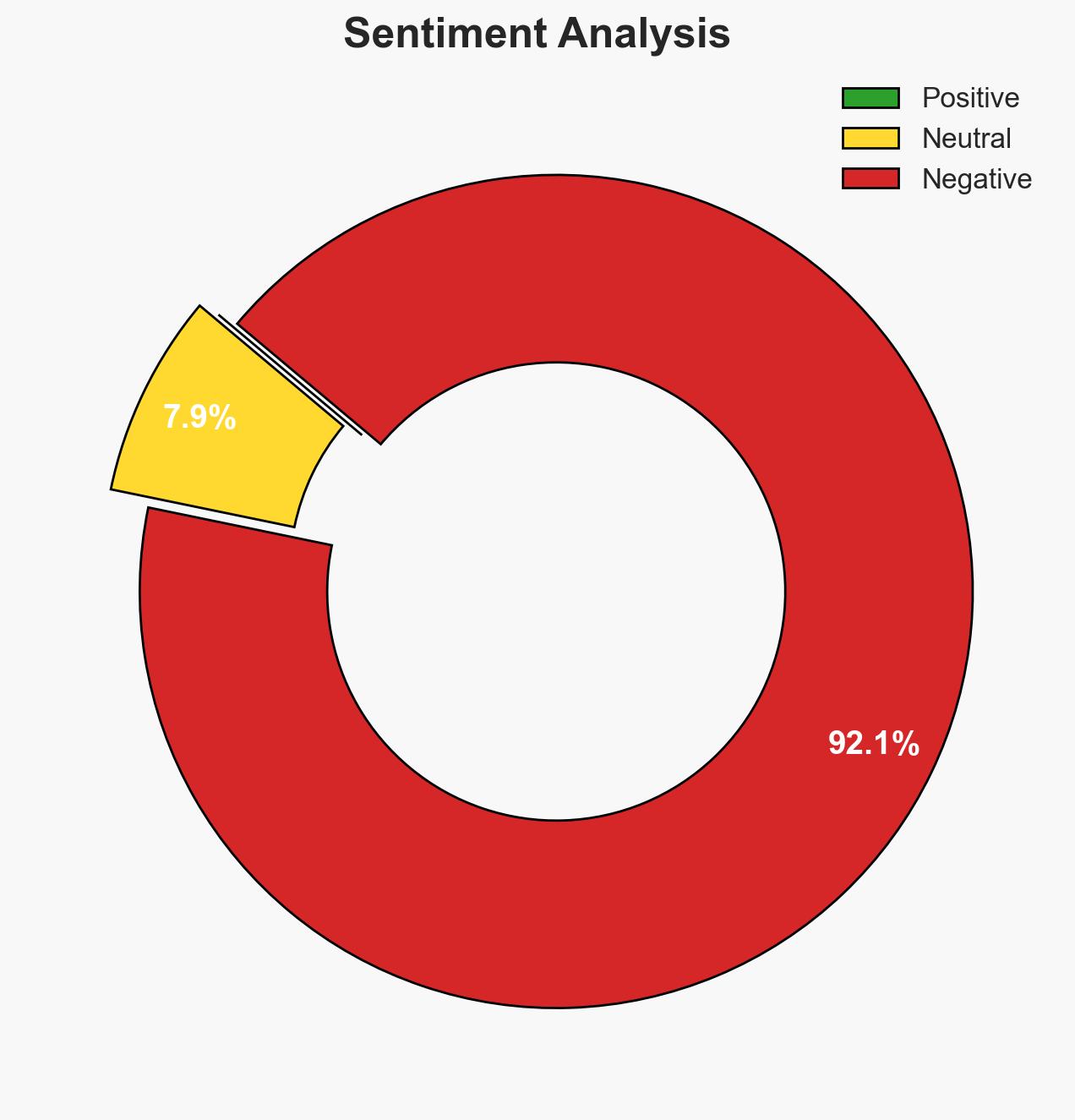
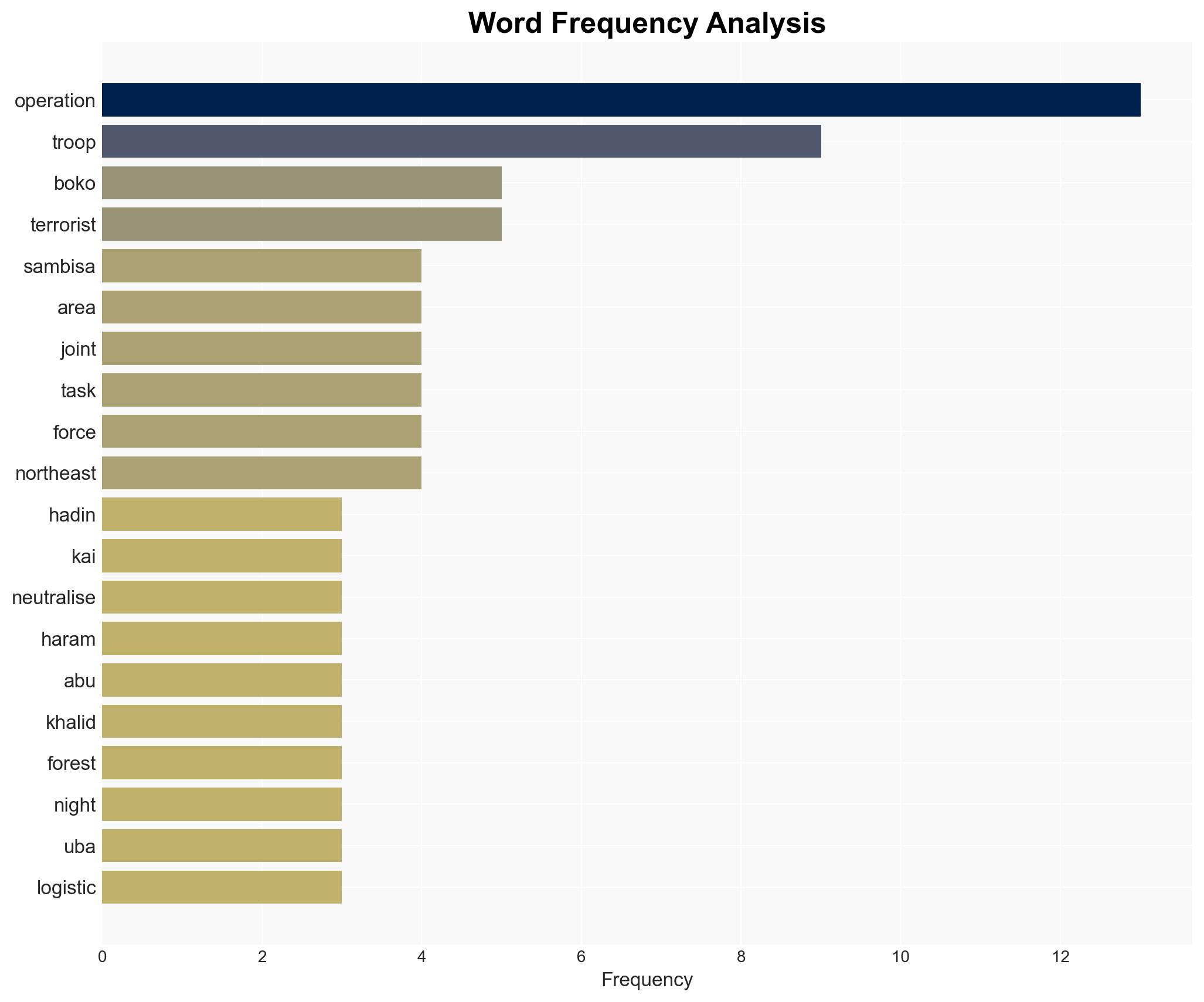
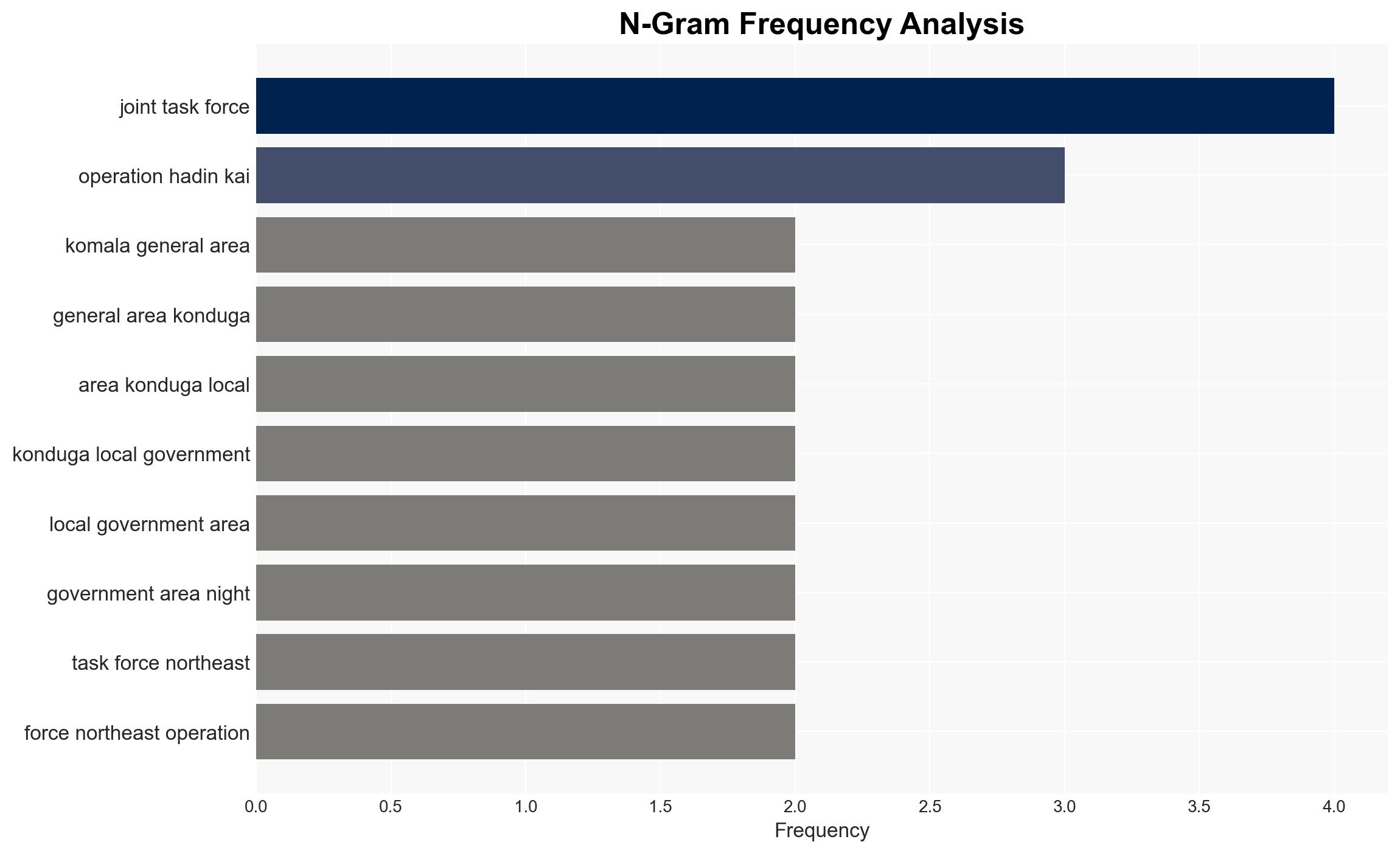
Operation Hadin Kai Eliminates Boko Haram’s Second-in-Command and 10 Fighters in Sambisa Forest
Published on: 2026-02-02
AI-powered OSINT brief from verified open sources. Automated NLP signal extraction with human verification. See our Methodology and Why WorldWideWatchers.
Intelligence Report: Military kills Boko Haram commander 10 others in Sambisa
1. BLUF (Bottom Line Up Front)
The recent military operation in Sambisa Forest resulted in the elimination of a senior Boko Haram commander, Abu Khalid, and 10 other fighters, potentially disrupting the group’s operational capabilities in the region. This development is likely to impact Boko Haram’s organizational structure and morale, with moderate confidence in the assessment due to limited information on the group’s internal dynamics.
2. Competing Hypotheses
- Hypothesis A: The elimination of Abu Khalid will significantly weaken Boko Haram’s operational capabilities in the Sambisa Forest. Supporting evidence includes the loss of a key leader and recovery of weapons, which could disrupt command and control. However, uncertainty remains about the group’s ability to quickly replace leadership.
- Hypothesis B: Boko Haram will maintain its operational capabilities despite the loss of Abu Khalid. This hypothesis is supported by the group’s historical resilience and adaptability. Contradicting evidence includes the immediate impact on logistics and morale, but the group’s decentralized structure may mitigate these effects.
- Assessment: Hypothesis A is currently better supported due to the immediate operational success and recovery of logistics, which could temporarily hinder Boko Haram’s activities. Indicators such as the emergence of new leadership or continued attacks could shift this judgment.
3. Key Assumptions and Red Flags
- Assumptions: The military’s account of the operation is accurate; Boko Haram’s leadership structure is hierarchical; the loss of logistics will impact operations.
- Information Gaps: Details on Boko Haram’s current leadership succession plans and internal cohesion are lacking.
- Bias & Deception Risks: Potential bias in military reporting to emphasize success; limited independent verification of the operation’s impact.
4. Implications and Strategic Risks
This development could lead to a temporary reduction in Boko Haram’s operational tempo, affecting regional security dynamics. However, the group’s resilience poses a risk of continued insurgency activities.
- Political / Geopolitical: Potential for increased military and political pressure on Boko Haram, possibly leading to shifts in regional alliances.
- Security / Counter-Terrorism: Short-term reduction in attacks may occur, but long-term threat remains if leadership is quickly replaced.
- Cyber / Information Space: Potential for Boko Haram to leverage digital platforms to recruit or spread propaganda in response to leadership losses.
- Economic / Social: Continued instability could hinder economic development and exacerbate humanitarian challenges in the region.
5. Recommendations and Outlook
- Immediate Actions (0–30 days): Increase intelligence monitoring of Boko Haram communications and movements; engage with local communities to gather insights on group activities.
- Medium-Term Posture (1–12 months): Strengthen regional partnerships to enhance counter-terrorism capabilities; invest in community resilience programs to reduce recruitment pools.
- Scenario Outlook:
- Best: Sustained military pressure leads to significant degradation of Boko Haram capabilities.
- Worst: Rapid leadership replacement and increased attacks destabilize the region further.
- Most-Likely: Temporary disruption with gradual recovery of Boko Haram’s operational capabilities.
6. Key Individuals and Entities
- Abu Khalid (Boko Haram second-in-command)
- Lt. Col. Sanni Uba (Media Information Officer, Joint Task Force)
- Julaibib (Boko Haram/ISWAP commander)
7. Thematic Tags
Counter-Terrorism, Boko Haram, military operations, regional security, leadership decapitation, insurgency, intelligence analysis
Structured Analytic Techniques Applied
- ACH 2.0: Reconstruct likely threat actor intentions via hypothesis testing and structured refutation.
- Indicators Development: Track radicalization signals and propaganda patterns to anticipate operational planning.
- Narrative Pattern Analysis: Analyze spread/adaptation of ideological narratives for recruitment/incitement signals.
Explore more:
Counter-Terrorism Briefs ·
Daily Summary ·
Support us