Hamas Supporters Harass Black-Owned Kosher Establishments in New York and Beyond
Published on: 2026-02-18
AI-powered OSINT brief from verified open sources. Automated NLP signal extraction with human verification. See our Methodology and Why WorldWideWatchers.
Intelligence Report: Hamas supporters target Blacks in Harlem
1. BLUF (Bottom Line Up Front)
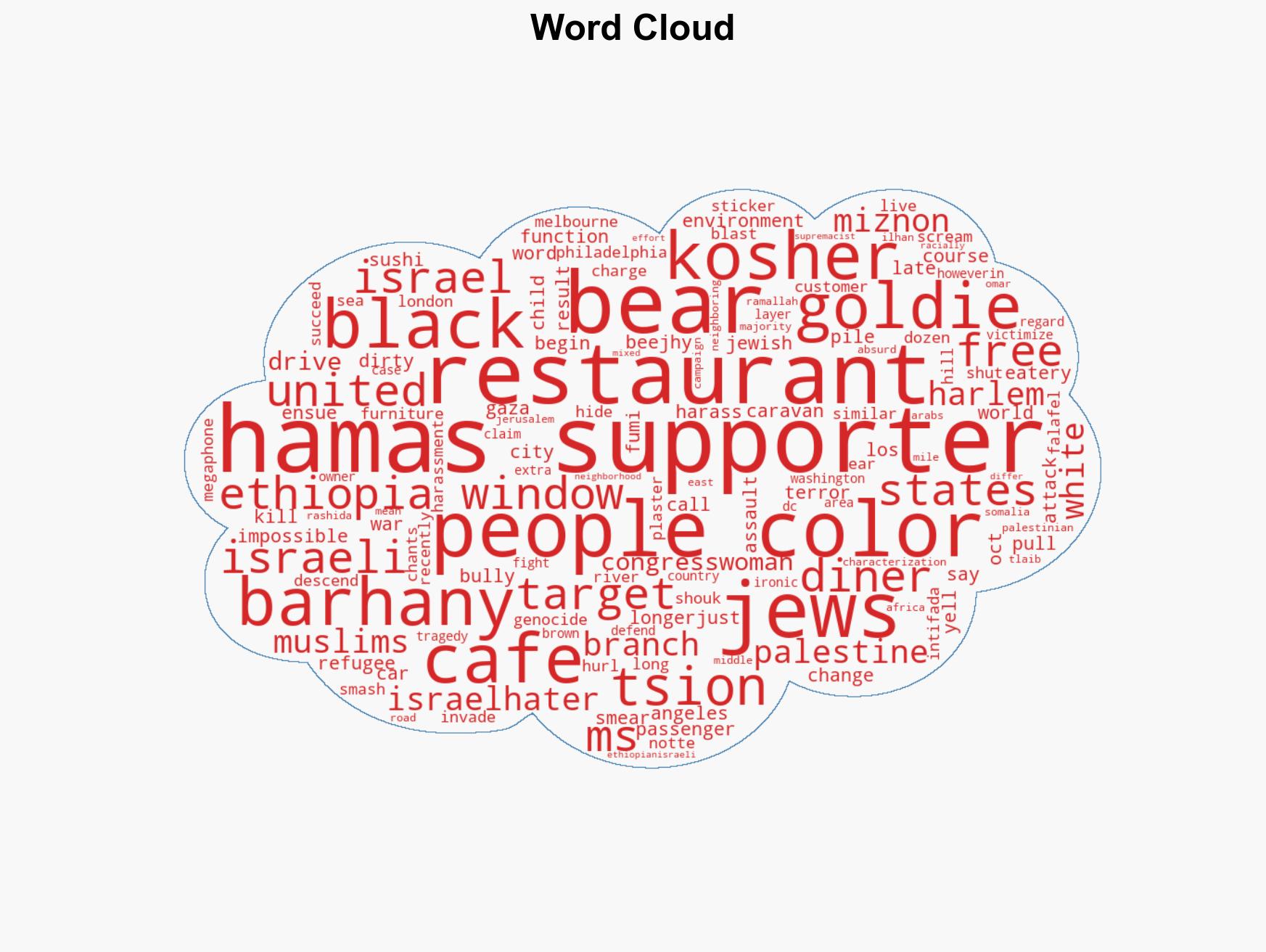
The targeting of Tsion Cafe in Harlem by Hamas supporters highlights a broader pattern of harassment against Israeli and Jewish establishments globally. This incident underscores potential racial and geopolitical tensions, with moderate confidence that the harassment is part of a coordinated effort to disrupt Jewish businesses. The affected parties include Jewish business owners and communities in multicultural urban areas.
2. Competing Hypotheses
- Hypothesis A: The harassment of Tsion Cafe and similar establishments is a coordinated effort by Hamas supporters to intimidate and disrupt Jewish-owned businesses globally. This is supported by the pattern of similar incidents in multiple cities. However, the extent of coordination and centralization of these actions remains uncertain.
- Hypothesis B: These incidents are isolated acts of aggression by disparate groups of Hamas supporters, not centrally coordinated but rather inspired by shared ideological motivations. The lack of direct evidence of a central command structure supports this hypothesis.
- Assessment: Hypothesis A is currently better supported due to the consistent pattern of similar incidents across various locations, suggesting at least some level of coordination or shared strategy. Key indicators that could shift this judgment include evidence of communication or planning among perpetrators across different cities.
3. Key Assumptions and Red Flags
- Assumptions: The incidents are ideologically motivated; the targeted businesses are perceived as representative of Israeli or Jewish interests; the actions are intended to intimidate and disrupt.
- Information Gaps: Details on the organizational structure or communication methods of the perpetrators; the extent of local versus international coordination.
- Bias & Deception Risks: Potential bias in reporting due to the politically charged nature of the incidents; risk of overestimating coordination without direct evidence.
4. Implications and Strategic Risks
This development could exacerbate racial and geopolitical tensions, influencing public sentiment and policy responses in affected areas.
- Political / Geopolitical: Potential for increased diplomatic tensions between pro-Israel and pro-Palestinian factions within affected countries.
- Security / Counter-Terrorism: Heightened risk of retaliatory violence or escalation in targeted urban areas.
- Cyber / Information Space: Possible increase in online propaganda and misinformation campaigns related to the incidents.
- Economic / Social: Negative impact on local economies and community relations, particularly in multicultural neighborhoods.
5. Recommendations and Outlook
- Immediate Actions (0–30 days): Enhance monitoring of similar incidents, increase security measures for vulnerable establishments, and engage community leaders to promote dialogue.
- Medium-Term Posture (1–12 months): Develop resilience measures for affected communities, strengthen partnerships with local law enforcement, and enhance intelligence-sharing mechanisms.
- Scenario Outlook:
- Best: De-escalation through effective community engagement and law enforcement intervention.
- Worst: Escalation into broader communal violence and increased geopolitical tensions.
- Most-Likely: Continued sporadic incidents with moderate impact on community relations and business operations.
6. Key Individuals and Entities
- Beejhy Barhany, owner of Tsion Cafe
- Not clearly identifiable from open sources in this snippet for other individuals/entities involved.
7. Thematic Tags
Counter-Terrorism, racial tensions, geopolitical conflict, community relations, business disruption, ideological extremism, public safety
Structured Analytic Techniques Applied
- ACH 2.0: Reconstruct likely threat actor intentions via hypothesis testing and structured refutation.
- Indicators Development: Track radicalization signals and propaganda patterns to anticipate operational planning.
- Narrative Pattern Analysis: Analyze spread/adaptation of ideological narratives for recruitment/incitement signals.
Explore more:
Counter-Terrorism Briefs ·
Daily Summary ·
Support us