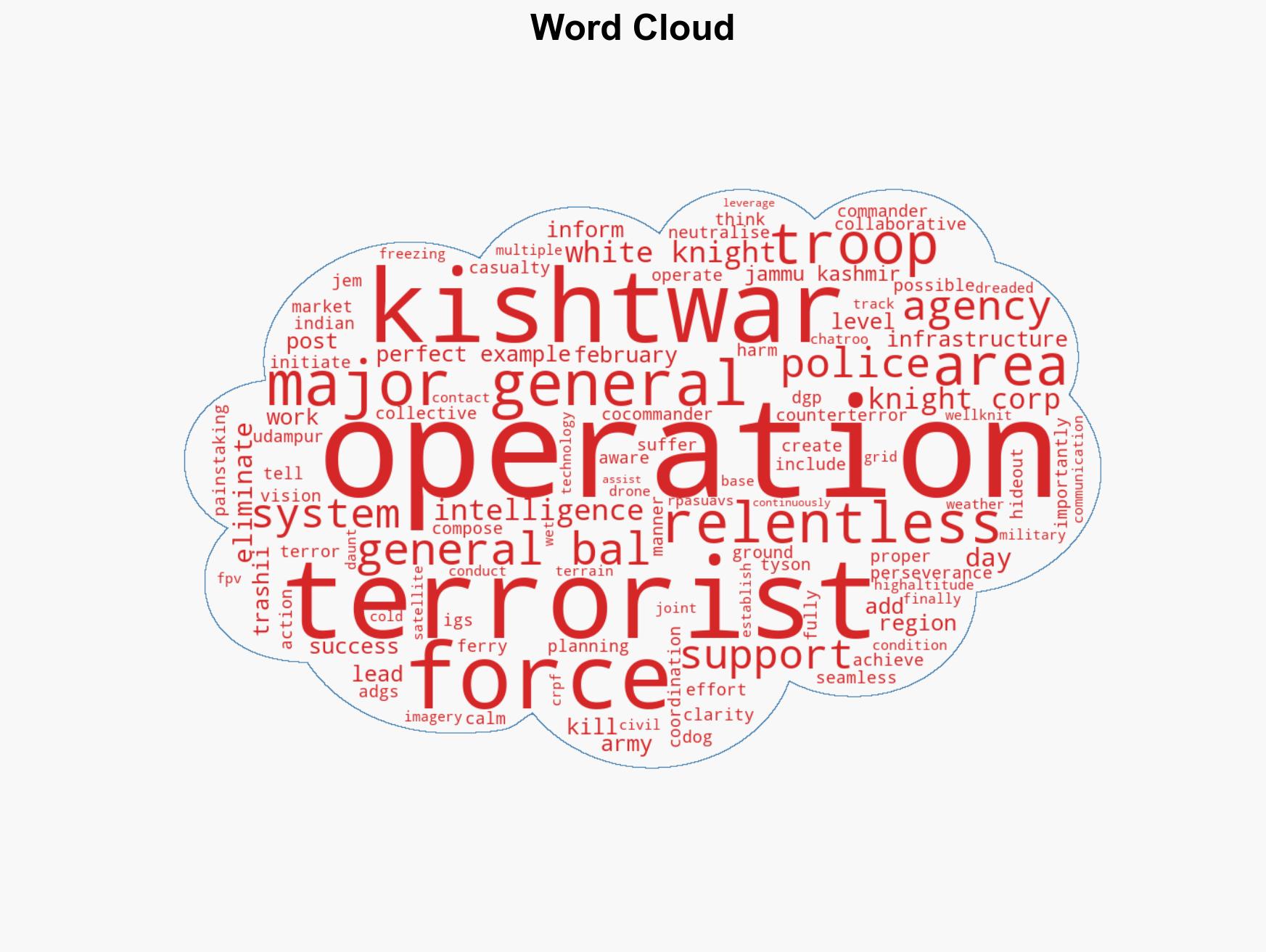
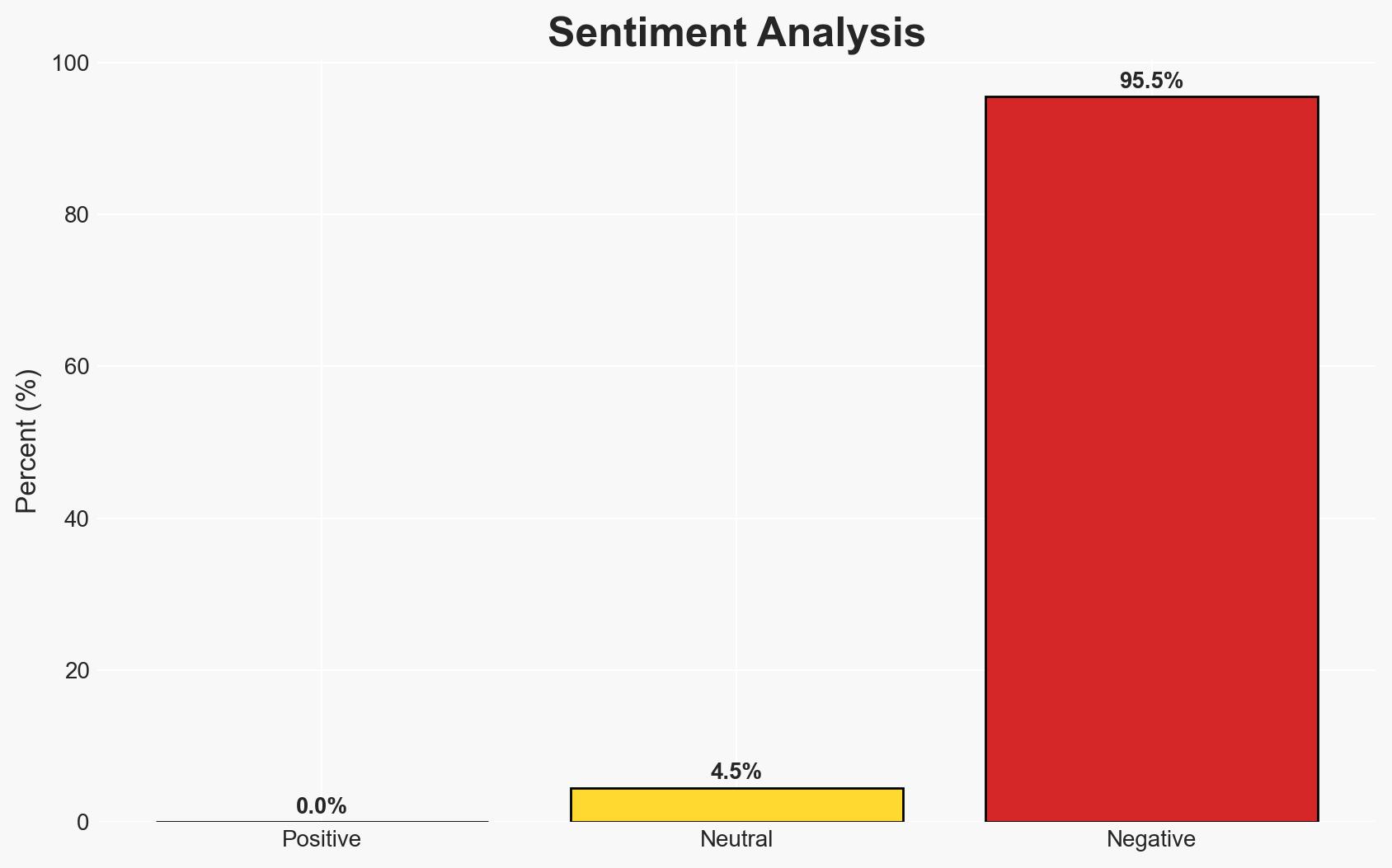
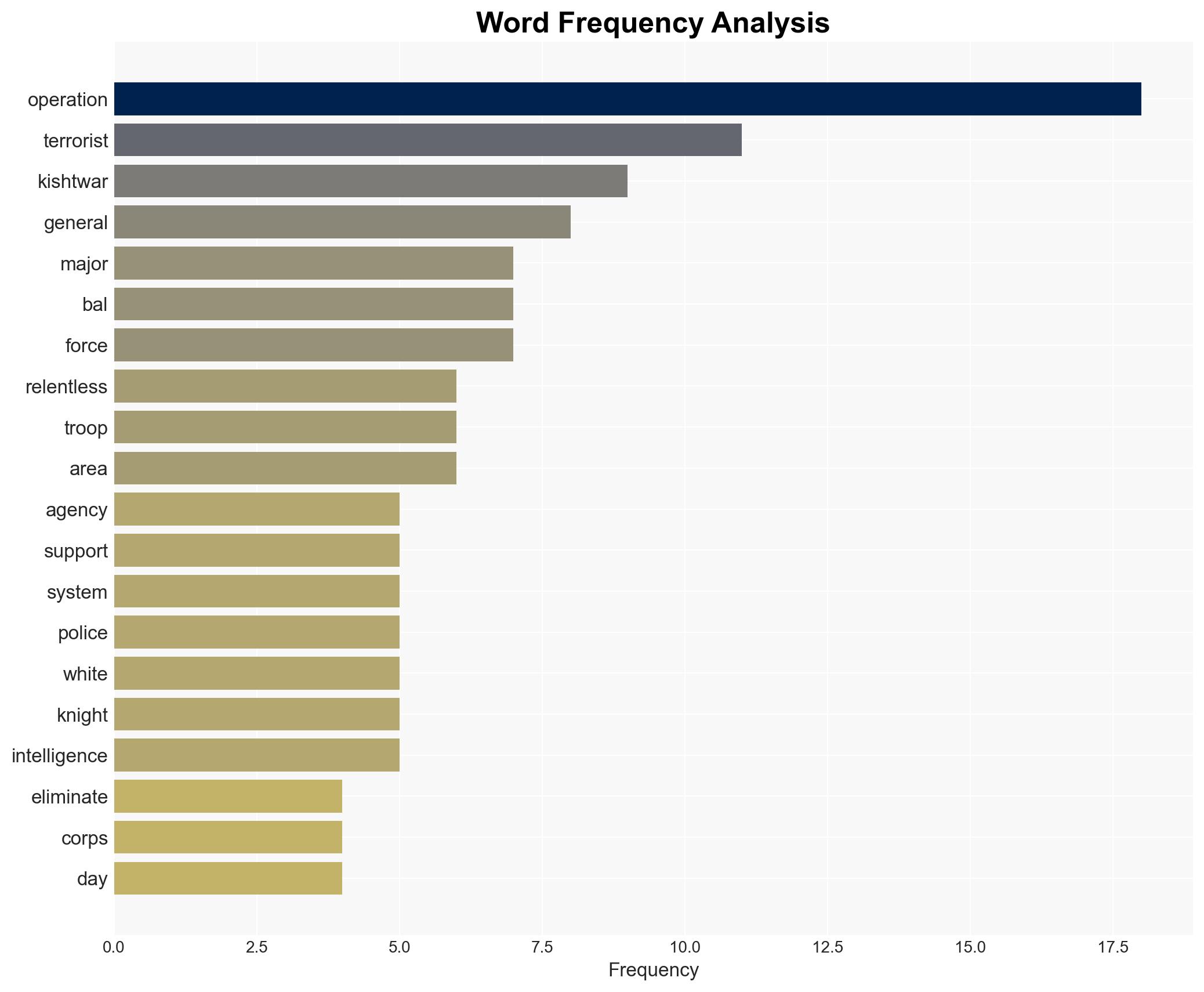
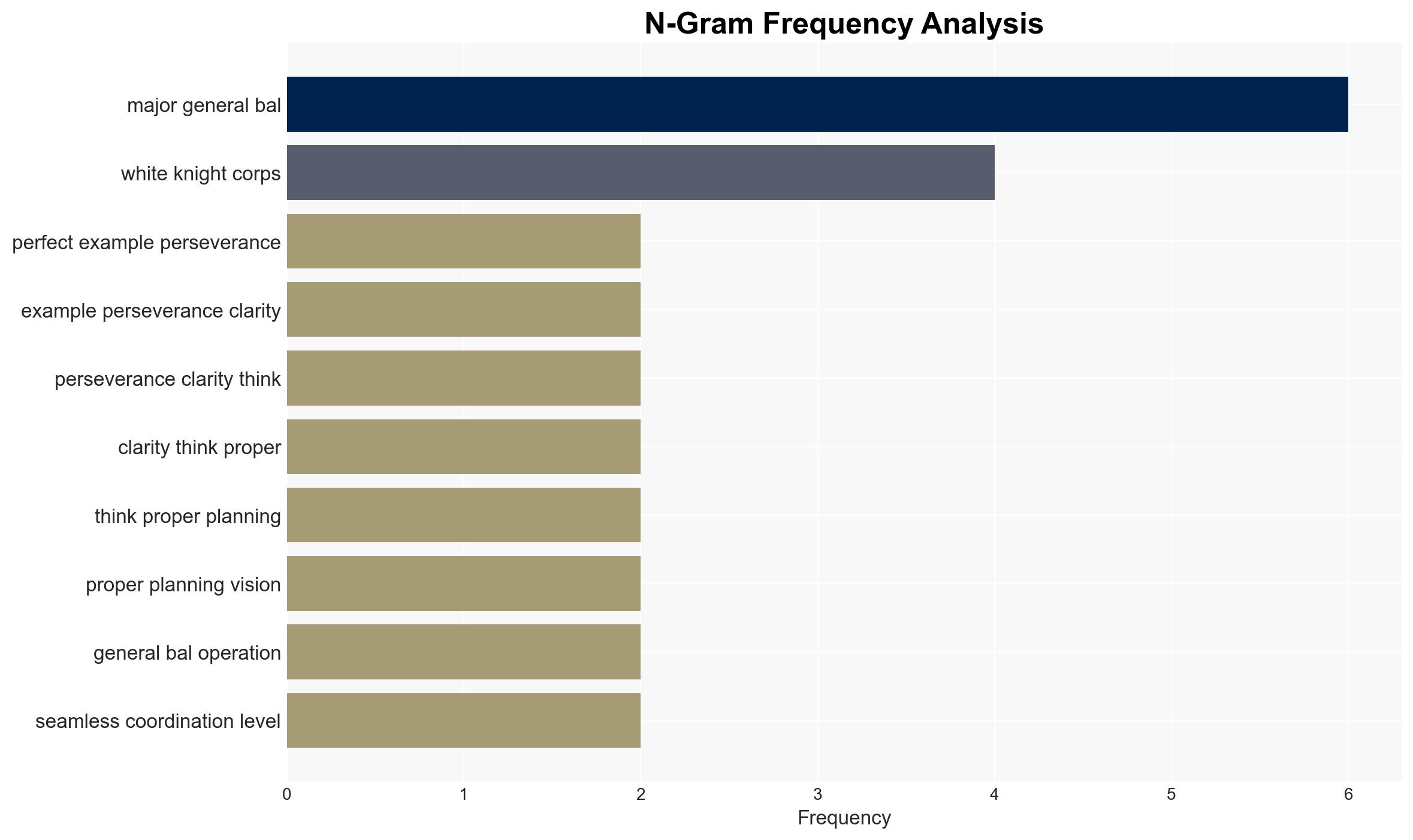
Operation Trashi-I exemplifies effective planning and coordination in counter-terrorism efforts, says Major G…
Published on: 2026-02-23
AI-powered OSINT brief from verified open sources. Automated NLP signal extraction with human verification. See our Methodology and Why WorldWideWatchers.
Intelligence Report: Operation Trashi-I showcases perseverance planning and seamless coordination Major General APS Bal
1. BLUF (Bottom Line Up Front)
Operation Trashi-I, led by Major General APS Bal, exemplifies effective counter-terrorism coordination among Indian security forces, resulting in significant operational success without casualties. The operation highlights the importance of inter-agency collaboration and intelligence sharing. Overall, there is moderate confidence in the sustained capability of Indian forces to manage similar threats effectively.
2. Competing Hypotheses
- Hypothesis A: Operation Trashi-I’s success is primarily due to superior planning and coordination among Indian security forces, as evidenced by the seamless integration of multiple agencies and the absence of casualties. However, the extent of external support to terrorist elements remains uncertain.
- Hypothesis B: The operation’s success is largely attributable to the degradation of terrorist capabilities in the region, possibly due to prior intelligence operations. This hypothesis is less supported as it does not fully account for the reported coordination and planning efforts.
- Assessment: Hypothesis A is currently better supported due to explicit statements from Major General Bal regarding the coordination and planning efforts. Future intelligence on the support networks for terrorist elements could shift this assessment.
3. Key Assumptions and Red Flags
- Assumptions: The operation’s reported success accurately reflects the ground reality; inter-agency coordination is sustainable; terrorist networks in the region are currently weakened.
- Information Gaps: Details on the support networks for terrorist elements; specific intelligence on the infrastructure and logistics used by terrorists.
- Bias & Deception Risks: Potential overstatement of success by military sources; lack of independent verification of operation details; possible underestimation of terrorist capabilities.
4. Implications and Strategic Risks
The success of Operation Trashi-I may bolster Indian security forces’ confidence and deter terrorist activities in the short term. However, the persistence of support networks poses a risk of resurgence.
- Political / Geopolitical: Strengthened domestic political support for counter-terrorism measures; potential diplomatic tensions if cross-border elements are implicated.
- Security / Counter-Terrorism: Temporary reduction in terrorist activity; increased focus on dismantling support networks.
- Cyber / Information Space: Potential for increased propaganda or misinformation campaigns by terrorist groups to counteract perceived successes.
- Economic / Social: Limited immediate impact; potential long-term benefits from improved security environment.
5. Recommendations and Outlook
- Immediate Actions (0–30 days): Enhance intelligence gathering on support networks; increase surveillance in key areas; maintain inter-agency communication channels.
- Medium-Term Posture (1–12 months): Develop resilience measures against potential terrorist resurgence; strengthen regional partnerships for intelligence sharing.
- Scenario Outlook: Best: Sustained reduction in terrorist activities; Worst: Resurgence due to undetected support networks; Most-Likely: Continued sporadic threats with effective countermeasures.
6. Key Individuals and Entities
- Major General APS Bal, General Officer Commanding (GOC) of the Counter-Insurgency Force (CIF) Delta
- Not clearly identifiable from open sources in this snippet.
7. Thematic Tags
Counter-Terrorism, military coordination, intelligence sharing, inter-agency collaboration, terrorist networks, regional security
Structured Analytic Techniques Applied
- ACH 2.0: Reconstruct likely threat actor intentions via hypothesis testing and structured refutation.
- Indicators Development: Track radicalization signals and propaganda patterns to anticipate operational planning.
- Narrative Pattern Analysis: Analyze spread/adaptation of ideological narratives for recruitment/incitement signals.
Explore more:
Counter-Terrorism Briefs ·
Daily Summary ·
Support us