NZ’s intelligence agency alerts that critical infrastructure cyber security is insufficient amid rising threa…
Published on: 2026-03-05
AI-powered OSINT brief from verified open sources. Automated NLP signal extraction with human verification. See our Methodology and Why WorldWideWatchers.
Intelligence Report: Spy agency warns NZs cyber security barely up to scratch
1. BLUF (Bottom Line Up Front)
New Zealand’s cyber security, particularly in critical infrastructure, is inadequate compared to its Five Eyes partners, posing significant national security risks. The government’s recent reforms aim to address these vulnerabilities, but implementation challenges remain. This assessment is made with moderate confidence due to existing information gaps and the evolving threat landscape.
2. Competing Hypotheses
- Hypothesis A: New Zealand’s cyber security reforms will effectively enhance the protection of critical infrastructure, aligning with Five Eyes standards. Supporting evidence includes the government’s initiation of a new cyber security strategy and action plan. However, uncertainties exist regarding the pace and efficacy of implementation.
- Hypothesis B: Despite reforms, New Zealand will continue to lag behind its Five Eyes partners in cyber security due to systemic issues and resource constraints. This is supported by the GCSB’s warning about current vulnerabilities and the historical delay in reform adoption. Contradictory evidence includes the government’s proactive stance in launching reforms.
- Assessment: Hypothesis B is currently better supported due to the persistent vulnerabilities highlighted by the GCSB and the complexity of aligning with international standards. Key indicators that could shift this judgment include successful implementation of reforms and demonstrable improvements in cyber resilience.
3. Key Assumptions and Red Flags
- Assumptions: The government will allocate sufficient resources for reform implementation; international cooperation will continue to support NZ’s cyber security efforts; private sector engagement is critical for success; threat actors will increasingly target NZ’s critical infrastructure; reforms will be prioritized by policymakers.
- Information Gaps: Detailed timelines and resource allocations for reform implementation; specific vulnerabilities within critical infrastructure sectors; private sector readiness and capability to comply with new standards.
- Bias & Deception Risks: Potential over-reliance on government statements without independent verification; underestimation of threat actor capabilities; possible downplaying of reform challenges by stakeholders to maintain public confidence.
4. Implications and Strategic Risks
The development of cyber security reforms in New Zealand could significantly impact national security and economic stability. The effectiveness of these reforms will influence the country’s resilience against cyber threats and its standing within the Five Eyes alliance.
- Political / Geopolitical: Failure to improve cyber security could strain relations with Five Eyes partners and impact international cooperation.
- Security / Counter-Terrorism: Enhanced cyber security could deter state and non-state actors from targeting NZ, reducing the risk of significant disruptions.
- Cyber / Information Space: Successful reforms could lead to improved threat detection and response capabilities, but may also provoke more sophisticated attacks.
- Economic / Social: Improved cyber security could bolster economic stability by protecting critical infrastructure, but compliance costs may burden smaller entities.
5. Recommendations and Outlook
- Immediate Actions (0–30 days): Conduct a comprehensive assessment of current vulnerabilities; engage with private sector stakeholders to ensure alignment with new standards; increase monitoring of cyber threats to critical infrastructure.
- Medium-Term Posture (1–12 months): Develop partnerships with international cyber security entities; invest in workforce training and development; establish clear metrics for reform success.
- Scenario Outlook:
- Best: Full implementation of reforms leads to enhanced security and international standing.
- Worst: Reforms are inadequately implemented, leading to significant cyber incidents.
- Most-Likely: Partial improvements with ongoing challenges in aligning with international standards.
6. Key Individuals and Entities
- Andrew Clark (GCSB Director-General)
- Prime Minister’s Department
- Government Communications Security Bureau (GCSB)
- Not clearly identifiable from open sources in this snippet.
7. Thematic Tags
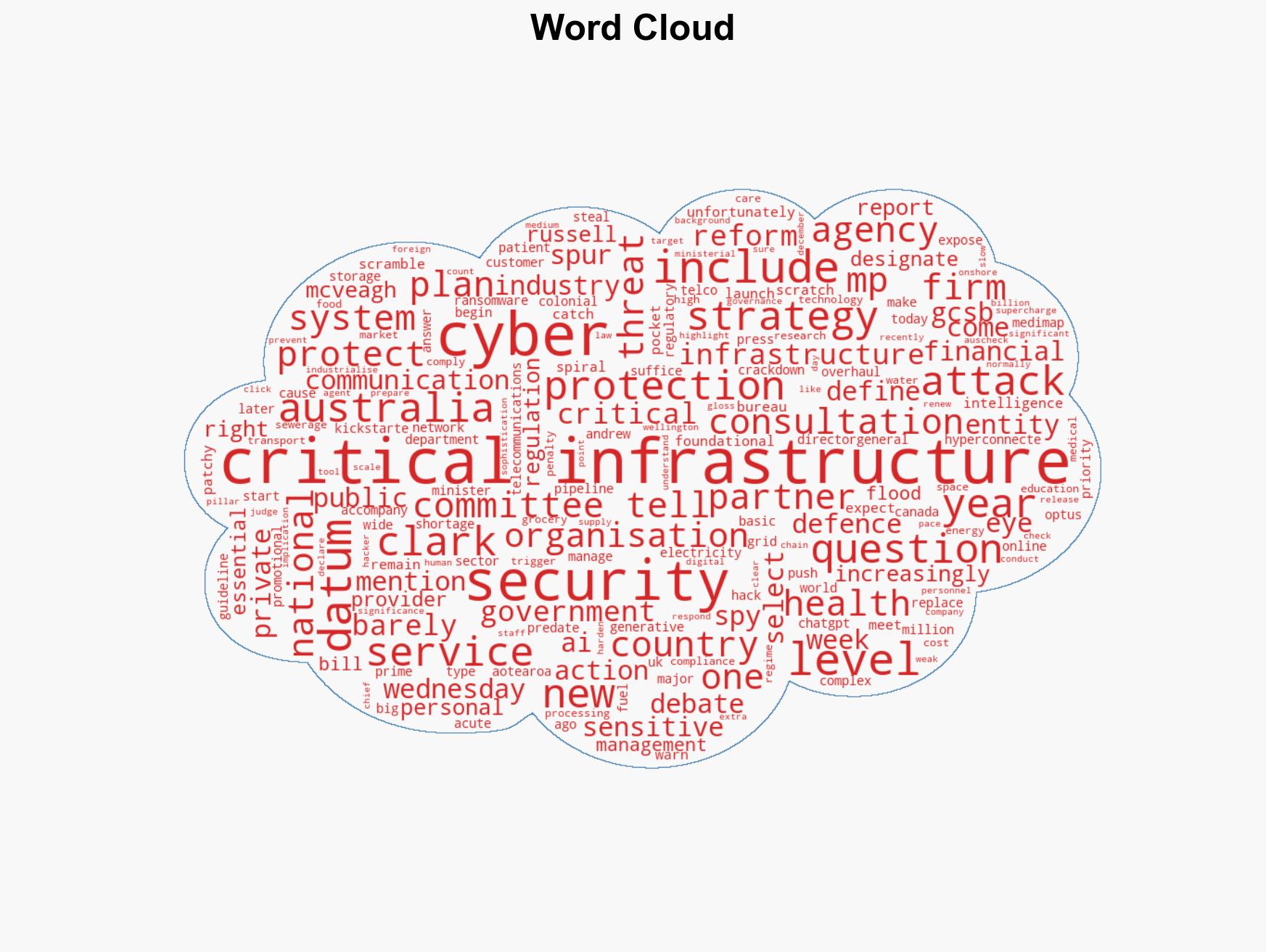
cybersecurity, cyber security, critical infrastructure, Five Eyes, national security, cyber threats, reform implementation, international cooperation
Structured Analytic Techniques Applied
- Adversarial Threat Simulation: Model and simulate actions of cyber adversaries to anticipate vulnerabilities and improve resilience.
- Indicators Development: Detect and monitor behavioral or technical anomalies across systems for early threat detection.
- Bayesian Scenario Modeling: Quantify uncertainty and predict cyberattack pathways using probabilistic inference.
- Network Influence Mapping: Map influence relationships to assess actor impact.
Explore more:
Cybersecurity Briefs ·
Daily Summary ·
Support us