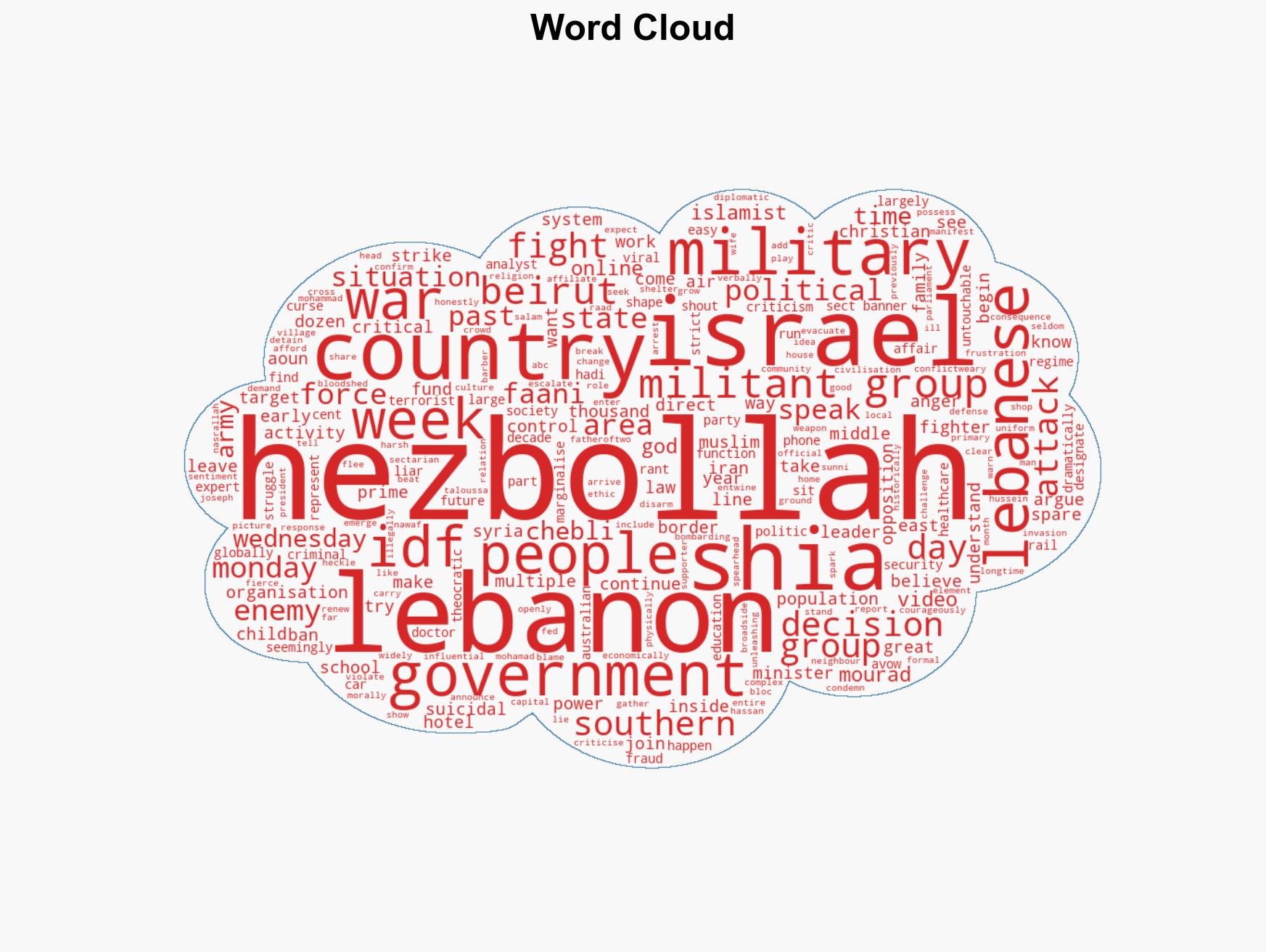
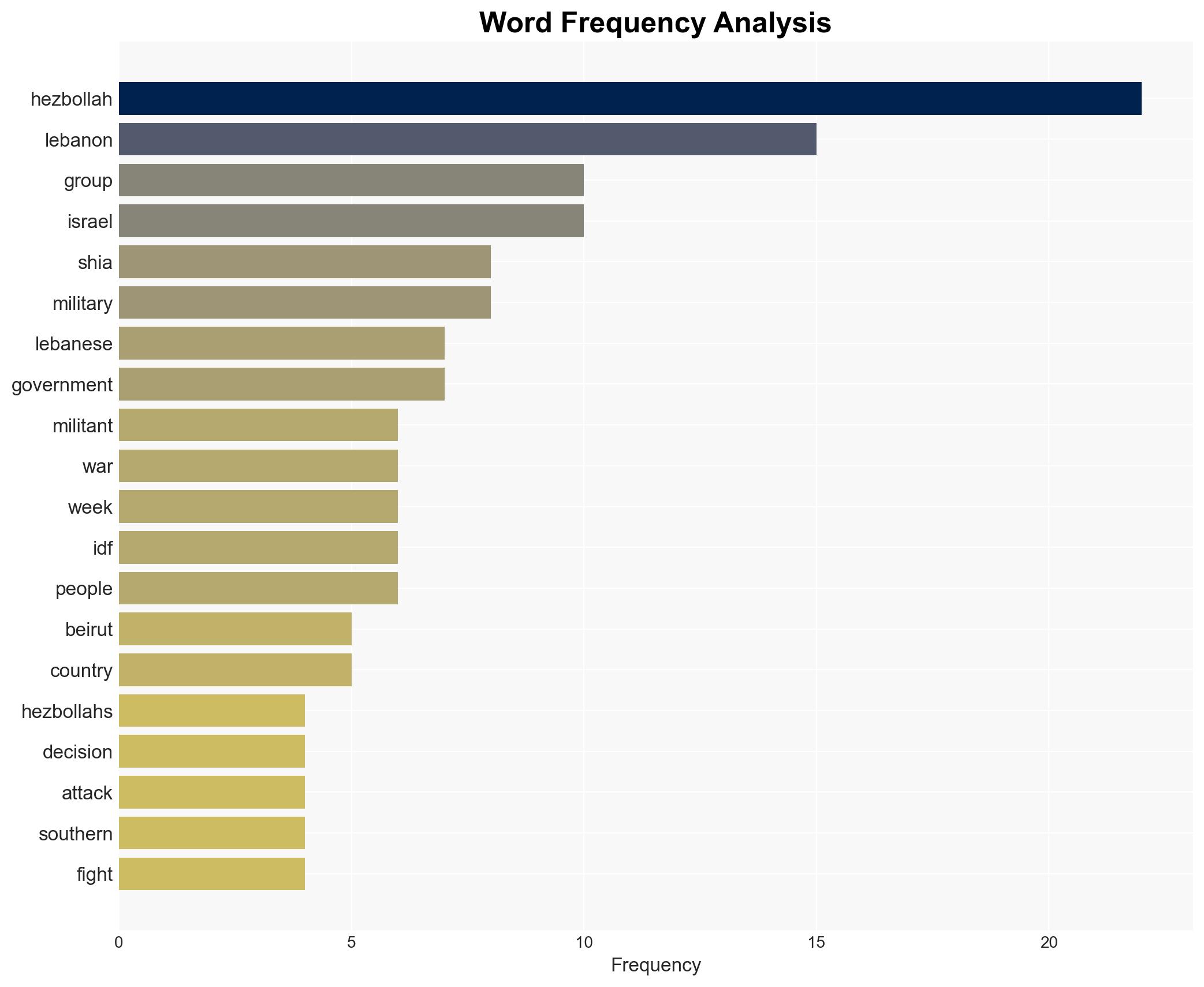
Hezbollah Faces Growing Backlash in Lebanon Amid Criticism of Its Role in Regional Conflict
Published on: 2026-03-06
AI-powered OSINT brief from verified open sources. Automated NLP signal extraction with human verification. See our Methodology and Why WorldWideWatchers.
Intelligence Report: ‘You are liars you are frauds’ Hezbollah faces reckoning in Lebanon
1. BLUF (Bottom Line Up Front)
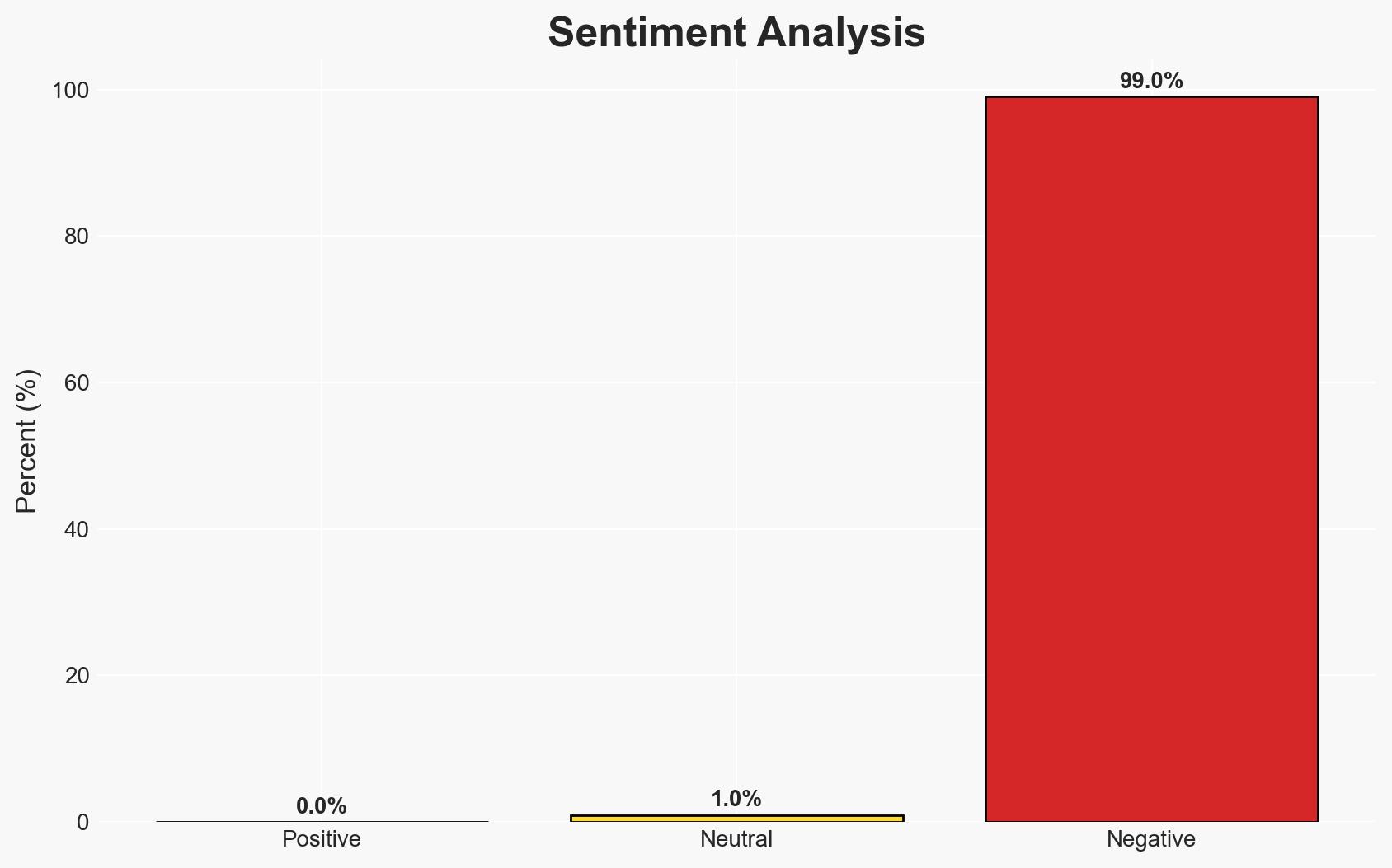
Hezbollah’s recent involvement in the Middle East conflict has sparked significant domestic backlash, potentially destabilizing its long-standing influence in Lebanon. The growing criticism from within the Shia community and other Lebanese factions suggests a shift in public sentiment. This development could alter Lebanon’s political landscape and Hezbollah’s regional role. Overall confidence in this assessment is moderate.
2. Competing Hypotheses
- Hypothesis A: Hezbollah’s decision to engage in the Middle East conflict will lead to a significant erosion of its domestic support, weakening its political and social influence in Lebanon. Supporting evidence includes public criticism from Shia individuals and condemnation from various Lebanese factions. However, the extent of this erosion is uncertain due to Hezbollah’s entrenched control over certain regions.
- Hypothesis B: Despite current criticisms, Hezbollah will maintain its influence in Lebanon due to its deep-rooted support among Shia communities and its provision of essential services. Contradicting evidence includes the increasing vocal opposition and potential shifts in public opinion.
- Assessment: Hypothesis A is currently better supported given the visible and vocal criticism from diverse Lebanese groups, including some Shia members. Key indicators that could shift this judgment include Hezbollah’s ability to mitigate criticism through strategic communication or increased support from Iran.
3. Key Assumptions and Red Flags
- Assumptions: Hezbollah’s involvement in the conflict is primarily driven by Iranian influence; public criticism will continue to grow if military engagements escalate; Lebanese government and military will remain opposed to Hezbollah’s actions.
- Information Gaps: Detailed public opinion data on Hezbollah’s support within Lebanon; Hezbollah’s internal strategic calculations and potential responses to domestic criticism.
- Bias & Deception Risks: Potential bias in reporting from sources with vested interests; possibility of misinformation campaigns by Hezbollah or opposing factions to sway public opinion.
4. Implications and Strategic Risks
The current situation could lead to increased political instability in Lebanon, affecting regional security dynamics. Hezbollah’s actions may provoke further Israeli military responses, escalating the conflict.
- Political / Geopolitical: Potential weakening of Hezbollah’s political power could alter Lebanon’s alliances and regional posture.
- Security / Counter-Terrorism: Increased risk of cross-border attacks and retaliations, complicating counter-terrorism efforts.
- Cyber / Information Space: Potential for increased cyber operations targeting Lebanese and regional entities, as well as intensified information warfare.
- Economic / Social: Escalating conflict may exacerbate Lebanon’s economic crisis and lead to further social fragmentation.
5. Recommendations and Outlook
- Immediate Actions (0–30 days): Enhance monitoring of Hezbollah’s activities and public sentiment in Lebanon; engage with Lebanese government and regional partners to assess potential shifts in alliances.
- Medium-Term Posture (1–12 months): Develop resilience measures to counter potential destabilization; strengthen partnerships with Lebanese civil society to support democratic processes.
- Scenario Outlook:
- Best: Hezbollah de-escalates involvement, leading to stabilization in Lebanon.
- Worst: Prolonged conflict leads to severe internal strife and regional instability.
- Most-Likely: Continued criticism weakens Hezbollah’s domestic position but does not fully erode its influence.
6. Key Individuals and Entities
- Hezbollah
- Iran
- Lebanese Government
- Israel Defense Forces (IDF)
- Hadi Mourad (Lebanese political analyst and doctor)
- Mohamad Hussein Faani (Shia critic of Hezbollah)
7. Thematic Tags
Counter-Terrorism, Lebanon, Hezbollah, Middle East conflict, public dissent, Iranian influence, regional stability, Shia community
Structured Analytic Techniques Applied
- ACH 2.0: Reconstruct likely threat actor intentions via hypothesis testing and structured refutation.
- Indicators Development: Track radicalization signals and propaganda patterns to anticipate operational planning.
- Narrative Pattern Analysis: Analyze spread/adaptation of ideological narratives for recruitment/incitement signals.
Explore more:
Counter-Terrorism Briefs ·
Daily Summary ·
Support us