The Prolonged Path to Conflict with Iran: Assessing Military Competence and Regional Influence
Published on: 2026-03-10
AI-powered OSINT brief from verified open sources. Automated NLP signal extraction with human verification. See our Methodology and Why WorldWideWatchers.
Intelligence Report: Our Long Road To War With Iran
1. BLUF (Bottom Line Up Front)
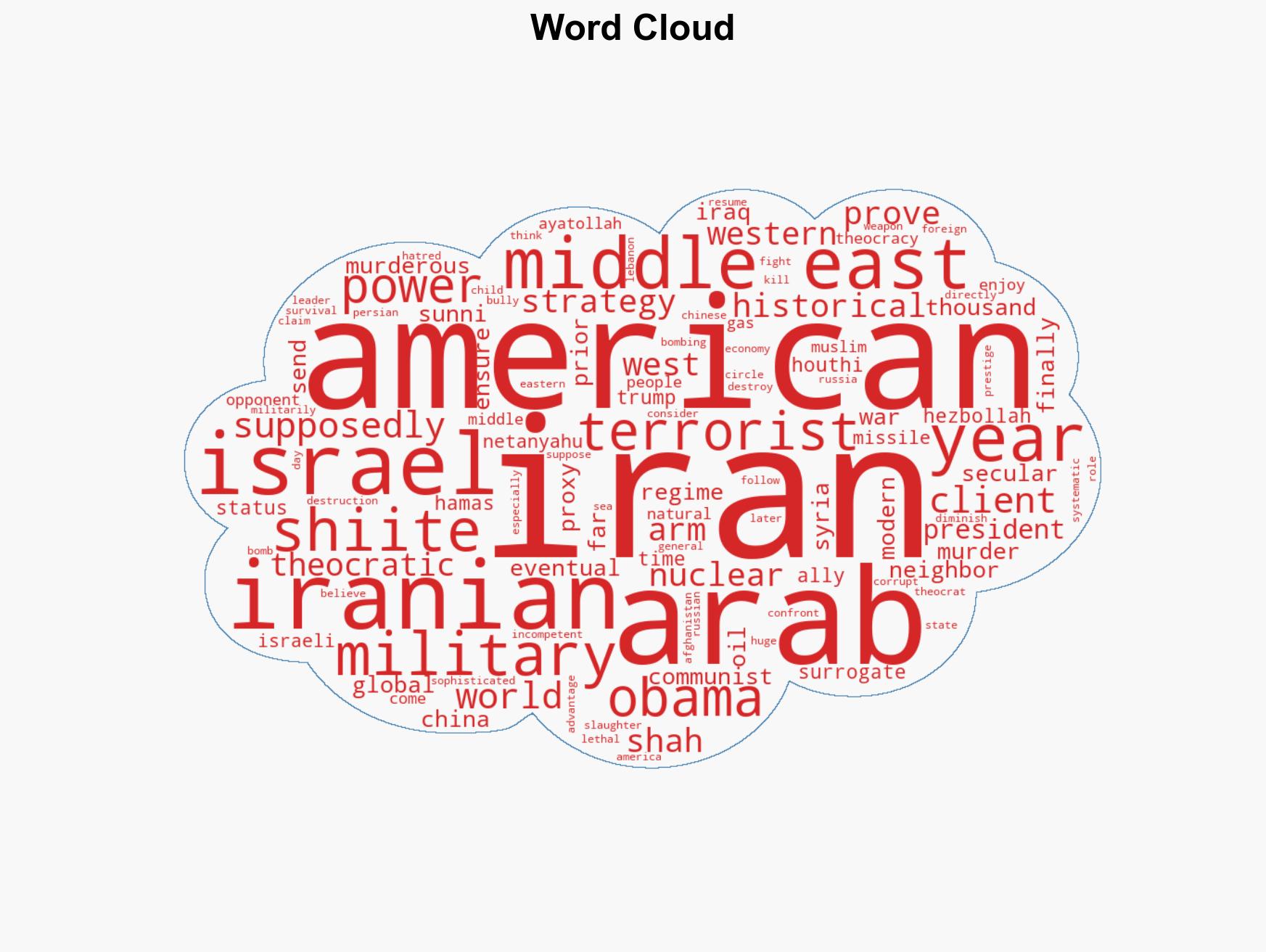
The Iranian regime, despite its historical unpredictability and hostility towards the West, may not be as formidable as perceived. The regime’s internal corruption and military incompetence, coupled with its strategic alliances, suggest vulnerabilities that could be exploited. This assessment is made with moderate confidence.
2. Competing Hypotheses
- Hypothesis A: Iran’s regime is a significant threat due to its strategic location, natural resources, and alliances with Russia and China. Supporting evidence includes its control over the Strait of Hormuz and historical hostility towards the West. Contradicting evidence includes its military incompetence and internal corruption.
- Hypothesis B: Iran’s regime is not a significant threat due to its internal weaknesses and inability to effectively leverage its strategic advantages. Supporting evidence includes its military failures and internal corruption. Contradicting evidence includes its strategic alliances and control over key resources.
- Assessment: Hypothesis B is currently better supported due to the regime’s demonstrated military incompetence and internal corruption. Key indicators that could shift this judgment include changes in military capability or shifts in strategic alliances.
3. Key Assumptions and Red Flags
- Assumptions: The regime’s internal corruption will continue to undermine its effectiveness; Iran will maintain its current alliances with Russia and China; the regime’s hostility towards the West remains unchanged.
- Information Gaps: Detailed insights into current military capabilities and internal political dynamics; the extent of foreign influence on Iran’s strategic decisions.
- Bias & Deception Risks: Potential source bias due to historical Western perspectives on Iran; risk of Iranian strategic deception regarding military capabilities and intentions.
4. Implications and Strategic Risks
The Iranian regime’s weaknesses could lead to increased internal instability and potential shifts in regional power dynamics. However, its strategic alliances and control over key resources pose ongoing risks.
- Political / Geopolitical: Possible shifts in regional alliances or increased influence of Russia and China in the Middle East.
- Security / Counter-Terrorism: Continued threat of proxy conflicts and asymmetric warfare tactics targeting Western interests.
- Cyber / Information Space: Potential for increased cyber operations targeting Western infrastructure as a form of asymmetric warfare.
- Economic / Social: Internal economic instability could lead to social unrest, impacting regional stability.
5. Recommendations and Outlook
- Immediate Actions (0–30 days): Enhance monitoring of Iranian military activities and internal political developments; strengthen cyber defenses against potential Iranian operations.
- Medium-Term Posture (1–12 months): Develop resilience measures and partnerships with regional allies; enhance intelligence-sharing with allies to counter Iranian influence.
- Scenario Outlook: Best: Iran moderates its stance and engages diplomatically. Worst: Escalation of proxy conflicts and direct confrontations. Most-Likely: Continued low-level conflicts and strategic posturing.
6. Key Individuals and Entities
- Not clearly identifiable from open sources in this snippet.
7. Thematic Tags
regional conflicts, Iran, military incompetence, strategic alliances, internal corruption, Middle East stability, proxy conflicts, cyber operations
Structured Analytic Techniques Applied
- Causal Layered Analysis (CLA): Analyze events across surface happenings, systems, worldviews, and myths.
- Cross-Impact Simulation: Model ripple effects across neighboring states, conflicts, or economic dependencies.
- Scenario Generation: Explore divergent futures under varying assumptions to identify plausible paths.
- Network Influence Mapping: Map influence relationships to assess actor impact.
Explore more:
Regional Conflicts Briefs ·
Daily Summary ·
Support us