Iran’s Attacks on Gulf Gas Facilities Escalate Amid Ongoing Regional Conflict with Israel and the U.S.
Published on: 2026-03-19
AI-powered OSINT brief from verified open sources. Automated NLP signal extraction with human verification. See our Methodology and Why WorldWideWatchers.
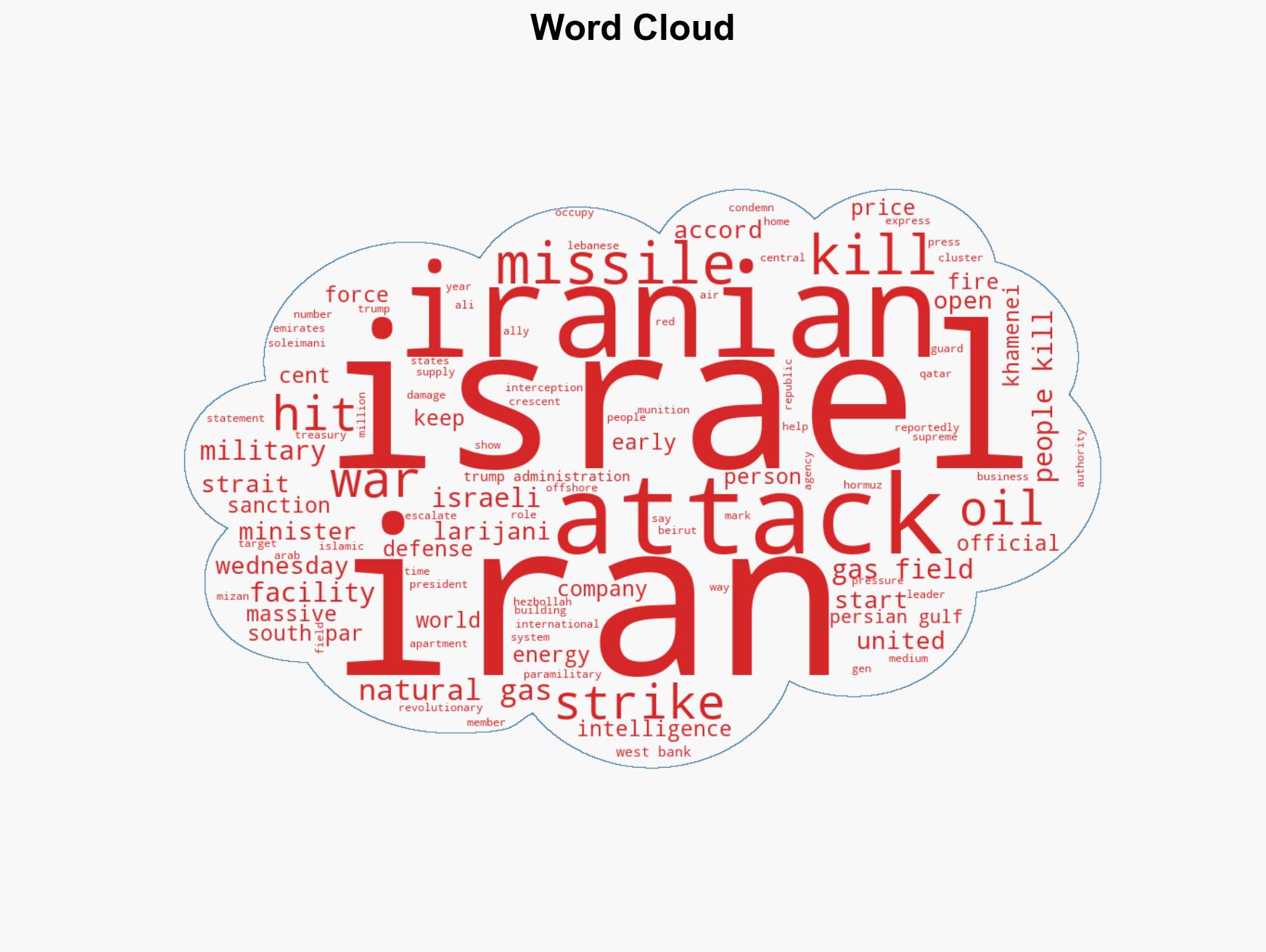
Intelligence Report: Strikes hit world’s largest natural gas field in Iran and Tehran retaliates with more attacks as West Asia war continues
1. BLUF (Bottom Line Up Front)
The escalation of hostilities involving Iran, Israel, and other regional actors has intensified, targeting critical energy infrastructure and impacting global oil prices. The most likely hypothesis is that these actions are part of a broader strategic confrontation with significant geopolitical and economic implications. This assessment is made with moderate confidence, considering the complexity and fluidity of the situation.
2. Competing Hypotheses
- Hypothesis A: The strikes on energy infrastructure are a calculated escalation by Iran and its adversaries to gain leverage in ongoing geopolitical tensions. Supporting evidence includes the targeted nature of the attacks on critical energy sites and the strategic importance of these facilities. Key uncertainties involve the potential for further escalation and the involvement of additional state or non-state actors.
- Hypothesis B: The attacks are retaliatory measures in response to specific provocations, such as the killing of Iranian officials, rather than part of a broader strategic plan. This is supported by the sequence of events following high-profile assassinations. However, this hypothesis is contradicted by the scale and coordination of the attacks, suggesting a more strategic intent.
- Assessment: Hypothesis A is currently better supported due to the strategic targeting of energy infrastructure and the broader geopolitical context. Indicators that could shift this judgment include changes in diplomatic engagements or unexpected unilateral de-escalation by key actors.
3. Key Assumptions and Red Flags
- Assumptions: The conflict will remain regionally contained; energy infrastructure will continue to be a primary target; major powers will avoid direct military involvement.
- Information Gaps: Details on the extent of damage to energy facilities, specific military capabilities employed, and the internal decision-making processes of involved states.
- Bias & Deception Risks: Potential bias in reporting from state-affiliated media; possibility of misinformation or propaganda to manipulate international perceptions.
4. Implications and Strategic Risks
The ongoing conflict could lead to significant disruptions in global energy markets, further destabilizing the region and potentially drawing in additional international actors.
- Political / Geopolitical: Escalation could lead to broader regional conflict involving Gulf states and external powers, altering alliances and diplomatic relations.
- Security / Counter-Terrorism: Increased risk of asymmetric attacks and terrorism as regional tensions heighten.
- Cyber / Information Space: Potential for cyber operations targeting critical infrastructure and information warfare to sway public opinion.
- Economic / Social: Rising oil prices could exacerbate global economic instability, affecting consumer prices and social unrest in vulnerable regions.
5. Recommendations and Outlook
- Immediate Actions (0–30 days): Enhance monitoring of energy infrastructure, engage in diplomatic efforts to de-escalate tensions, and prepare for potential humanitarian impacts.
- Medium-Term Posture (1–12 months): Strengthen regional security partnerships, invest in alternative energy sources, and develop contingency plans for energy supply disruptions.
- Scenario Outlook: Best: Diplomatic resolution and stabilization of oil markets. Worst: Full-scale regional conflict with global economic repercussions. Most-Likely: Continued skirmishes with periodic diplomatic interventions.
6. Key Individuals and Entities
- Masoud Pezeshkian (Iranian President)
- Esmail Khatib (Iranian Intelligence Minister, deceased)
- Ali Larijani (Iranian Security Official, deceased)
- Gen. Gholam Reza Soleimani (Head of Basij Force, deceased)
- Israel Katz (Israeli Defense Minister)
- Not clearly identifiable from open sources in this snippet.
7. Thematic Tags
regional conflicts, geopolitical tensions, energy security, regional conflict, oil market volatility, strategic infrastructure, Middle East dynamics, international diplomacy
Structured Analytic Techniques Applied
- Causal Layered Analysis (CLA): Analyze events across surface happenings, systems, worldviews, and myths.
- Cross-Impact Simulation: Model ripple effects across neighboring states, conflicts, or economic dependencies.
- Scenario Generation: Explore divergent futures under varying assumptions to identify plausible paths.
Explore more:
Regional Conflicts Briefs ·
Daily Summary ·
Support us