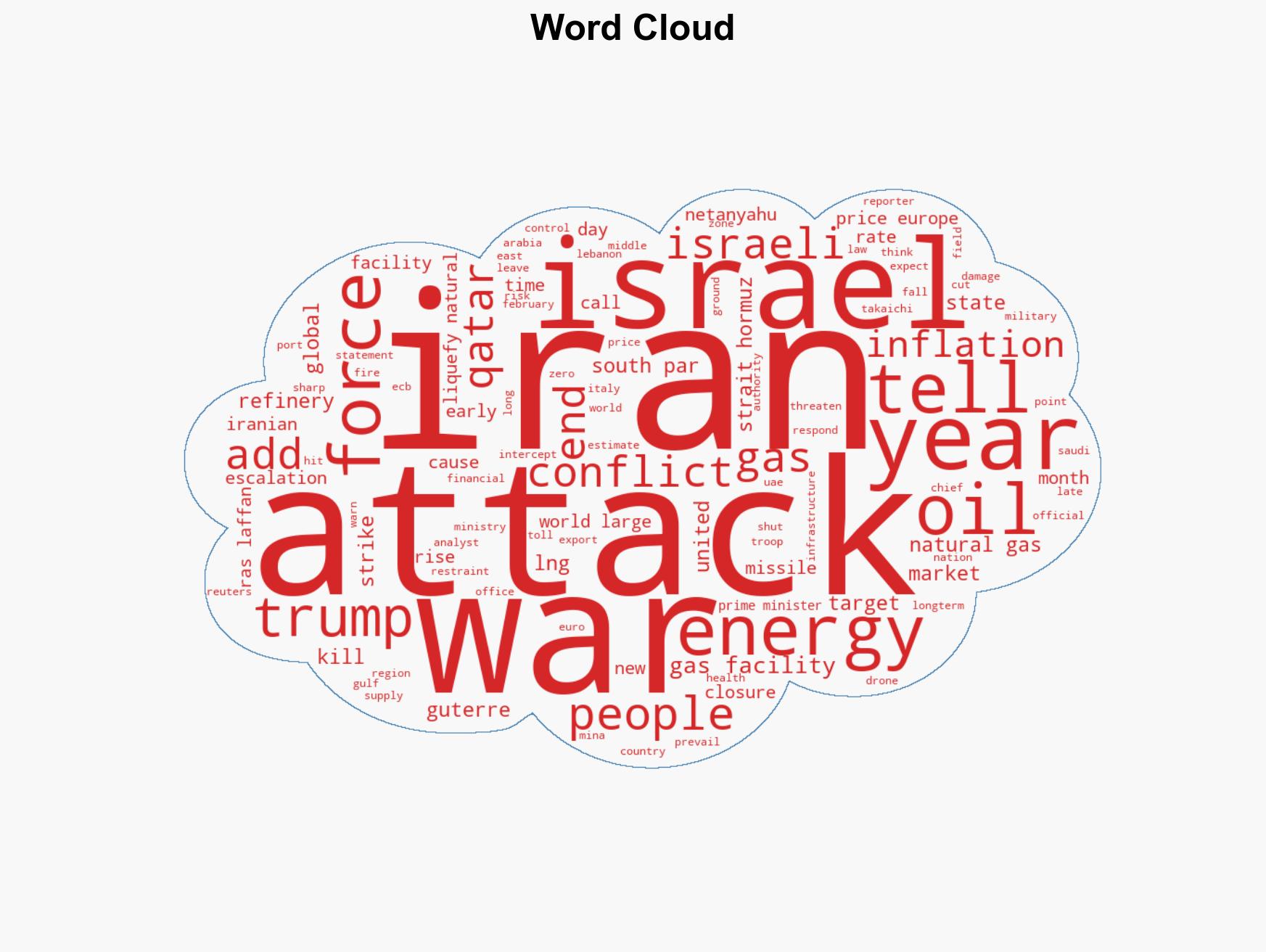
Trump promises to halt Israeli strikes on Iranian gas infrastructure amid escalating energy crisis.
Published on: 2026-03-19
AI-powered OSINT brief from verified open sources. Automated NLP signal extraction with human verification. See our Methodology and Why WorldWideWatchers.
Intelligence Report: Trump vows no more attacks by Israel on Iran gas field
1. BLUF (Bottom Line Up Front)
The escalation of military actions between Israel and Iran has significantly disrupted global energy markets, with substantial damage to critical gas infrastructure in the Middle East. This situation is likely to exacerbate global energy shortages and inflationary pressures, particularly in Europe. The most likely hypothesis is that continued conflict will lead to prolonged energy supply disruptions. Overall confidence in this assessment is moderate due to existing information gaps and potential biases in reporting.
2. Competing Hypotheses
- Hypothesis A: The conflict between Israel and Iran will persist, leading to sustained disruptions in global energy supplies. This is supported by the recent attacks on major gas facilities and the retaliatory nature of the strikes. However, the potential for diplomatic intervention remains a key uncertainty.
- Hypothesis B: Diplomatic efforts will de-escalate the conflict, allowing for a gradual restoration of energy supplies. This hypothesis is less supported given the current escalation and lack of visible diplomatic progress.
- Assessment: Hypothesis A is currently better supported due to the ongoing retaliatory strikes and the absence of effective diplomatic interventions. Key indicators that could shift this judgment include any significant diplomatic engagement or ceasefire agreements.
3. Key Assumptions and Red Flags
- Assumptions: The conflict will continue to affect energy infrastructure; diplomatic efforts are currently ineffective; global energy markets will remain volatile.
- Information Gaps: Details on potential diplomatic negotiations; comprehensive damage assessments of affected facilities; intentions of key state actors.
- Bias & Deception Risks: Potential bias in source reporting due to political affiliations; risk of misinformation from involved parties to manipulate public perception.
4. Implications and Strategic Risks
The ongoing conflict could lead to a prolonged energy crisis, impacting global economic stability and exacerbating inflationary pressures. The situation may also influence geopolitical alliances and regional security dynamics.
- Political / Geopolitical: Potential for increased tensions between regional powers and shifts in international alliances.
- Security / Counter-Terrorism: Heightened risk of further attacks on critical infrastructure and potential for broader regional conflict.
- Cyber / Information Space: Increased likelihood of cyber-attacks targeting energy infrastructure and information warfare to influence public opinion.
- Economic / Social: Rising energy costs could lead to economic instability and social unrest, particularly in energy-dependent regions.
5. Recommendations and Outlook
- Immediate Actions (0–30 days): Enhance monitoring of energy infrastructure; engage in diplomatic channels to de-escalate tensions; prepare contingency plans for energy supply disruptions.
- Medium-Term Posture (1–12 months): Develop resilience measures for energy markets; strengthen international partnerships to mitigate economic impacts; invest in alternative energy sources.
- Scenario Outlook:
- Best Case: Diplomatic resolution leads to stabilization and gradual recovery of energy supplies.
- Worst Case: Escalation into broader regional conflict with severe global economic repercussions.
- Most Likely: Prolonged conflict with intermittent disruptions to energy supplies and continued market volatility.
6. Key Individuals and Entities
- Donald Trump, US President
- Saad al-Kaabi, CEO of QatarEnergy
- Not clearly identifiable from open sources in this snippet for other key individuals.
7. Thematic Tags
regional conflicts, energy security, Middle East conflict, global markets, inflation, geopolitical tensions, infrastructure attacks, diplomatic efforts
Structured Analytic Techniques Applied
- Causal Layered Analysis (CLA): Analyze events across surface happenings, systems, worldviews, and myths.
- Cross-Impact Simulation: Model ripple effects across neighboring states, conflicts, or economic dependencies.
- Scenario Generation: Explore divergent futures under varying assumptions to identify plausible paths.
- Bayesian Scenario Modeling: Forecast futures under uncertainty via probabilistic logic.
Explore more:
Regional Conflicts Briefs ·
Daily Summary ·
Support us