Khamenei declares Iran’s enemies are being defeated in Nowruz message amid ongoing US and Israeli attacks
Published on: 2026-03-20
AI-powered OSINT brief from verified open sources. Automated NLP signal extraction with human verification. See our Methodology and Why WorldWideWatchers.
Intelligence Report: Irans Khamenei says enemy defeated in written Nowruz message
1. BLUF (Bottom Line Up Front)
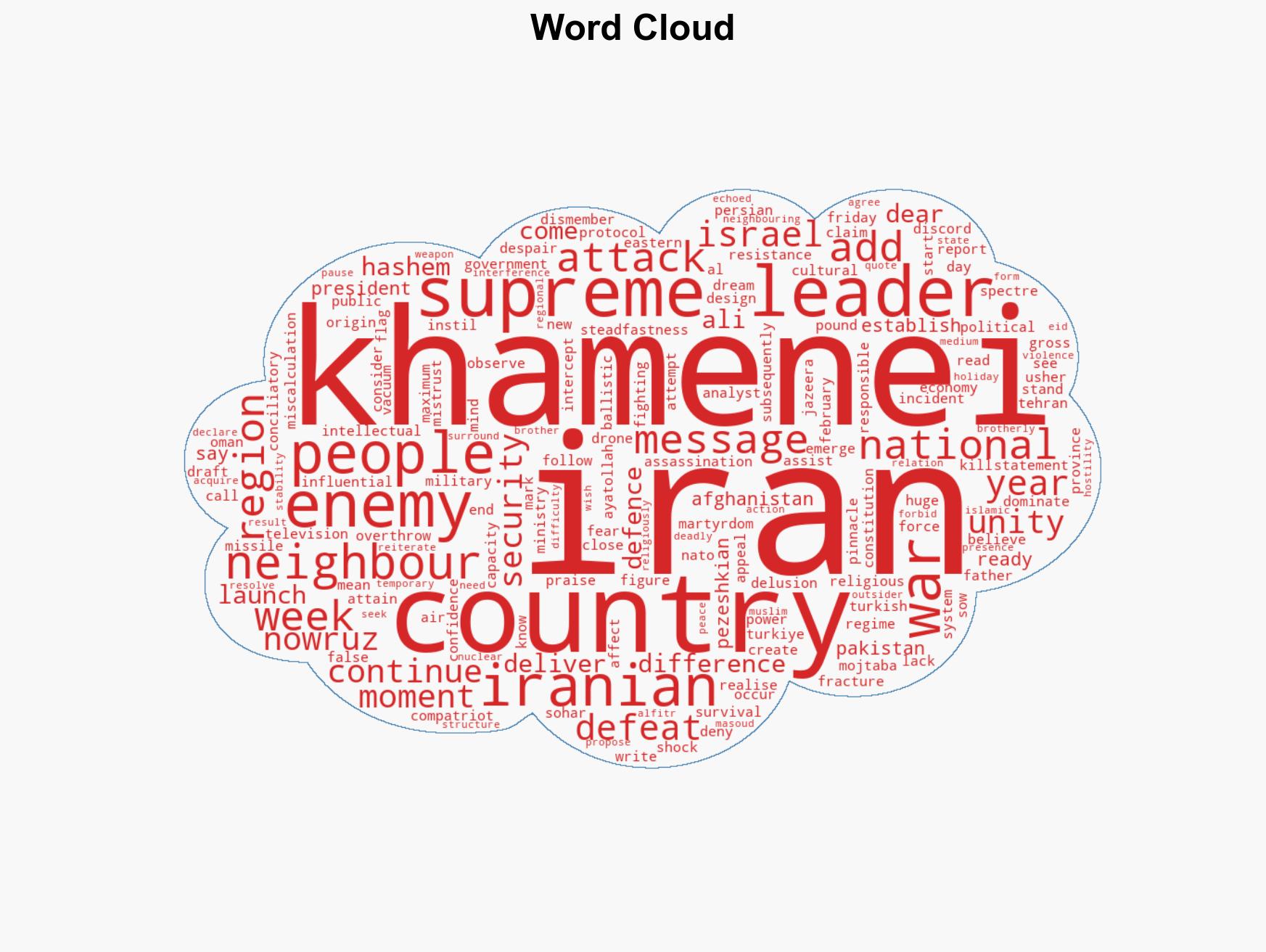
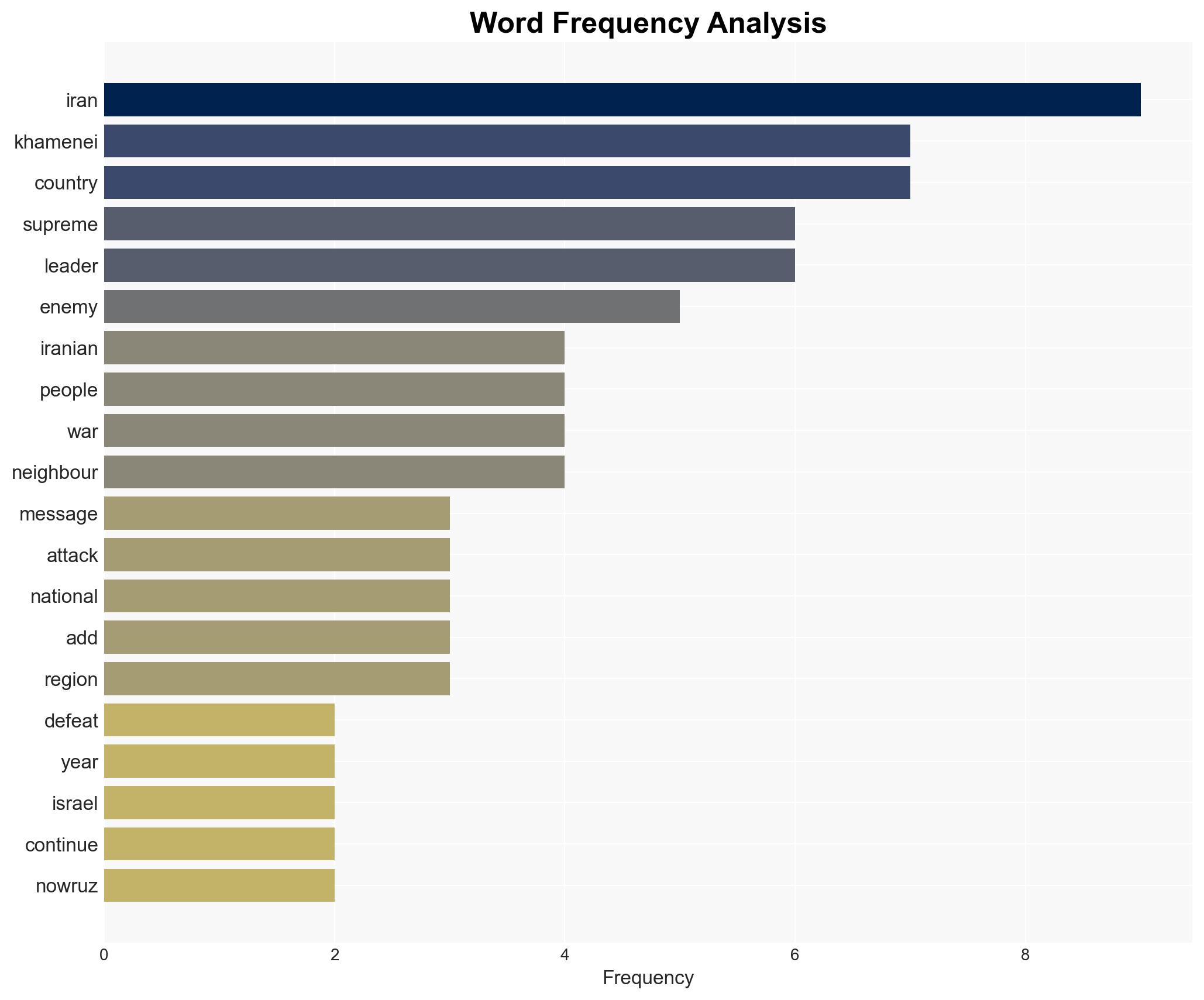
Supreme Leader Mojtaba Khamenei’s Nowruz message asserts that Iran’s enemies, particularly the US and Israel, are being defeated, emphasizing national unity and resilience. This statement aims to bolster domestic morale and regional influence amidst ongoing conflicts. The most likely hypothesis is that Khamenei’s message is part of a strategic narrative to maintain internal cohesion and deter external aggression. Overall confidence in this assessment is moderate due to limited corroborative evidence and potential bias in the source.
2. Competing Hypotheses
- Hypothesis A: Khamenei’s message is a genuine reflection of Iran’s strategic position, indicating real setbacks for US and Israeli efforts. Supporting evidence includes the emphasis on national unity and the claim of enemy fractures. Contradicting evidence includes the lack of independent verification of these claims and potential exaggeration for domestic consumption.
- Hypothesis B: The message is primarily a propaganda effort to maintain internal stability and project strength externally. Supporting evidence includes the historical use of such narratives by Iran’s leadership and the strategic timing during Nowruz. Contradicting evidence could be any independent reports of significant setbacks for US and Israeli operations, which are currently lacking.
- Assessment: Hypothesis B is currently better supported due to the lack of independent verification of claimed enemy defeats and the historical context of similar rhetoric from Iranian leadership. Indicators that could shift this judgment include credible reports of strategic gains by Iran or significant losses by its adversaries.
3. Key Assumptions and Red Flags
- Assumptions: Iran’s leadership is unified in its messaging strategy; external threats are perceived as significant by the Iranian populace; regional dynamics remain volatile.
- Information Gaps: Independent assessments of the military and strategic situation in Iran; verification of claims regarding enemy fractures and false flag operations.
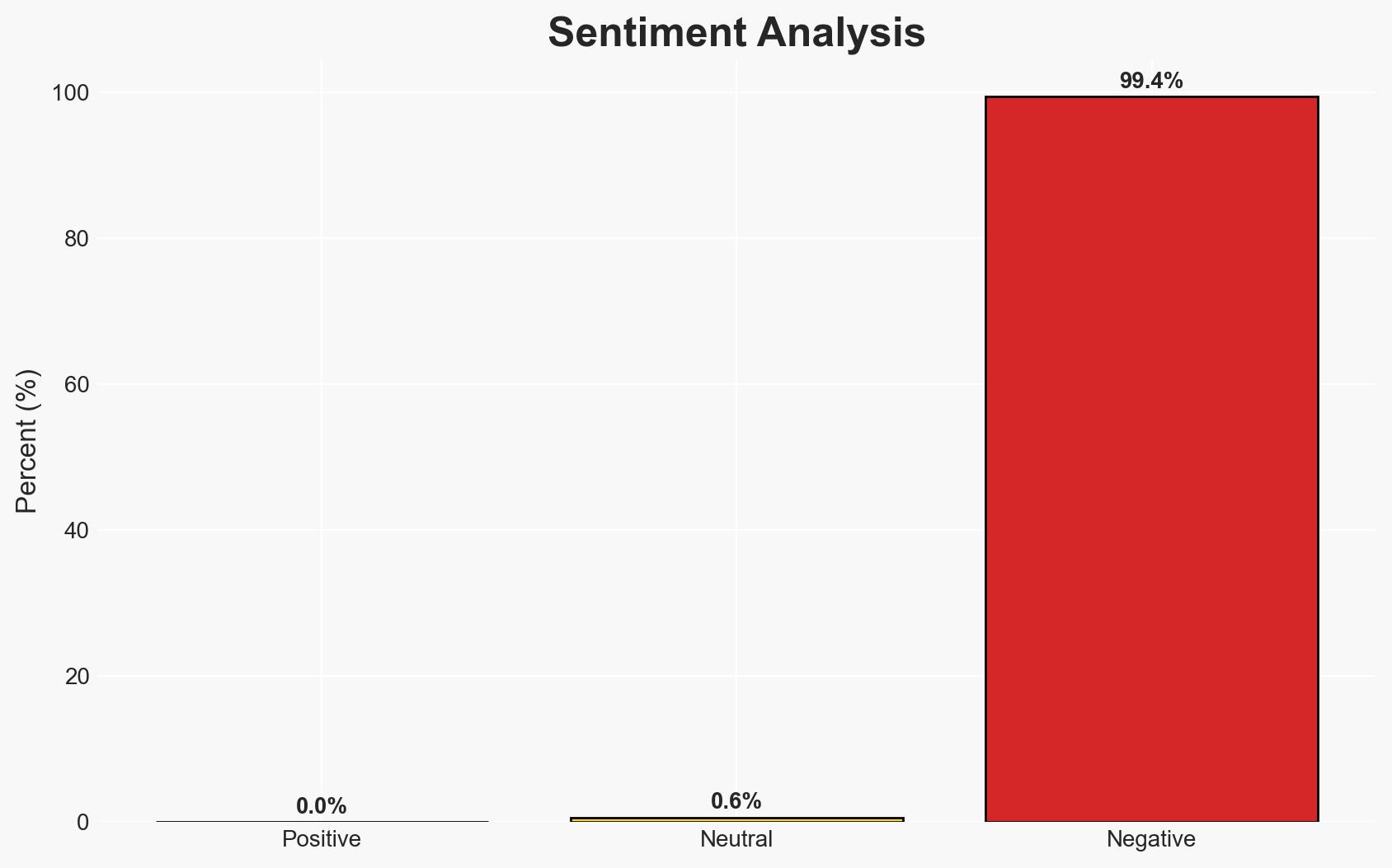
- Bias & Deception Risks: Potential bias in Iranian state media; risk of cognitive bias in interpreting strategic communications as factual; possible deception in claims of enemy defeat and false flag operations.
4. Implications and Strategic Risks
This development could reinforce Iran’s internal cohesion and deter external aggression in the short term. However, it may also escalate tensions with the US and Israel, potentially leading to increased regional instability.
- Political / Geopolitical: Potential for increased diplomatic isolation or escalation of hostilities with Western powers.
- Security / Counter-Terrorism: Heightened risk of retaliatory actions by Iran or its proxies against perceived aggressors.
- Cyber / Information Space: Increased likelihood of cyber operations targeting Iranian infrastructure or propaganda efforts to counter Iran’s narrative.
- Economic / Social: Potential economic strain from continued conflict and sanctions, impacting social stability and cohesion.
5. Recommendations and Outlook
- Immediate Actions (0–30 days): Enhance monitoring of Iranian state media and communications for shifts in narrative; increase intelligence sharing with regional allies.
- Medium-Term Posture (1–12 months): Develop resilience measures against potential cyber threats; strengthen regional partnerships to counterbalance Iranian influence.
- Scenario Outlook: Best: De-escalation and diplomatic engagement; Worst: Escalation into broader conflict; Most-Likely: Continued strategic posturing with periodic skirmishes.
6. Key Individuals and Entities
- Mojtaba Khamenei – Supreme Leader of Iran
- Masoud Pezeshkian – President of Iran
- Not clearly identifiable from open sources in this snippet.
7. Thematic Tags
regional conflicts, national security, regional stability, propaganda, geopolitical tensions, cyber threats, Iran-US relations, Middle East conflict
Structured Analytic Techniques Applied
- Causal Layered Analysis (CLA): Analyze events across surface happenings, systems, worldviews, and myths.
- Cross-Impact Simulation: Model ripple effects across neighboring states, conflicts, or economic dependencies.
- Scenario Generation: Explore divergent futures under varying assumptions to identify plausible paths.
Explore more:
Regional Conflicts Briefs ·
Daily Summary ·
Support us