Global Economic Stability at Risk Amid Ongoing Middle East Conflict and Rising Energy Prices
Published on: 2026-04-01
AI-powered OSINT brief from verified open sources. Automated NLP signal extraction with human verification. See our Methodology and Why WorldWideWatchers.
Intelligence Report: Nouriel Roubini The global economy hangs in the balance as a result of the Middle East conflict
1. BLUF (Bottom Line Up Front)
The ongoing US-Israeli conflict with Iran is likely to result in prolonged economic instability, particularly affecting global energy prices and economic growth. The most supported hypothesis suggests escalation by the US and Israel to achieve regime change in Iran, potentially stabilizing the region in the long term. This assessment is made with moderate confidence due to significant uncertainties in geopolitical developments and market reactions.
2. Competing Hypotheses
- Hypothesis A: The US and Israel will escalate military actions to achieve regime change in Iran, leading to long-term regional stability. This is supported by the strategic need to secure the Strait of Hormuz and reduce Iranian influence. However, the high-risk nature of military escalation and potential international backlash are key uncertainties.
- Hypothesis B: The conflict will remain a prolonged stalemate, with neither side achieving decisive victory. This is supported by Iran’s resilience and ability to disrupt Gulf oil production, coupled with US political constraints. Contradicting evidence includes the potential for US strategic shifts and international pressure for resolution.
- Assessment: Hypothesis A is currently better supported due to the strategic imperatives for the US and Israel to neutralize Iranian threats. Indicators such as increased military deployments or diplomatic maneuvers could shift this judgment.
3. Key Assumptions and Red Flags
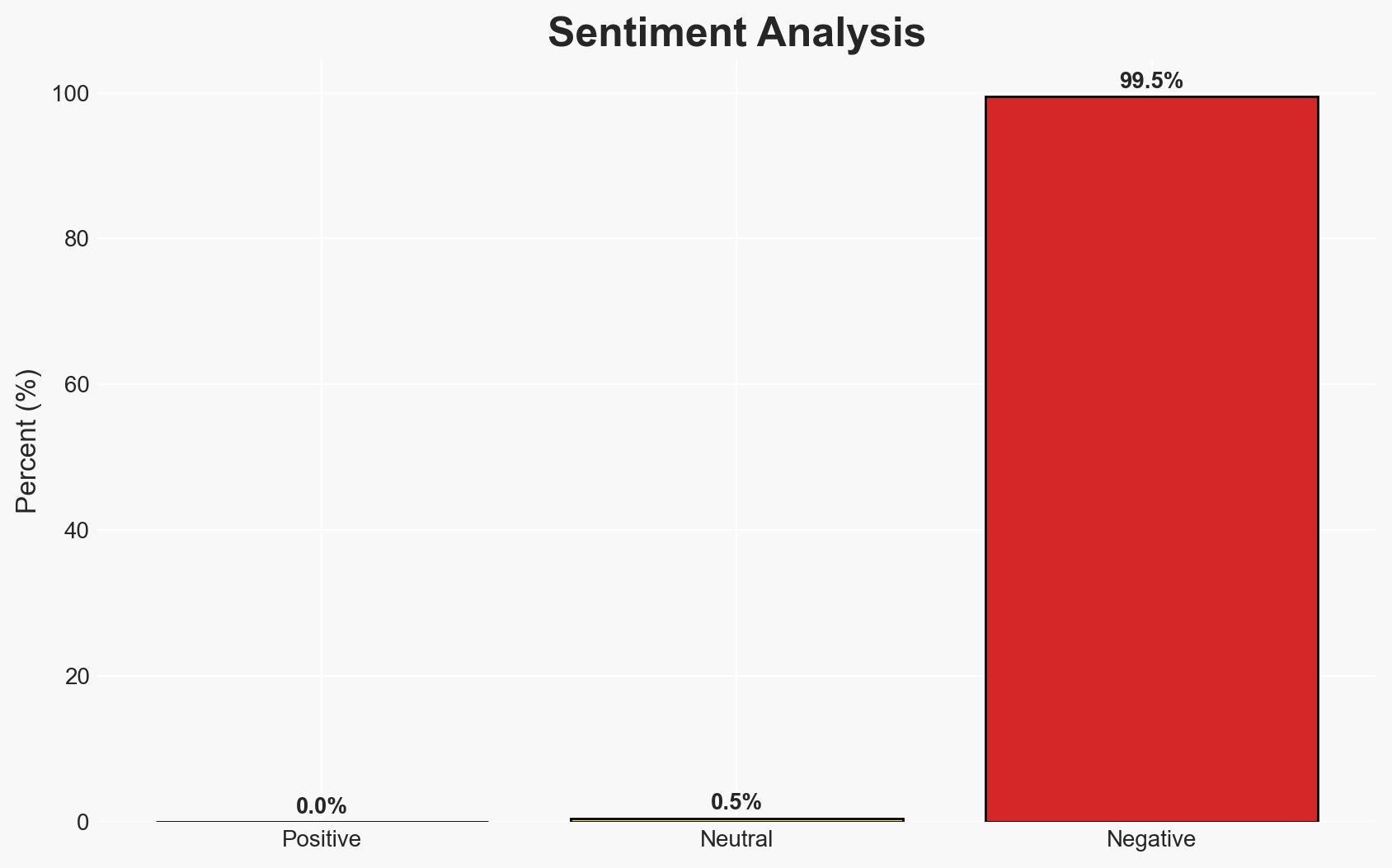
- Assumptions: The US and Israel have the capability and willingness to sustain military operations; Iran will continue to resist without significant concessions; global markets will react negatively to prolonged conflict.
- Information Gaps: Detailed intelligence on Iran’s military capabilities and internal political stability; US and Israeli strategic decision-making processes; potential third-party interventions.
- Bias & Deception Risks: Potential overestimation of US-Israeli military effectiveness; underestimation of Iranian resilience; media narratives influenced by political agendas.
4. Implications and Strategic Risks
The conflict’s evolution could significantly alter geopolitical alignments and economic conditions globally. Prolonged instability may exacerbate existing tensions and economic vulnerabilities.
- Political / Geopolitical: Potential for increased regional alliances against US-Israeli actions; shifts in global energy alliances.
- Security / Counter-Terrorism: Heightened risk of asymmetric warfare and terrorist activities targeting US and allied interests.
- Cyber / Information Space: Increased cyber operations targeting critical infrastructure and information warfare to influence public opinion.
- Economic / Social: Sustained high energy prices could lead to global economic slowdown, with severe impacts on energy-dependent economies.
5. Recommendations and Outlook
- Immediate Actions (0–30 days): Enhance intelligence collection on Iranian military and political dynamics; strengthen cybersecurity defenses for critical infrastructure; engage in diplomatic efforts to de-escalate tensions.
- Medium-Term Posture (1–12 months): Develop contingency plans for energy market disruptions; foster regional partnerships to mitigate conflict spillover; invest in alternative energy sources.
- Scenario Outlook: Best Case: Successful regime change leads to regional stability; Worst Case: Escalation leads to broader regional conflict; Most Likely: Prolonged conflict with intermittent escalations and negotiations.
6. Key Individuals and Entities
- Donald J. Trump – US President
- Current Iranian Regime – Not clearly identifiable from open sources in this snippet
- Israeli Government – Not clearly identifiable from open sources in this snippet
7. Thematic Tags
regional conflicts, Middle East conflict, energy security, geopolitical instability, military escalation, economic impact, US foreign policy, Iranian resilience
Structured Analytic Techniques Applied
- Causal Layered Analysis (CLA): Analyze events across surface happenings, systems, worldviews, and myths.
- Cross-Impact Simulation: Model ripple effects across neighboring states, conflicts, or economic dependencies.
- Scenario Generation: Explore divergent futures under varying assumptions to identify plausible paths.
- Bayesian Scenario Modeling: Forecast futures under uncertainty via probabilistic logic.
Explore more:
Regional Conflicts Briefs ·
Daily Summary ·
Support us