Asian Markets Plunge Amid Escalating Tensions Over Attacks on Qatar’s Energy Infrastructure
Published on: 2026-03-19
AI-powered OSINT brief from verified open sources. Automated NLP signal extraction with human verification. See our Methodology and Why WorldWideWatchers.
Intelligence Report: Asias stock markets dive after attacks on energy facilities in Qatar Iran
1. BLUF (Bottom Line Up Front)
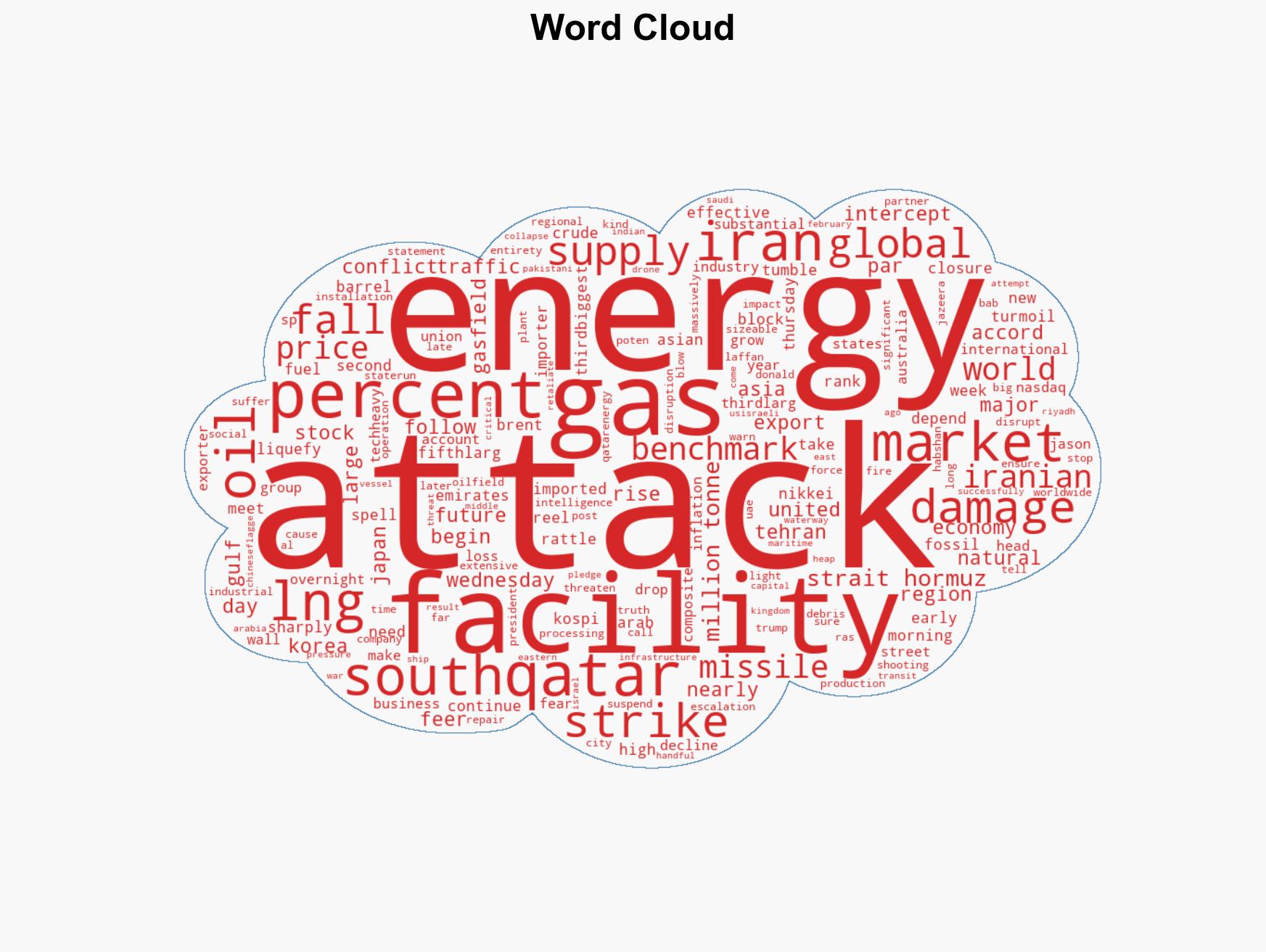
Recent attacks on energy facilities in Qatar, Iran, and the UAE have led to significant disruptions in global energy supplies, causing a sharp decline in Asian stock markets and a rise in oil prices. The most likely hypothesis is that these attacks are part of a broader regional conflict escalation, affecting global economic stability and energy security. Overall confidence in this assessment is moderate, given the current evidence and geopolitical context.
2. Competing Hypotheses
- Hypothesis A: The attacks are a deliberate escalation by Iran to exert pressure on Gulf states and disrupt global energy markets. This is supported by the reported missile attacks and the strategic targeting of key energy facilities. However, the extent of Iran’s involvement and strategic objectives remain uncertain.
- Hypothesis B: The attacks are isolated incidents carried out by non-state actors or proxies without direct state sponsorship, aiming to destabilize the region. This is contradicted by the scale and coordination of the attacks, which suggest state-level capabilities.
- Assessment: Hypothesis A is currently better supported due to the strategic nature of the targets and the geopolitical tensions in the region. Indicators such as further state-level communications or military movements could shift this judgment.
3. Key Assumptions and Red Flags
- Assumptions: The attacks were state-sponsored; Iran aims to disrupt global energy markets; regional tensions will continue to escalate.
- Information Gaps: Details on the attackers’ identities and motivations; extent of damage to facilities; regional diplomatic communications.
- Bias & Deception Risks: Potential bias in attributing attacks to state actors without conclusive evidence; risk of misinformation from involved parties.
4. Implications and Strategic Risks
The attacks could lead to prolonged disruptions in energy supplies, affecting global markets and increasing geopolitical tensions. This development may further destabilize the region and impact international relations.
- Political / Geopolitical: Potential for increased diplomatic tensions and military confrontations in the Gulf region.
- Security / Counter-Terrorism: Heightened threat environment for energy infrastructure and potential for retaliatory actions.
- Cyber / Information Space: Possible increase in cyber operations targeting energy sectors and misinformation campaigns.
- Economic / Social: Rising energy prices could exacerbate global inflation and economic instability, affecting social cohesion.
5. Recommendations and Outlook
- Immediate Actions (0–30 days): Enhance monitoring of regional military activities; strengthen security measures for energy infrastructure; engage in diplomatic efforts to de-escalate tensions.
- Medium-Term Posture (1–12 months): Develop resilience measures for energy supply chains; foster international partnerships for regional stability; invest in alternative energy sources.
- Scenario Outlook:
- Best Case: Diplomatic resolution leads to stabilization and resumption of energy exports.
- Worst Case: Escalation into broader regional conflict with severe global economic impacts.
- Most Likely: Continued low-level conflict with periodic disruptions and high energy prices.
6. Key Individuals and Entities
- QatarEnergy
- Iranian Government
- United Arab Emirates Government
- Saudi Arabian Government
- US President Donald Trump
7. Thematic Tags
regional conflicts, energy security, geopolitical tensions, Middle East conflict, global markets, infrastructure attacks, regional stability, economic impact
Structured Analytic Techniques Applied
- Causal Layered Analysis (CLA): Analyze events across surface happenings, systems, worldviews, and myths.
- Cross-Impact Simulation: Model ripple effects across neighboring states, conflicts, or economic dependencies.
- Scenario Generation: Explore divergent futures under varying assumptions to identify plausible paths.
Explore more:
Regional Conflicts Briefs ·
Daily Summary ·
Support us