Bangladesh Unrest Follows Death of Protest Leader Sharif Osman Hadi, Targeting Media Outlets Amid Violence
Published on: 2025-12-20
AI-powered OSINT brief from verified open sources. Automated NLP signal extraction with human verification. See our Methodology and Why WorldWideWatchers.
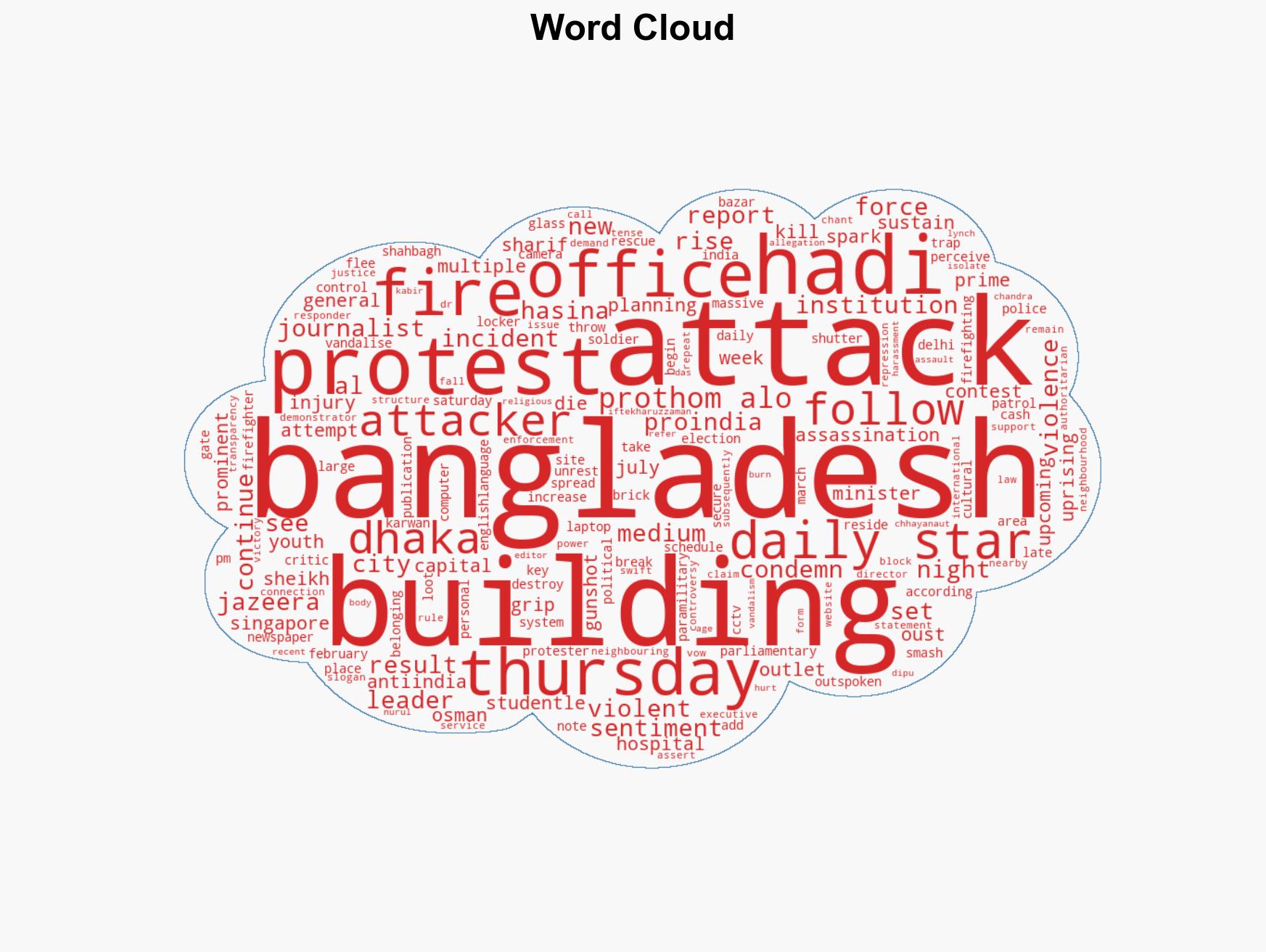
Intelligence Report: Bangladesh Violence Sharif Osman Hadi’s Death Triggers Attack On Top Media Houses – What We Know
1. BLUF (Bottom Line Up Front)
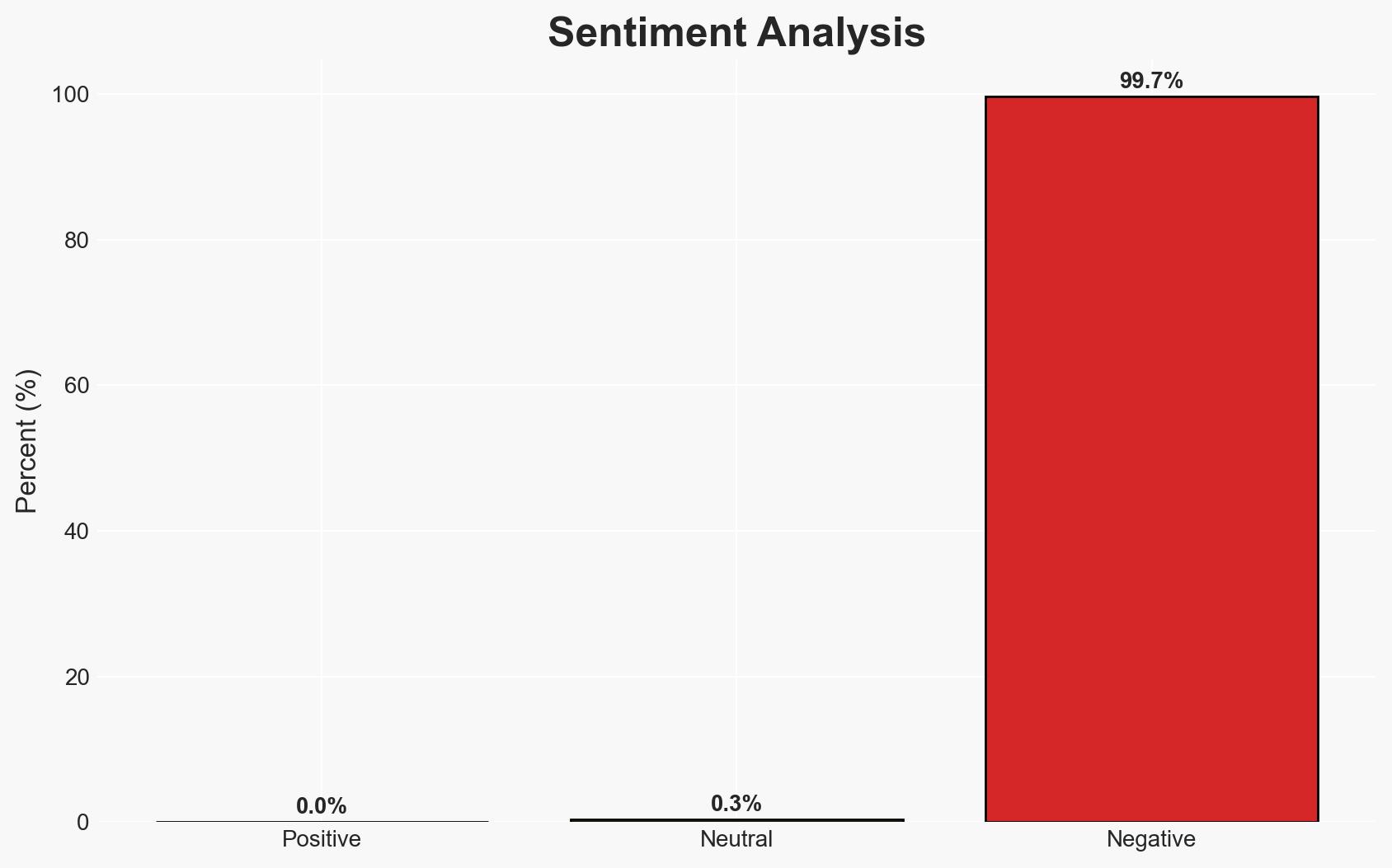
The assassination of Sharif Osman Hadi has catalyzed widespread violence in Bangladesh, targeting media outlets perceived as pro-India. The unrest reflects deep-seated political tensions and anti-India sentiment, with potential for further escalation. The most likely hypothesis is that these events are driven by domestic political factions seeking to capitalize on nationalist sentiments. Overall confidence in this assessment is moderate.
2. Competing Hypotheses
- Hypothesis A: The violence is primarily driven by domestic political factions exploiting nationalist sentiments to destabilize the current government and influence upcoming elections. This is supported by the targeting of media perceived as pro-India and Hadi’s political aspirations. However, the extent of foreign influence remains uncertain.
- Hypothesis B: The unrest is orchestrated by external actors, possibly with ties to India, seeking to destabilize Bangladesh and influence its political landscape. This is contradicted by the lack of direct evidence of foreign involvement and the domestic focus of the protests.
- Assessment: Hypothesis A is currently better supported due to the domestic nature of the protests and the political context surrounding Hadi’s assassination. Key indicators that could shift this judgment include evidence of foreign funding or coordination of the protests.
3. Key Assumptions and Red Flags
- Assumptions: The protests are primarily driven by internal political dynamics; anti-India sentiment is a significant motivator; media outlets are targeted due to perceived political alignments.
- Information Gaps: The extent of foreign involvement, if any; the identity and motivations of protest leaders; the role of security forces in either exacerbating or mitigating the violence.
- Bias & Deception Risks: Potential bias in media reports due to political affiliations; risk of misinformation or propaganda from domestic or foreign actors.
4. Implications and Strategic Risks
The ongoing violence in Bangladesh could lead to further political instability, affecting regional security dynamics and international relations. The situation may evolve into a broader conflict if not addressed promptly.
- Political / Geopolitical: Potential for increased tensions with India; risk of political fragmentation within Bangladesh.
- Security / Counter-Terrorism: Heightened risk of violence and potential for extremist groups to exploit the unrest.
- Cyber / Information Space: Increased likelihood of cyber-attacks on media and government institutions; potential spread of disinformation.
- Economic / Social: Disruption to economic activities and potential for social unrest; impact on foreign investment and tourism.
5. Recommendations and Outlook
- Immediate Actions (0–30 days): Enhance intelligence monitoring of protest activities; engage with local leaders to de-escalate tensions; increase security around key infrastructure.
- Medium-Term Posture (1–12 months): Strengthen partnerships with regional allies to address cross-border issues; develop resilience measures for media and critical infrastructure.
- Scenario Outlook:
- Best: De-escalation through dialogue and political reforms, leading to stable elections.
- Worst: Escalation into widespread violence and potential civil conflict.
- Most-Likely: Continued unrest with intermittent violence, requiring sustained security measures.
6. Key Individuals and Entities
- Sharif Osman Hadi – Deceased protest leader
- Sheikh Hasina – Former Prime Minister
- Prothom Alo – Targeted media outlet
- The Daily Star – Targeted media outlet
- Transparency International Bangladesh – Commenting entity
- Dr. Iftekharuzzaman – Executive Director, Transparency International Bangladesh
7. Thematic Tags
national security threats, political instability, media attacks, anti-India sentiment, Bangladesh protests, election violence, regional security, information warfare
Structured Analytic Techniques Applied
- Cognitive Bias Stress Test: Expose and correct potential biases in assessments through red-teaming and structured challenge.
- Bayesian Scenario Modeling: Use probabilistic forecasting for conflict trajectories or escalation likelihood.
- Network Influence Mapping: Map relationships between state and non-state actors for impact estimation.
Explore more:
National Security Threats Briefs ·
Daily Summary ·
Support us