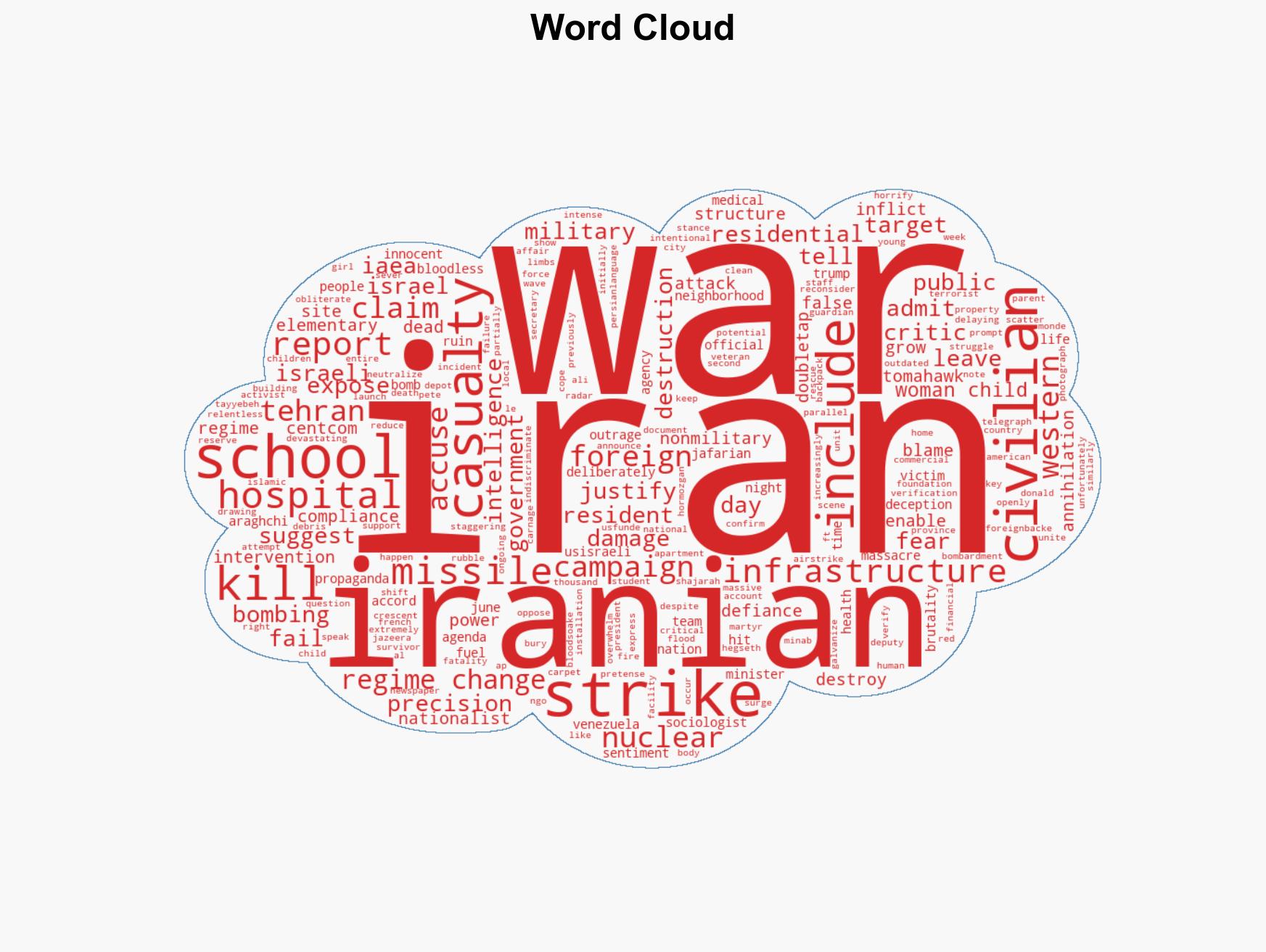
Civilian casualties soar in Iran as US-Israeli airstrikes devastate infrastructure and provoke widespread bac…
Published on: 2026-03-16
AI-powered OSINT brief from verified open sources. Automated NLP signal extraction with human verification. See our Methodology and Why WorldWideWatchers.
Intelligence Report: US-Israeli bombing campaign sparks outrage as civilian toll mounts in Iran
1. BLUF (Bottom Line Up Front)
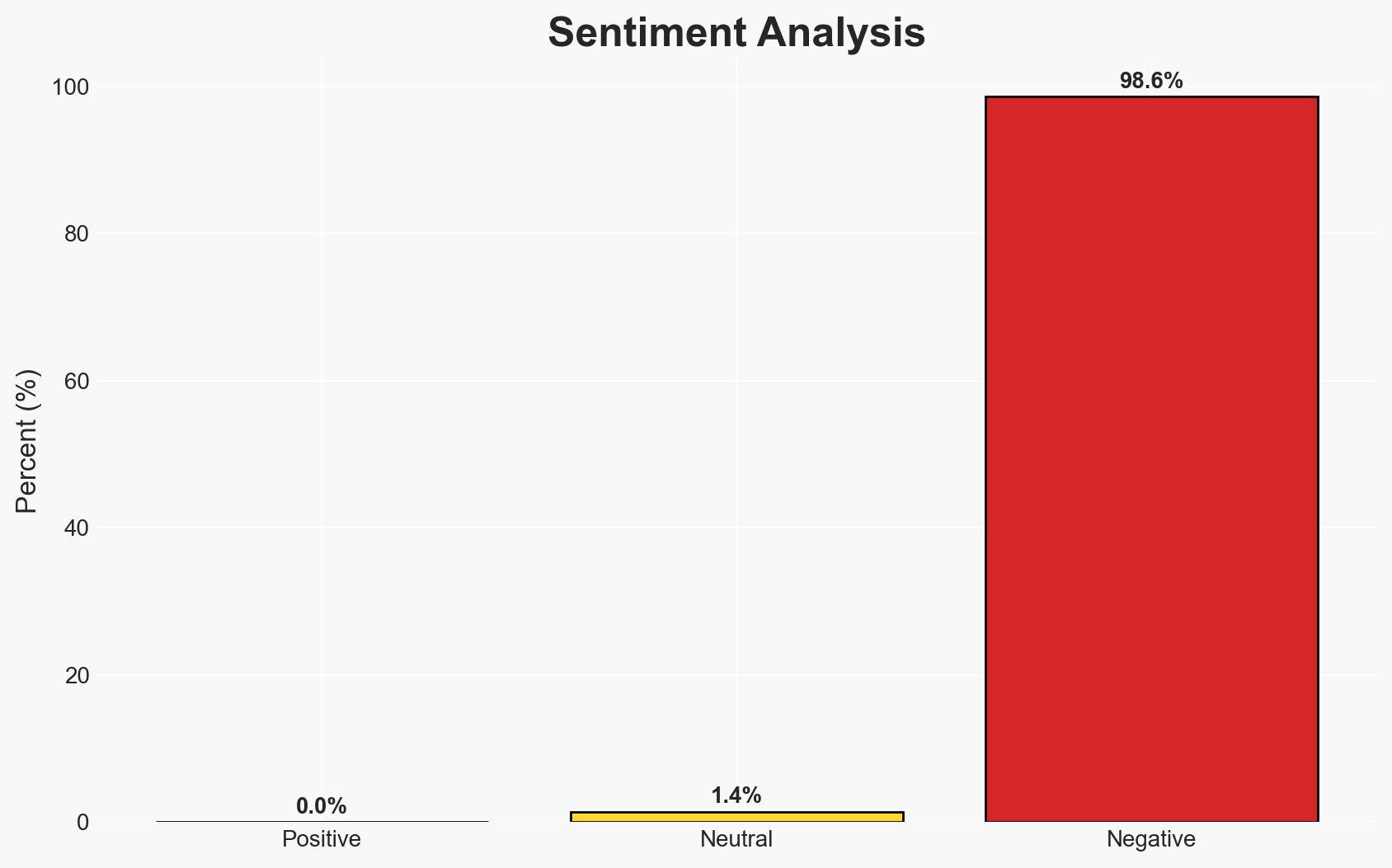
The US-Israeli bombing campaign in Iran has resulted in significant civilian casualties and infrastructure damage, intensifying anti-Western sentiment and unifying Iranian public opinion against foreign intervention. The most likely hypothesis is that the campaign aims to degrade Iran’s military capabilities but has inadvertently strengthened nationalist resolve. Confidence in this assessment is moderate due to limited verification of on-ground reports and potential biases in available sources.
2. Competing Hypotheses
- Hypothesis A: The bombing campaign is primarily intended to dismantle Iran’s military infrastructure and deter its missile capabilities. Supporting evidence includes the targeting of infrastructure and military sites, though the failure to neutralize missile sites contradicts this aim. Key uncertainties involve the accuracy of intelligence guiding these strikes.
- Hypothesis B: The campaign is designed to provoke regime change by destabilizing Iran through civilian and economic disruption. This is supported by the targeting of non-military sites and the resultant civilian casualties, which have shifted public sentiment. Contradicting evidence includes the lack of a clear political strategy to support regime change.
- Assessment: Hypothesis B is currently better supported due to the pattern of strikes on civilian infrastructure and the resultant political backlash, which aligns with a strategy of destabilization. Indicators such as increased nationalist rhetoric and international condemnation could further support this hypothesis.
3. Key Assumptions and Red Flags
- Assumptions: The US and Israel have accurate intelligence on Iranian military capabilities; Iranian reports of casualties are accurate; international reactions will influence the campaign’s continuation.
- Information Gaps: Detailed verification of strike targets and their military significance; independent casualty assessments; internal decision-making processes within the US and Israeli governments.
- Bias & Deception Risks: Potential bias in Iranian casualty reports; Western media reliance on official military statements; risk of manipulated narratives to justify military actions.
4. Implications and Strategic Risks
This development could exacerbate regional tensions, increase anti-Western sentiment, and potentially lead to retaliatory actions by Iran. The campaign’s continuation risks further destabilizing the region and complicating diplomatic efforts.
- Political / Geopolitical: Escalation could draw in regional actors, complicating US and Israeli diplomatic relations.
- Security / Counter-Terrorism: Increased risk of retaliatory attacks against US and Israeli interests globally.
- Cyber / Information Space: Potential for increased cyber operations by Iran against Western targets as a form of asymmetric retaliation.
- Economic / Social: Disruption of Iranian economic activities and increased humanitarian needs could destabilize the region further.
5. Recommendations and Outlook
- Immediate Actions (0–30 days): Enhance intelligence verification processes; engage in diplomatic channels to de-escalate tensions; monitor Iranian military and cyber activities closely.
- Medium-Term Posture (1–12 months): Strengthen regional partnerships to mitigate escalation risks; develop resilience measures against potential retaliatory actions.
- Scenario Outlook:
- Best: Diplomatic resolution leads to cessation of hostilities.
- Worst: Full-scale regional conflict involving multiple state and non-state actors.
- Most-Likely: Continued low-intensity conflict with periodic escalations and international diplomatic interventions.
6. Key Individuals and Entities
- Not clearly identifiable from open sources in this snippet.
7. Thematic Tags
national security threats, military strategy, civilian casualties, regional stability, international relations, intelligence operations, public sentiment, regime change
Structured Analytic Techniques Applied
- Cognitive Bias Stress Test: Expose and correct potential biases in assessments through red-teaming and structured challenge.
- Bayesian Scenario Modeling: Use probabilistic forecasting for conflict trajectories or escalation likelihood.
- Network Influence Mapping: Map relationships between state and non-state actors for impact estimation.
Explore more:
National Security Threats Briefs ·
Daily Summary ·
Support us