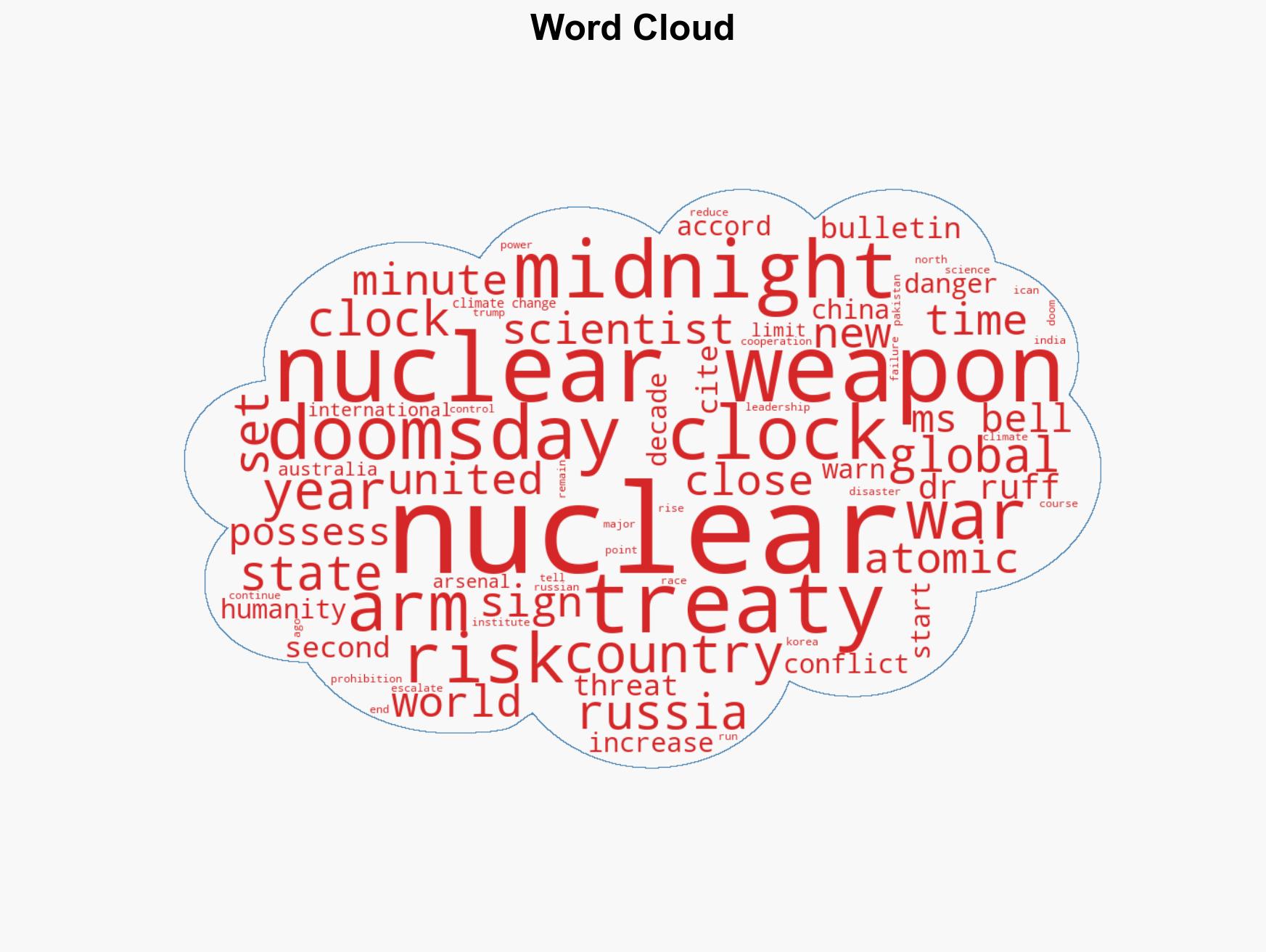
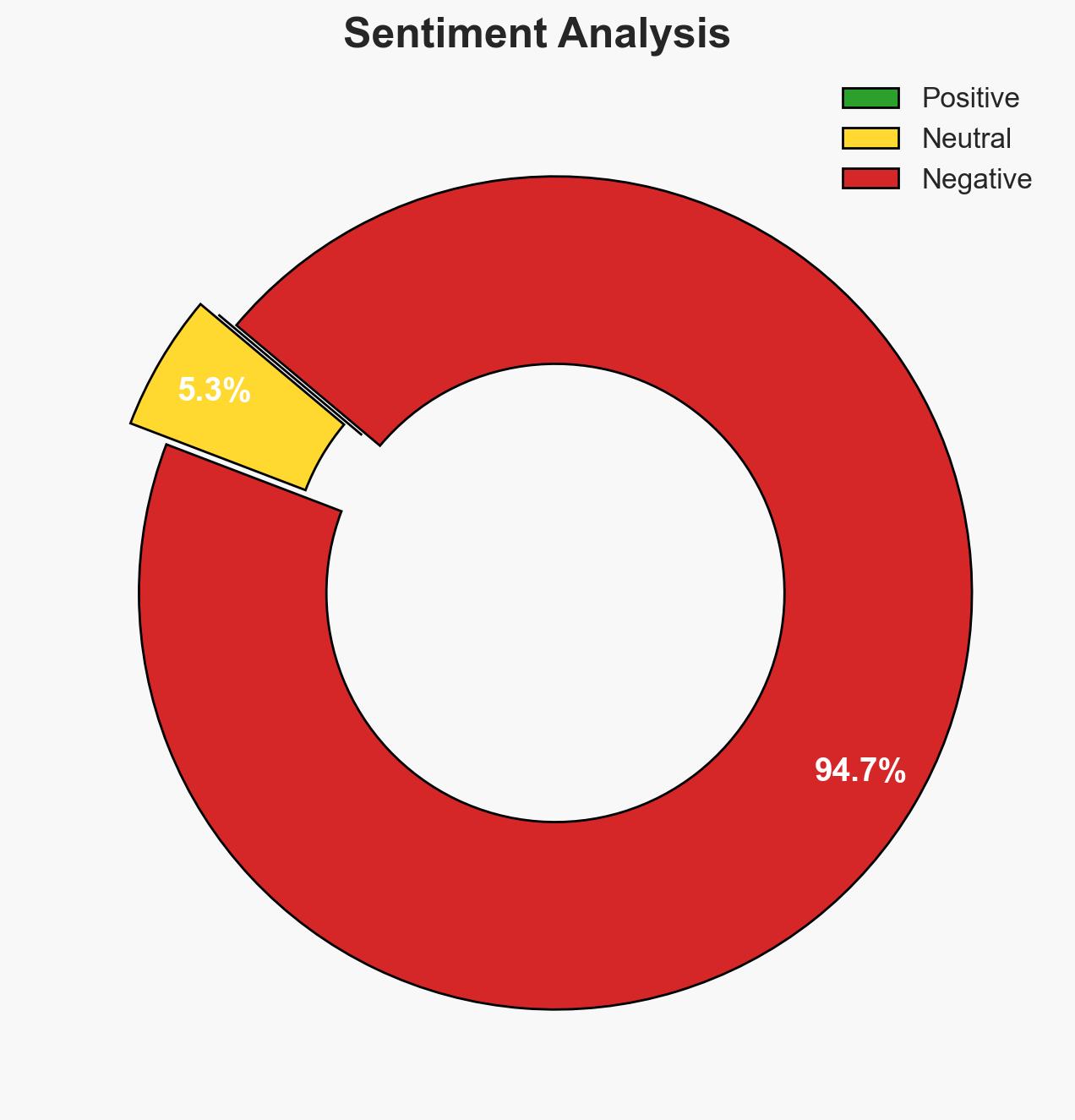
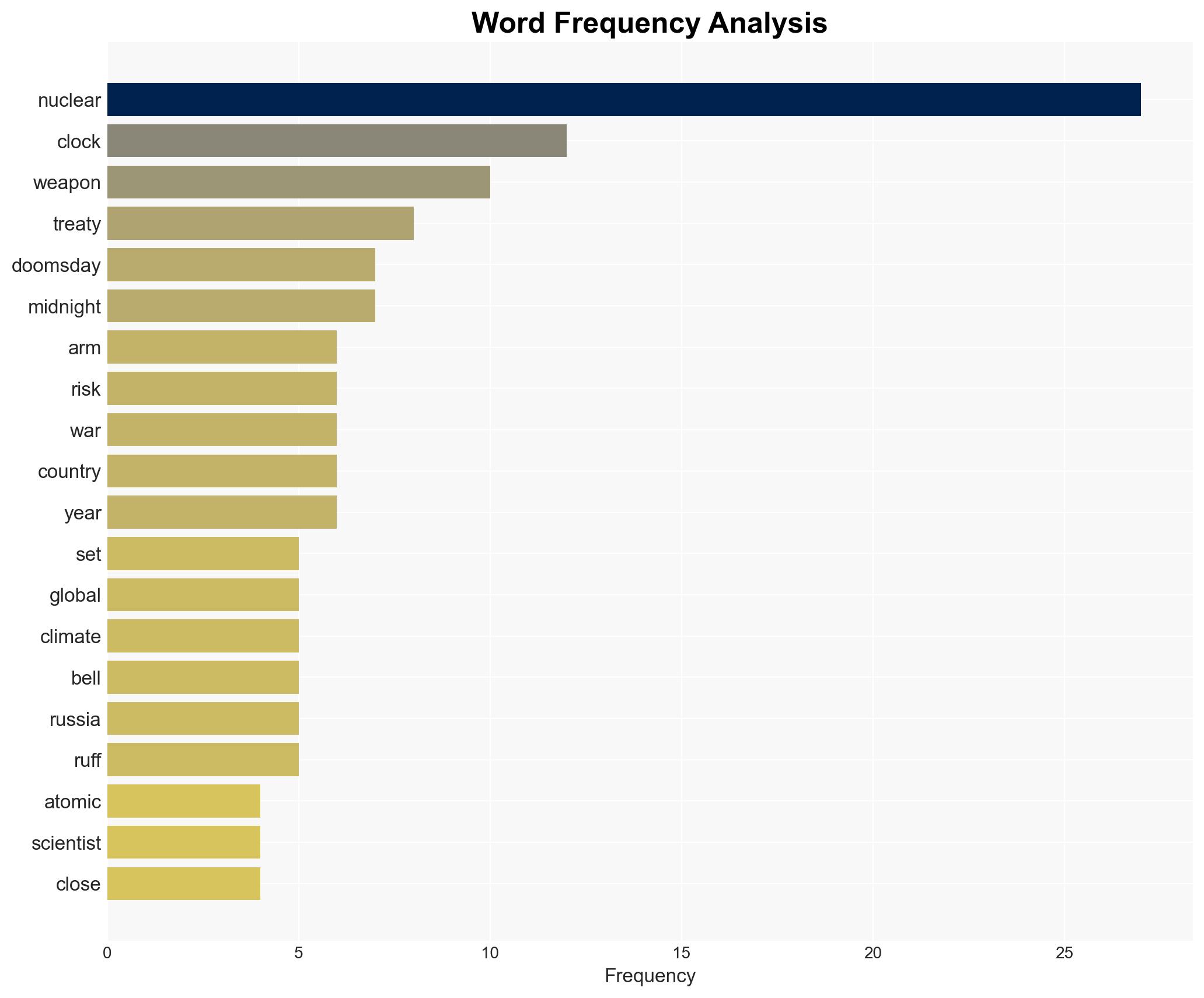
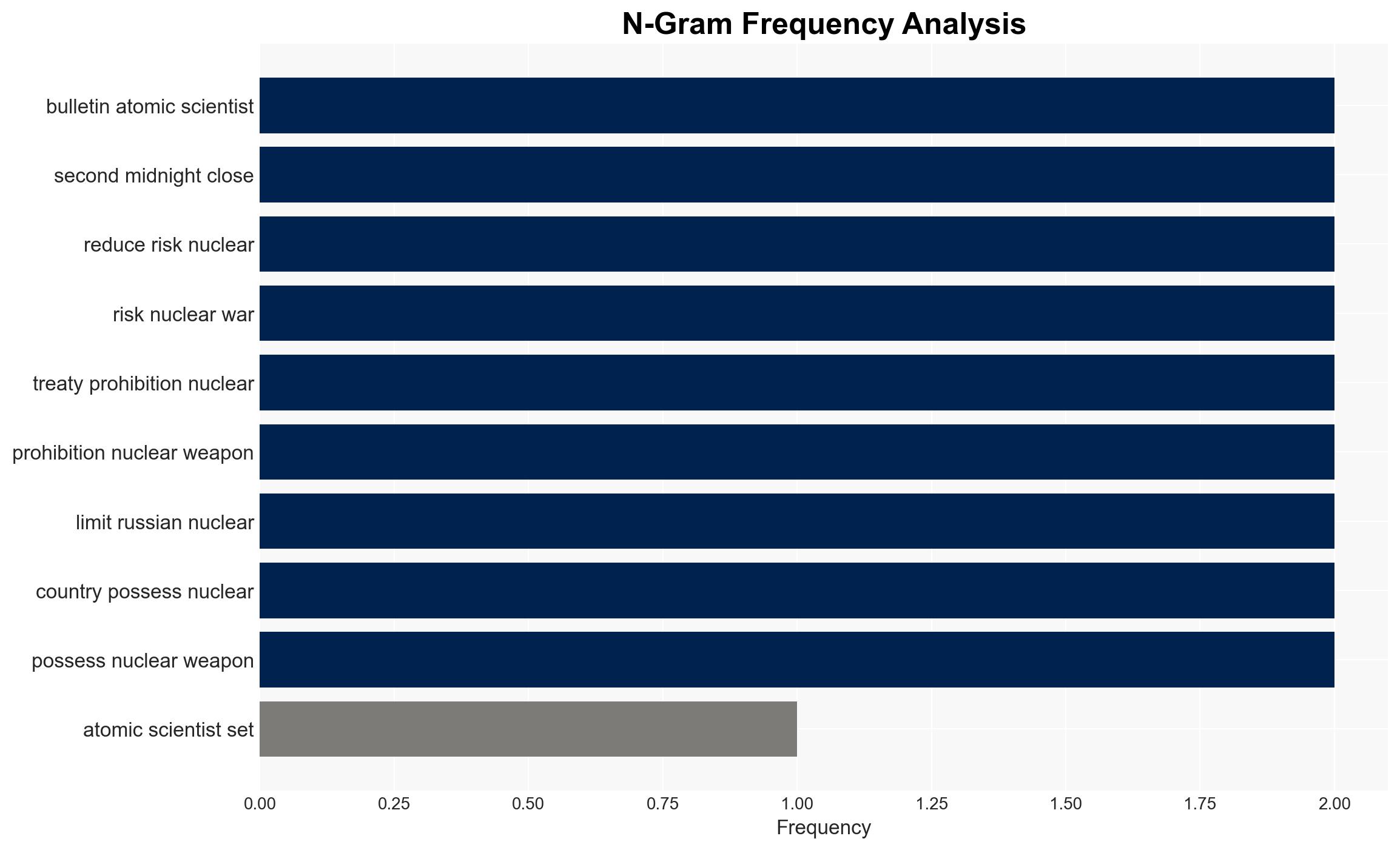
Doomsday Clock set at 85 seconds to midnight, marking unprecedented threat level to humanity.
Published on: 2026-01-28
AI-powered OSINT brief from verified open sources. Automated NLP signal extraction with human verification. See our Methodology and Why WorldWideWatchers.
Intelligence Report: Doomsday Clock moves closer than ever to point of human annihilation
1. BLUF (Bottom Line Up Front)
The Doomsday Clock has been set to 85 seconds to midnight, indicating heightened global risks primarily from nuclear tensions, geopolitical conflicts, AI advancements, and climate change. This development underscores the urgent need for international cooperation to mitigate these threats. The analysis is presented with moderate confidence due to existing information gaps and potential biases in source reporting.
2. Competing Hypotheses
- Hypothesis A: The movement of the Doomsday Clock reflects an accurate assessment of increased global risks, driven by deteriorating nuclear arms control and escalating geopolitical tensions. Supporting evidence includes recent conflicts and aggressive postures by major powers. However, uncertainties remain regarding the actual likelihood of these risks leading to catastrophic outcomes.
- Hypothesis B: The adjustment of the Doomsday Clock is primarily symbolic and may overstate the immediacy of global threats due to inherent biases in the assessment process. The lack of concrete evidence linking current tensions to an imminent existential threat supports this view, though it contradicts the expert consensus on rising risks.
- Assessment: Hypothesis A is currently better supported due to the alignment with expert analysis and observable geopolitical trends. Key indicators that could shift this judgment include de-escalation in major conflicts or renewed international arms control agreements.
3. Key Assumptions and Red Flags
- Assumptions: The Doomsday Clock accurately reflects expert consensus on global risk levels; current geopolitical tensions are indicative of broader systemic instability; international cooperation is necessary to mitigate existential threats.
- Information Gaps: Detailed intelligence on the internal decision-making processes of key state actors; comprehensive data on AI advancements and their potential impacts on global security.
- Bias & Deception Risks: Potential cognitive biases in expert assessments; source bias from the Bulletin of the Atomic Scientists; manipulation of public perception through symbolic actions like the Doomsday Clock.
4. Implications and Strategic Risks
The current setting of the Doomsday Clock could exacerbate global tensions by highlighting existential threats without providing clear pathways for resolution. This symbolic action may influence public and policy-maker perceptions, potentially leading to increased pressure for diplomatic or military responses.
- Political / Geopolitical: Increased risk of geopolitical escalation, particularly in regions with existing conflicts or nuclear capabilities.
- Security / Counter-Terrorism: Heightened alert levels and potential for miscalculation in conflict zones; increased focus on nuclear security measures.
- Cyber / Information Space: Potential for increased cyber operations targeting critical infrastructure; influence operations leveraging the Doomsday Clock narrative.
- Economic / Social: Potential destabilization of markets due to perceived risks; societal anxiety impacting public trust in governance.
5. Recommendations and Outlook
- Immediate Actions (0–30 days): Enhance monitoring of geopolitical flashpoints; engage in diplomatic dialogues to de-escalate tensions; increase public communication on risk mitigation strategies.
- Medium-Term Posture (1–12 months): Strengthen international arms control frameworks; invest in resilience against AI and climate-related threats; foster multilateral cooperation on global security issues.
- Scenario Outlook:
- Best: Renewed international cooperation leads to de-escalation and improved global security.
- Worst: Escalation of conflicts results in significant geopolitical instability and potential nuclear incidents.
- Most-Likely: Continued high tensions with sporadic diplomatic engagements and incremental risk mitigation efforts.
6. Key Individuals and Entities
- Bulletin of the Atomic Scientists
- Alexandra Bell, Chief Executive of the Bulletin of Atomic Scientists
- Not clearly identifiable from open sources in this snippet for other key individuals.
7. Thematic Tags
regional conflicts, nuclear arms control, geopolitical tensions, artificial intelligence, climate change, international cooperation, global security, existential threats
Structured Analytic Techniques Applied
- Causal Layered Analysis (CLA): Analyze events across surface happenings, systems, worldviews, and myths.
- Cross-Impact Simulation: Model ripple effects across neighboring states, conflicts, or economic dependencies.
- Scenario Generation: Explore divergent futures under varying assumptions to identify plausible paths.
- Adversarial Threat Simulation: Model hostile behavior to identify vulnerabilities.
Explore more:
Regional Conflicts Briefs ·
Daily Summary ·
Support us