Escalating Middle East conflict raises concerns over Bitcoin’s stability and potential decline
Published on: 2026-02-28
AI-powered OSINT brief from verified open sources. Automated NLP signal extraction with human verification. See our Methodology and Why WorldWideWatchers.
Intelligence Report: Bitcoin could see further downside risks as Iran attacks US bases across Middle East
1. BLUF (Bottom Line Up Front)
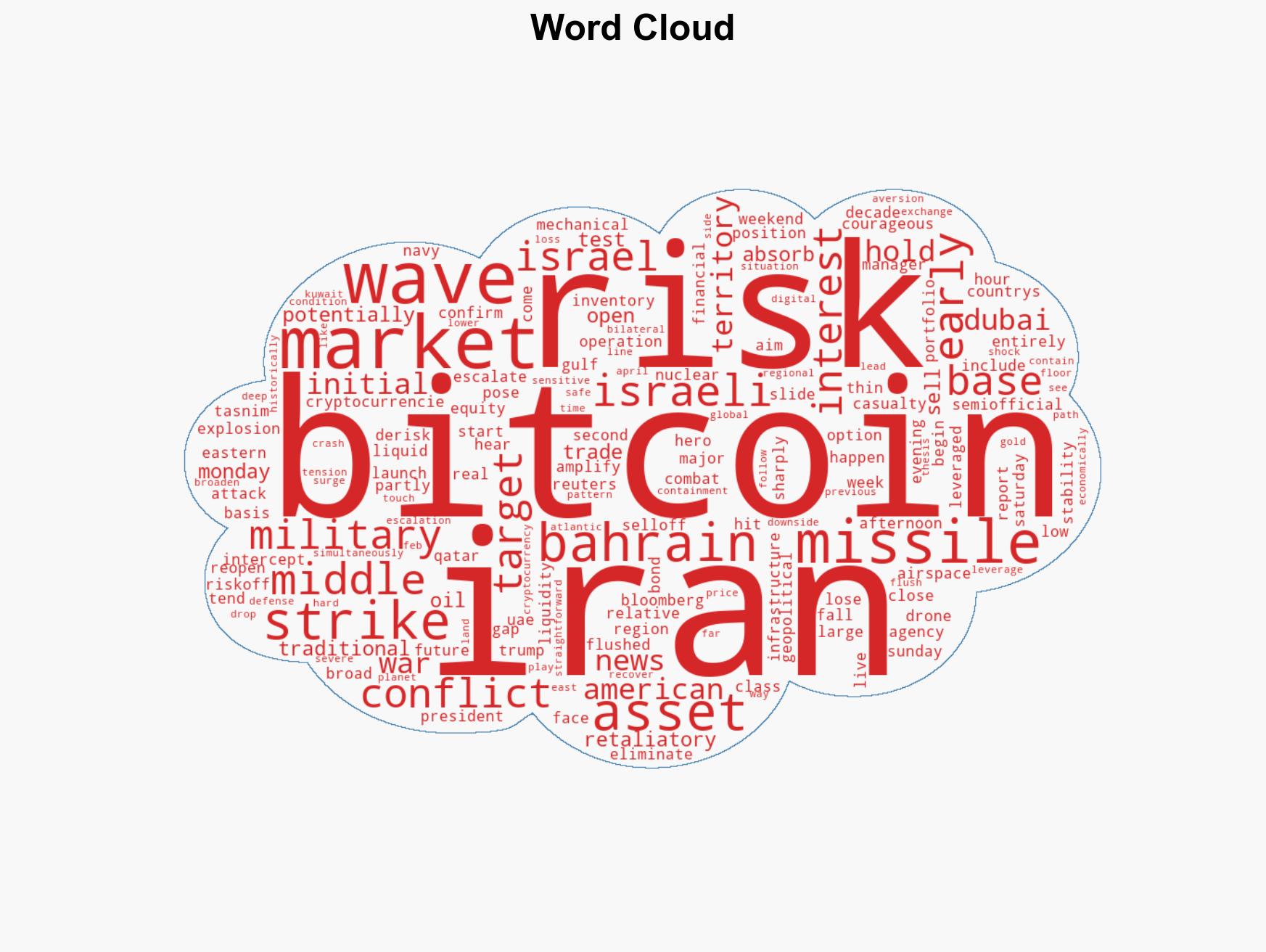
The escalation of military conflict in the Middle East, initiated by an Israeli strike on Iran and followed by Iranian retaliatory attacks on U.S. bases, poses significant risks to financial markets, including cryptocurrencies. Bitcoin, in particular, faces potential downside risks due to its behavior as a risk asset rather than a safe haven. The most likely hypothesis is that Bitcoin will experience further volatility as traditional markets react to the conflict. Overall confidence in this assessment is moderate.
2. Competing Hypotheses
- Hypothesis A: Bitcoin will experience significant downside as geopolitical tensions escalate, driven by its risk asset characteristics and potential global market sell-offs. Supporting evidence includes historical patterns of Bitcoin’s response to geopolitical shocks and current market conditions. Key uncertainties include the extent of conflict escalation and traditional market reactions.
- Hypothesis B: Bitcoin will maintain relative stability or recover quickly as traditional markets absorb the news, similar to past Middle East tensions. Supporting evidence includes past recovery patterns and Bitcoin’s unique trading characteristics over weekends. Contradicting evidence includes the unprecedented scale of the current conflict.
- Assessment: Hypothesis A is currently better supported due to the broader scope of the conflict and its impact on economically sensitive regions. Key indicators that could shift this judgment include de-escalation of military actions or stabilization of traditional markets.
3. Key Assumptions and Red Flags
- Assumptions: The conflict will continue to escalate; Bitcoin will behave as a risk asset; traditional markets will react negatively to the conflict; geopolitical tensions will impact global economic stability.
- Information Gaps: Detailed intelligence on the extent of damage to U.S. bases and regional infrastructure; precise market reactions in traditional sectors once they reopen.
- Bias & Deception Risks: Potential bias from media sources with vested interests; Iranian media may exaggerate military successes; U.S. statements may underplay risks to maintain public confidence.
4. Implications and Strategic Risks
The ongoing conflict in the Middle East could lead to prolonged instability, affecting global markets and geopolitical alignments. The situation may evolve into a broader regional war, impacting energy supplies and economic stability.
- Political / Geopolitical: Potential for further escalation involving additional regional actors; increased diplomatic tensions between global powers.
- Security / Counter-Terrorism: Heightened threat environment for U.S. and allied interests in the region; potential for asymmetric attacks.
- Cyber / Information Space: Increased risk of cyber operations targeting critical infrastructure; potential for misinformation campaigns.
- Economic / Social: Volatility in global oil prices; potential economic downturns in affected regions; social unrest due to economic pressures.
5. Recommendations and Outlook
- Immediate Actions (0–30 days): Enhance monitoring of geopolitical developments; prepare for potential cyber threats; engage in diplomatic efforts to de-escalate tensions.
- Medium-Term Posture (1–12 months): Strengthen alliances and partnerships in the region; invest in resilience measures for critical infrastructure; develop contingency plans for economic disruptions.
- Scenario Outlook:
- Best: Rapid de-escalation and stabilization of markets; triggers include successful diplomatic interventions.
- Worst: Full-scale regional conflict with global economic repercussions; triggers include further military engagements and oil supply disruptions.
- Most-Likely: Continued volatility with periodic escalations; triggers include ongoing military actions and market reactions.
6. Key Individuals and Entities
- Not clearly identifiable from open sources in this snippet.
7. Thematic Tags
regional conflicts, geopolitical risk, cryptocurrency volatility, Middle East conflict, financial markets, cyber threats, economic stability, military escalation
Structured Analytic Techniques Applied
- Causal Layered Analysis (CLA): Analyze events across surface happenings, systems, worldviews, and myths.
- Cross-Impact Simulation: Model ripple effects across neighboring states, conflicts, or economic dependencies.
- Scenario Generation: Explore divergent futures under varying assumptions to identify plausible paths.
Explore more:
Regional Conflicts Briefs ·
Daily Summary ·
Support us