Evolving Rationale for Military Action Against Iran Raises Concerns Over True Intentions
Published on: 2026-02-05
AI-powered OSINT brief from verified open sources. Automated NLP signal extraction with human verification. See our Methodology and Why WorldWideWatchers.
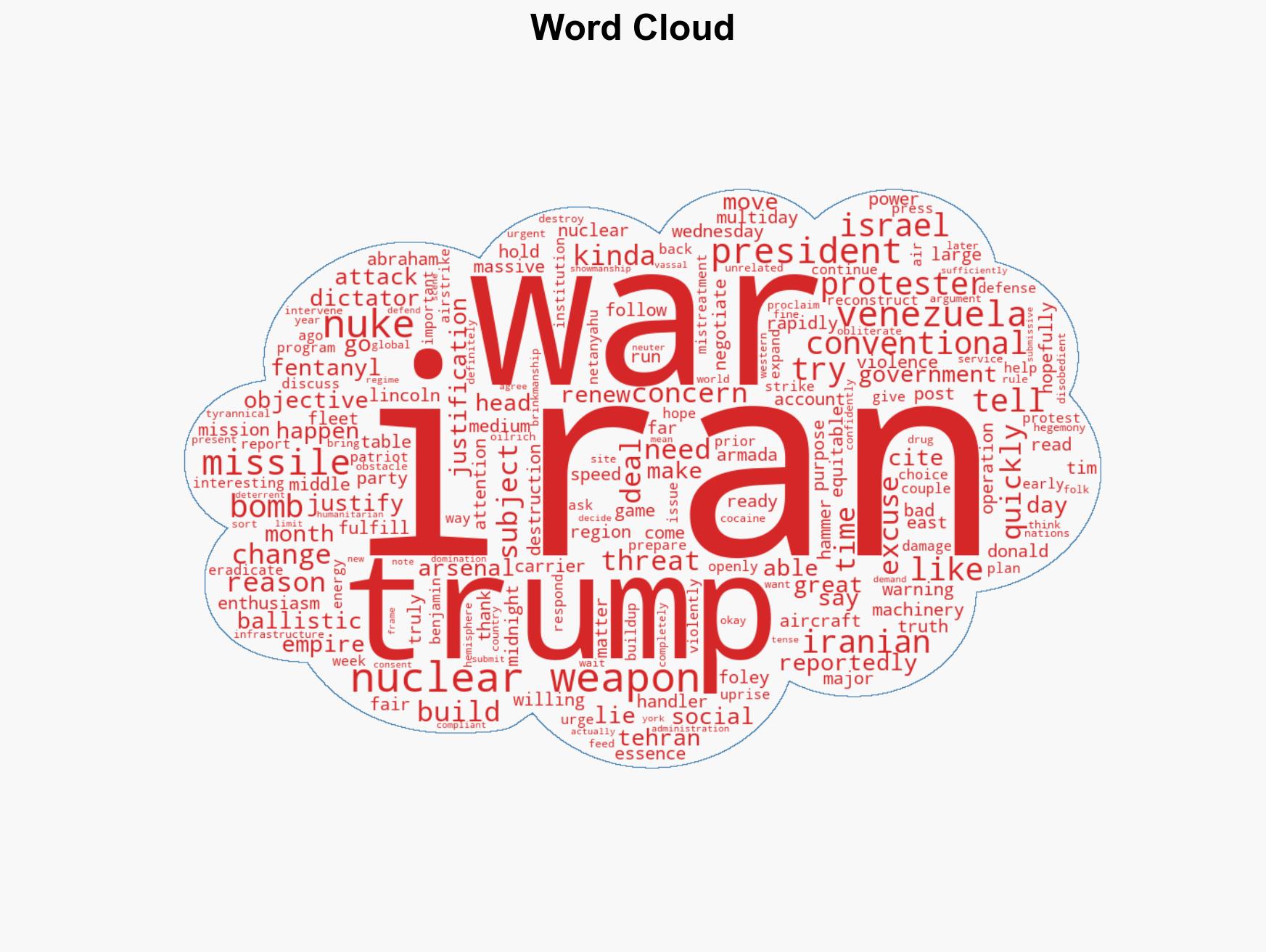
Intelligence Report: The Justifications For War With Iran Keep Changing
1. BLUF (Bottom Line Up Front)
The shifting justifications for potential military action against Iran suggest that the primary objective may be to initiate conflict rather than respond to specific threats. The most likely hypothesis is that these changing narratives are strategic posturing to pressure Iran into negotiations. This situation affects regional stability and international relations, with moderate confidence in this assessment.
2. Competing Hypotheses
- Hypothesis A: The changing justifications are genuine responses to evolving threats from Iran, such as nuclear development, missile programs, and internal unrest. Evidence includes public statements and military movements. Key uncertainties include the actual status of Iran’s capabilities and intentions.
- Hypothesis B: The justifications are pretexts for a predetermined objective of engaging in conflict with Iran. This is supported by the rapid shifts in narrative and the consistent military buildup. Contradicting evidence includes the lack of a clear, sustained narrative focus.
- Assessment: Hypothesis B is currently better supported due to the pattern of narrative shifts aligning with strategic military posturing. Key indicators that could shift this judgment include credible intelligence on imminent Iranian threats or a consistent, evidence-based narrative from policymakers.
3. Key Assumptions and Red Flags
- Assumptions: The US military buildup is intended to pressure Iran; Iran’s nuclear and missile capabilities pose a significant threat; US policy is influenced by regional allies.
- Information Gaps: Reliable intelligence on Iran’s current nuclear and missile capabilities; internal decision-making processes within the US administration.
- Bias & Deception Risks: Potential confirmation bias in interpreting Iranian actions; source bias from political statements; manipulation through strategic misinformation.
4. Implications and Strategic Risks
The evolving situation could lead to increased regional instability and impact global diplomatic relations. The potential for miscalculation or escalation is significant.
- Political / Geopolitical: Escalation could strain US relations with allies and adversaries, impacting global diplomatic efforts.
- Security / Counter-Terrorism: Increased military activity may heighten regional tensions and provoke asymmetric responses from Iran or proxy groups.
- Cyber / Information Space: Potential for increased cyber operations by state and non-state actors, targeting critical infrastructure and information systems.
- Economic / Social: Disruption of global oil markets and economic instability in the region could result from conflict escalation.
5. Recommendations and Outlook
- Immediate Actions (0–30 days): Enhance intelligence collection on Iranian capabilities; engage in diplomatic efforts to de-escalate tensions; monitor military movements closely.
- Medium-Term Posture (1–12 months): Strengthen alliances and partnerships in the region; develop resilience measures for potential economic disruptions; enhance cyber defenses.
- Scenario Outlook:
- Best Case: Diplomatic resolution leading to de-escalation and renewed negotiations.
- Worst Case: Full-scale military conflict with significant regional and global repercussions.
- Most Likely: Continued strategic posturing with intermittent diplomatic engagements.
6. Key Individuals and Entities
- Donald J. Trump (Former US President)
- Benjamin Netanyahu (Israeli Prime Minister)
- Not clearly identifiable from open sources in this snippet.
7. Thematic Tags
regional conflicts, military strategy, Iran-US relations, nuclear proliferation, geopolitical tensions, Middle East security, diplomatic negotiations
Structured Analytic Techniques Applied
- Causal Layered Analysis (CLA): Analyze events across surface happenings, systems, worldviews, and myths.
- Cross-Impact Simulation: Model ripple effects across neighboring states, conflicts, or economic dependencies.
- Scenario Generation: Explore divergent futures under varying assumptions to identify plausible paths.
Explore more:
Regional Conflicts Briefs ·
Daily Summary ·
Support us