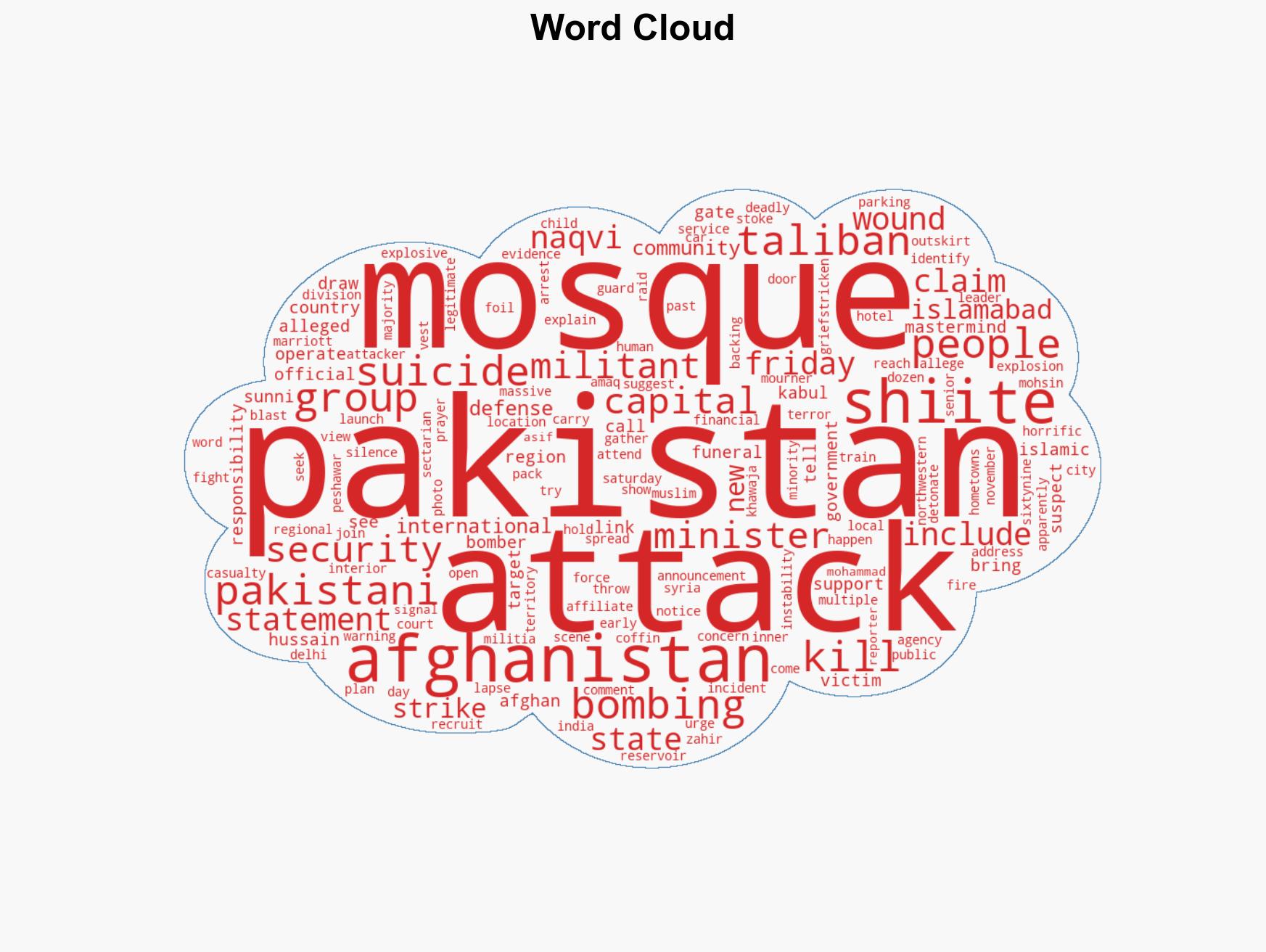
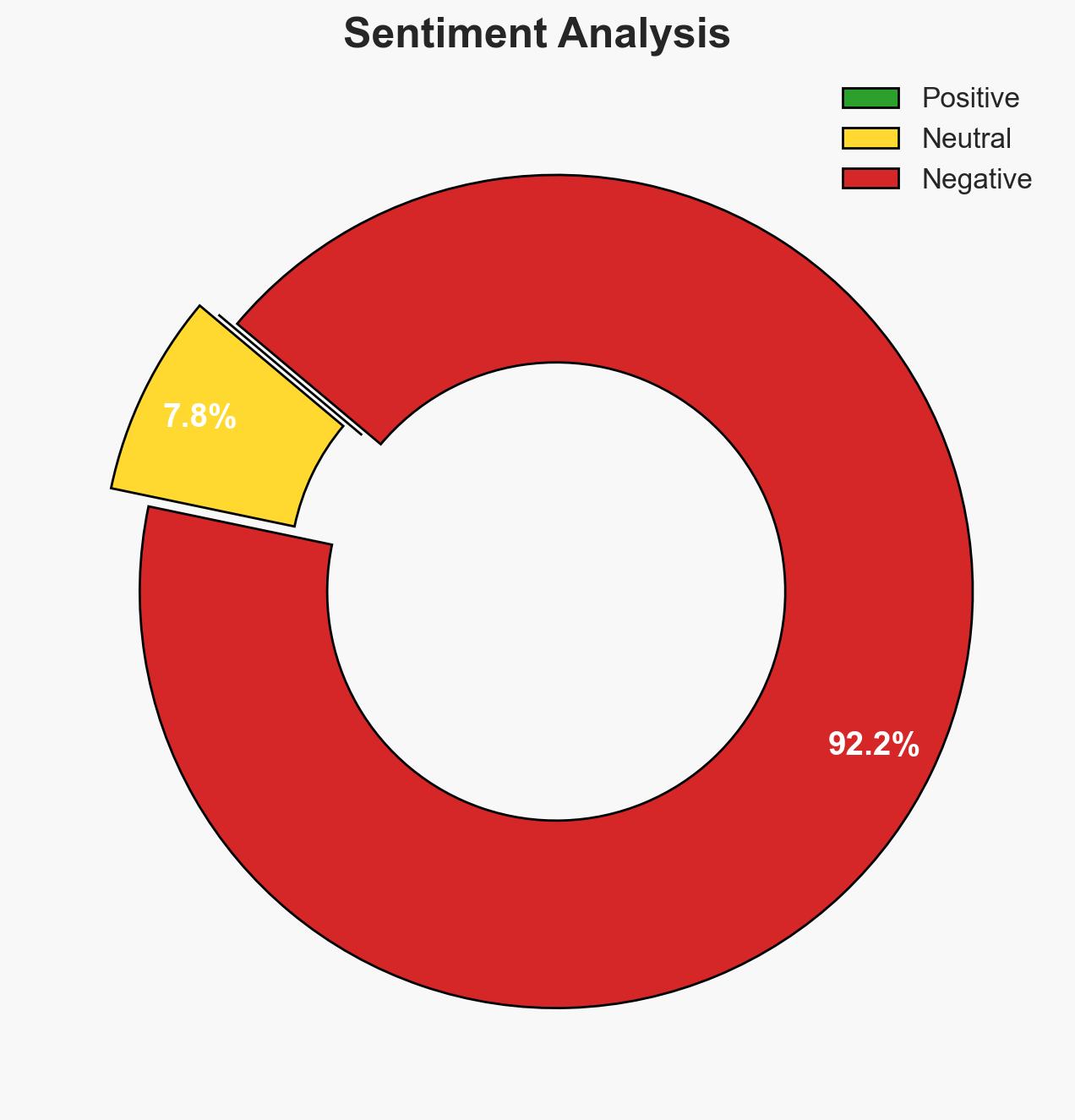
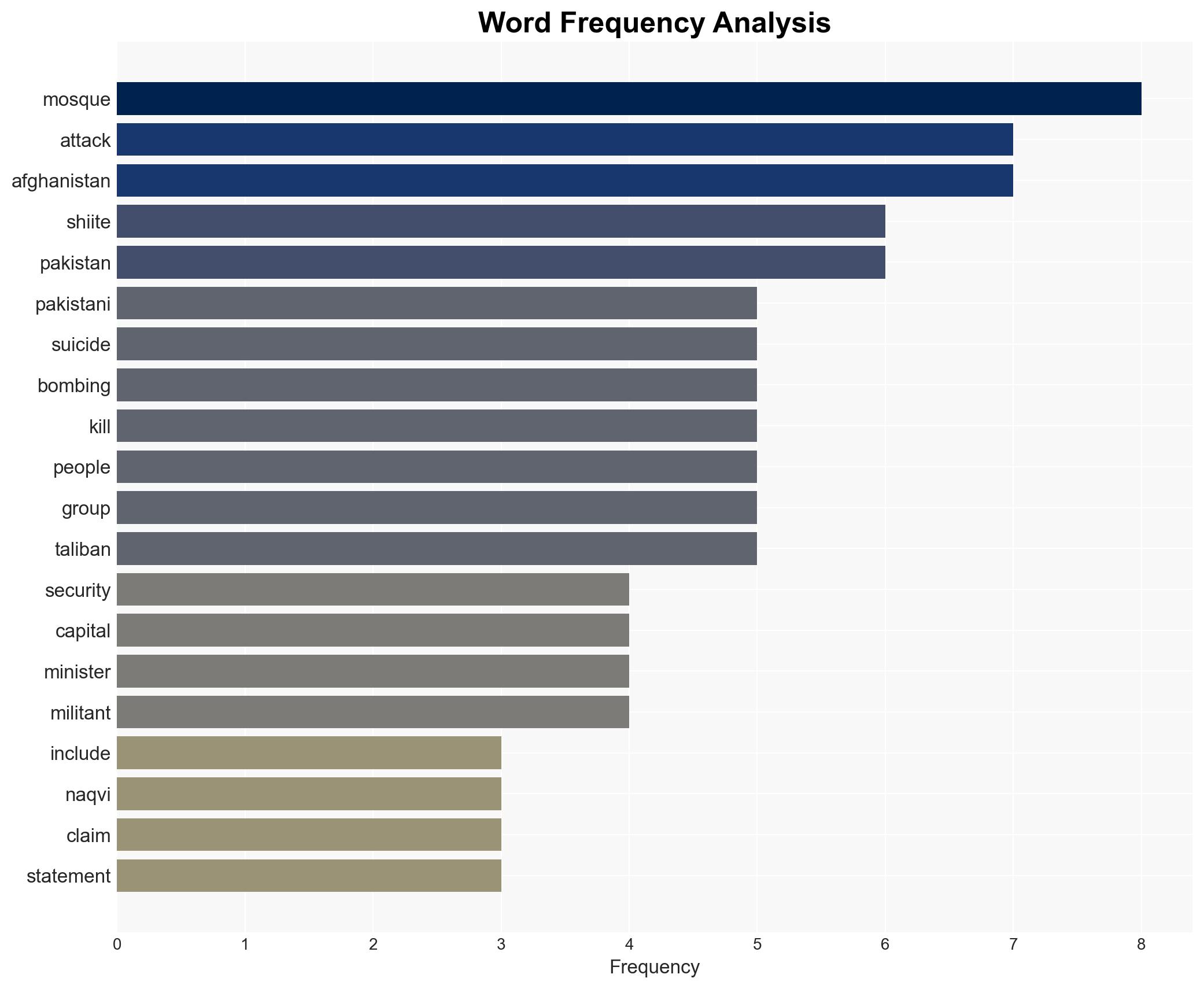
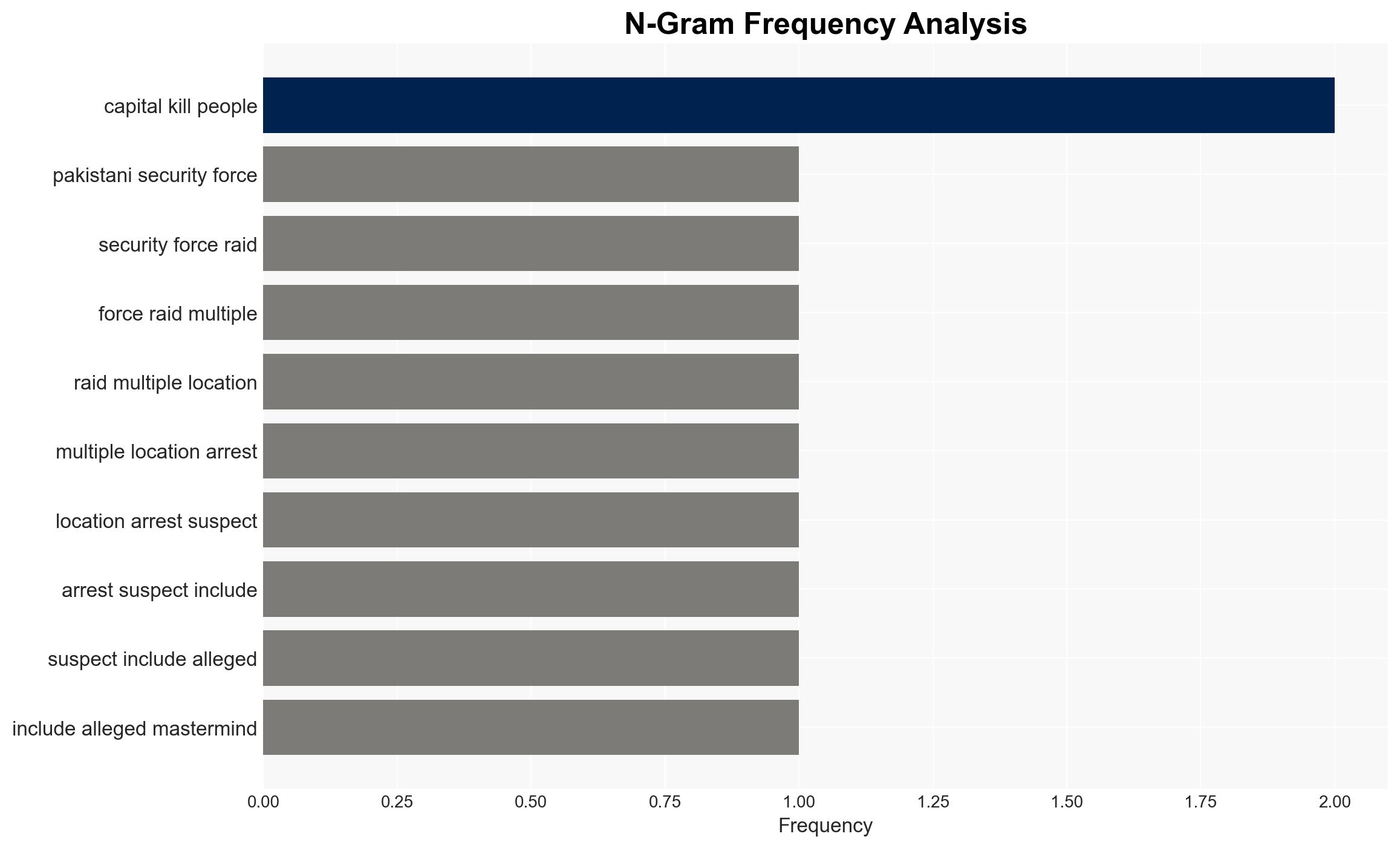
Four detained in connection with suicide bombing at Pakistani mosque that killed 31 and injured 169.
Published on: 2026-02-07
AI-powered OSINT brief from verified open sources. Automated NLP signal extraction with human verification. See our Methodology and Why WorldWideWatchers.
Intelligence Report: 4 suspects arrested after bombing at Pakistan mosque leaves 31 dead
1. BLUF (Bottom Line Up Front)
The arrest of four suspects, including the alleged mastermind, following a suicide bombing at a Shiite mosque in Pakistan, highlights ongoing sectarian tensions and the operational capabilities of IS-affiliated groups in the region. The incident underscores the potential for increased sectarian violence and regional instability. Overall confidence in this assessment is moderate, given the limited corroboration of claims regarding external involvement.
2. Competing Hypotheses
- Hypothesis A: The bombing was orchestrated by IS in Pakistan with operational and financial support from external actors, including Afghanistan and India. This is supported by the IS claim of responsibility and the arrest of suspects linked to IS. However, the lack of evidence for external financial backing introduces uncertainty.
- Hypothesis B: The attack was independently executed by local IS sympathizers without significant external support. This hypothesis is supported by the historical pattern of local IS operations in Pakistan. The absence of immediate evidence for foreign involvement strengthens this alternative explanation.
- Assessment: Hypothesis A is currently better supported due to the IS claim of responsibility and the arrests. However, the lack of corroborative evidence for external support remains a key uncertainty. Indicators such as verified financial transactions or communications could shift this judgment.
3. Key Assumptions and Red Flags
- Assumptions: IS maintains operational capabilities in Pakistan; sectarian violence is a strategic objective for IS; local law enforcement has accurately identified the suspects.
- Information Gaps: Evidence of financial or logistical support from external actors; verification of the mastermind’s identity and affiliations; details on the planning and execution of the attack.
- Bias & Deception Risks: Potential bias in attributing external involvement due to geopolitical tensions; IS propaganda may exaggerate its capabilities or external connections.
4. Implications and Strategic Risks
This development could exacerbate sectarian tensions in Pakistan, potentially leading to retaliatory attacks and further destabilization. The involvement of external actors, if verified, could escalate regional geopolitical tensions.
- Political / Geopolitical: Increased strain on Pakistan’s relations with Afghanistan and India; potential for international diplomatic pressure.
- Security / Counter-Terrorism: Heightened threat environment for Shiite communities; potential for increased counter-terrorism operations.
- Cyber / Information Space: Potential for IS to leverage digital platforms for propaganda and recruitment; misinformation risks regarding external involvement.
- Economic / Social: Potential impact on local economies due to instability; increased sectarian divisions could affect social cohesion.
5. Recommendations and Outlook
- Immediate Actions (0–30 days): Enhance intelligence-sharing with regional partners; increase security measures at vulnerable sites; monitor IS communications for further threats.
- Medium-Term Posture (1–12 months): Strengthen counter-terrorism capabilities; engage in diplomatic efforts to address regional tensions; promote community resilience initiatives.
- Scenario Outlook: Best: De-escalation and improved regional cooperation. Worst: Escalation of sectarian violence and regional conflict. Most-Likely: Continued sporadic attacks with limited regional cooperation.
6. Key Individuals and Entities
- Mohsin Naqvi – Pakistani Interior Minister
- Islamic State in Pakistan – Regional affiliate of IS
- Not clearly identifiable from open sources in this snippet – Alleged mastermind and other suspects
7. Thematic Tags
Counter-Terrorism, sectarian violence, regional stability, IS operations, geopolitical tensions, intelligence sharing, community resilience
Structured Analytic Techniques Applied
- ACH 2.0: Reconstruct likely threat actor intentions via hypothesis testing and structured refutation.
- Indicators Development: Track radicalization signals and propaganda patterns to anticipate operational planning.
- Narrative Pattern Analysis: Analyze spread/adaptation of ideological narratives for recruitment/incitement signals.
Explore more:
Counter-Terrorism Briefs ·
Daily Summary ·
Support us