Media Allegiances Questioned Amid Rising Domestic Violence Linked to Extremist Immigrants
Published on: 2026-03-15
AI-powered OSINT brief from verified open sources. Automated NLP signal extraction with human verification. See our Methodology and Why WorldWideWatchers.
Intelligence Report: The far-left media sympathizes with extremists who come to the US to cause chaos
1. BLUF (Bottom Line Up Front)
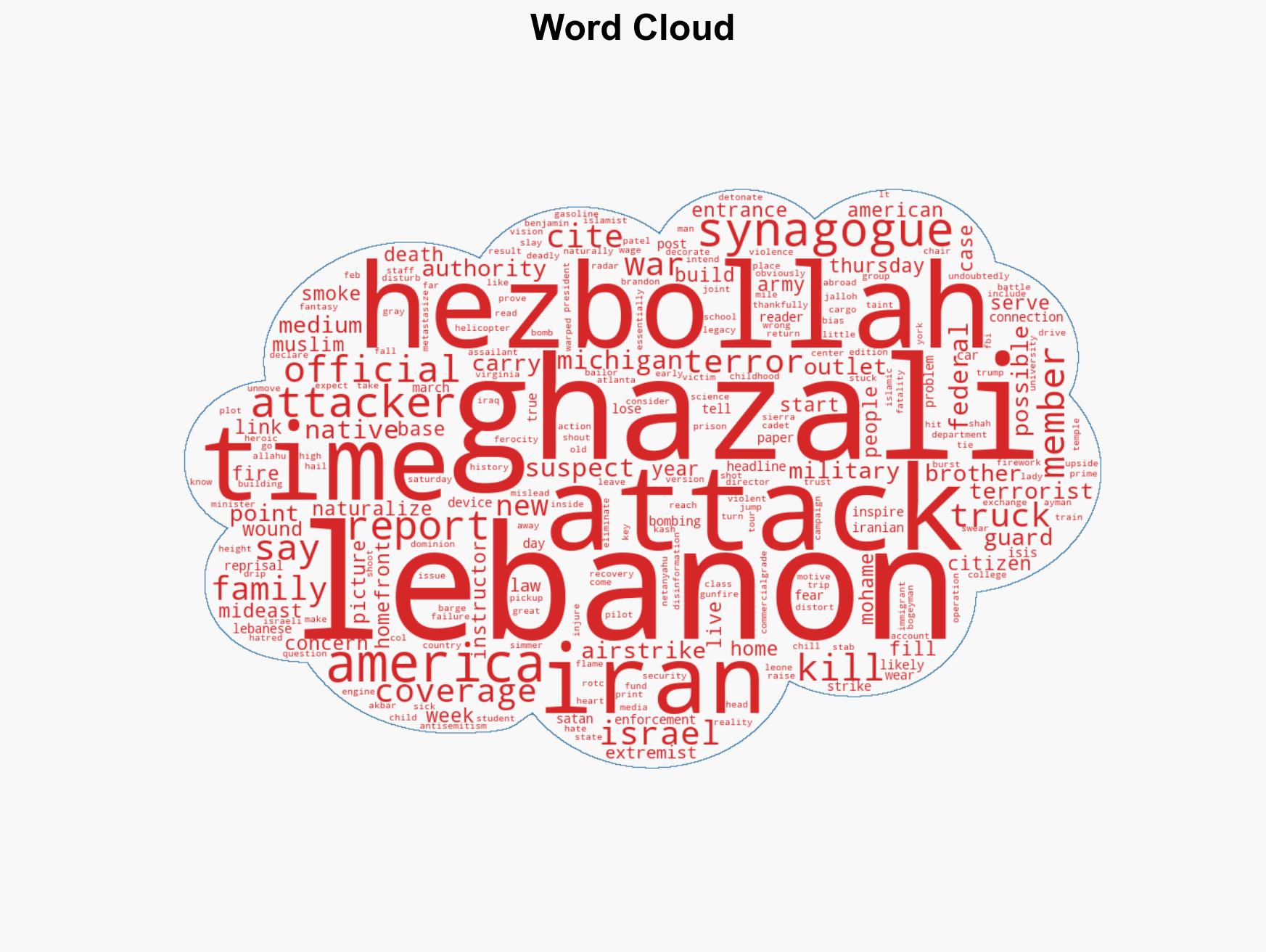
Recent terror attacks in the United States, attributed to naturalized citizens with ties to extremist groups, highlight a potential domestic threat linked to international conflicts involving Iran and Hezbollah. The media’s portrayal of these events may influence public perception and policy responses. Moderate confidence in the assessment due to limited corroborative data on media influence.
2. Competing Hypotheses
- Hypothesis A: The attacks are isolated incidents by individuals with extremist ties, not indicative of a broader coordinated effort. Supporting evidence includes the attackers’ known histories and previous imprisonment. Contradicting evidence is the simultaneous nature of the attacks.
- Hypothesis B: The attacks are part of a coordinated effort by extremist groups to exploit U.S. domestic vulnerabilities, potentially influenced by ongoing geopolitical tensions. Supporting evidence includes the attackers’ backgrounds and the timing of the attacks. Contradicting evidence is the lack of direct communication or operational links between the attackers.
- Assessment: Hypothesis A is currently better supported due to the lack of evidence of coordination between the attackers. Key indicators that could shift this judgment include discovery of communications or operational planning linking the incidents.
3. Key Assumptions and Red Flags
- Assumptions: The attackers acted independently; media coverage influences public perception; current data on attackers’ backgrounds is accurate.
- Information Gaps: Details on any potential communication between the attackers; comprehensive analysis of media influence on public perception.
- Bias & Deception Risks: Potential media bias against certain political figures; possible exaggeration of threats by sources with vested interests.
4. Implications and Strategic Risks
The attacks could exacerbate domestic tensions and influence U.S. foreign policy, particularly regarding Middle Eastern conflicts.
- Political / Geopolitical: Potential for increased scrutiny on immigration policies and international relations with Middle Eastern countries.
- Security / Counter-Terrorism: Heightened alert and resource allocation towards monitoring and preventing similar attacks.
- Cyber / Information Space: Possible increase in cyber operations targeting extremist communications and propaganda.
- Economic / Social: Potential impact on community relations and social cohesion, particularly in areas with significant immigrant populations.
5. Recommendations and Outlook
- Immediate Actions (0–30 days): Enhance surveillance and intelligence-sharing on individuals with known extremist ties; engage with community leaders to mitigate social tensions.
- Medium-Term Posture (1–12 months): Strengthen partnerships with international intelligence agencies; develop resilience measures for critical infrastructure.
- Scenario Outlook:
- Best: No further attacks; improved community relations.
- Worst: Coordinated attacks leading to significant casualties and geopolitical tensions.
- Most-Likely: Sporadic incidents with limited coordination, prompting policy reviews.
6. Key Individuals and Entities
- Mohamed Bailor Jalloh
- Ayman Mohamed Ghazali
- Lt. Col. Brandon Shah
- FBI Director Kash Patel
- Not clearly identifiable from open sources in this snippet.
7. Thematic Tags
Counter-Terrorism, media influence, domestic security, geopolitical tensions, immigration policy, extremist groups
Structured Analytic Techniques Applied
- ACH 2.0: Reconstruct likely threat actor intentions via hypothesis testing and structured refutation.
- Indicators Development: Track radicalization signals and propaganda patterns to anticipate operational planning.
- Narrative Pattern Analysis: Analyze spread/adaptation of ideological narratives for recruitment/incitement signals.
- Cognitive Bias Stress Test: Structured challenge to expose and correct biases.
Explore more:
Counter-Terrorism Briefs ·
Daily Summary ·
Support us