Missile and Drone Conflict in the Middle East: A Test of Endurance for Interceptor Systems
Published on: 2026-03-03
AI-powered OSINT brief from verified open sources. Automated NLP signal extraction with human verification. See our Methodology and Why WorldWideWatchers.
Intelligence Report: Iran war Endurance race between missiles interceptors
1. BLUF (Bottom Line Up Front)
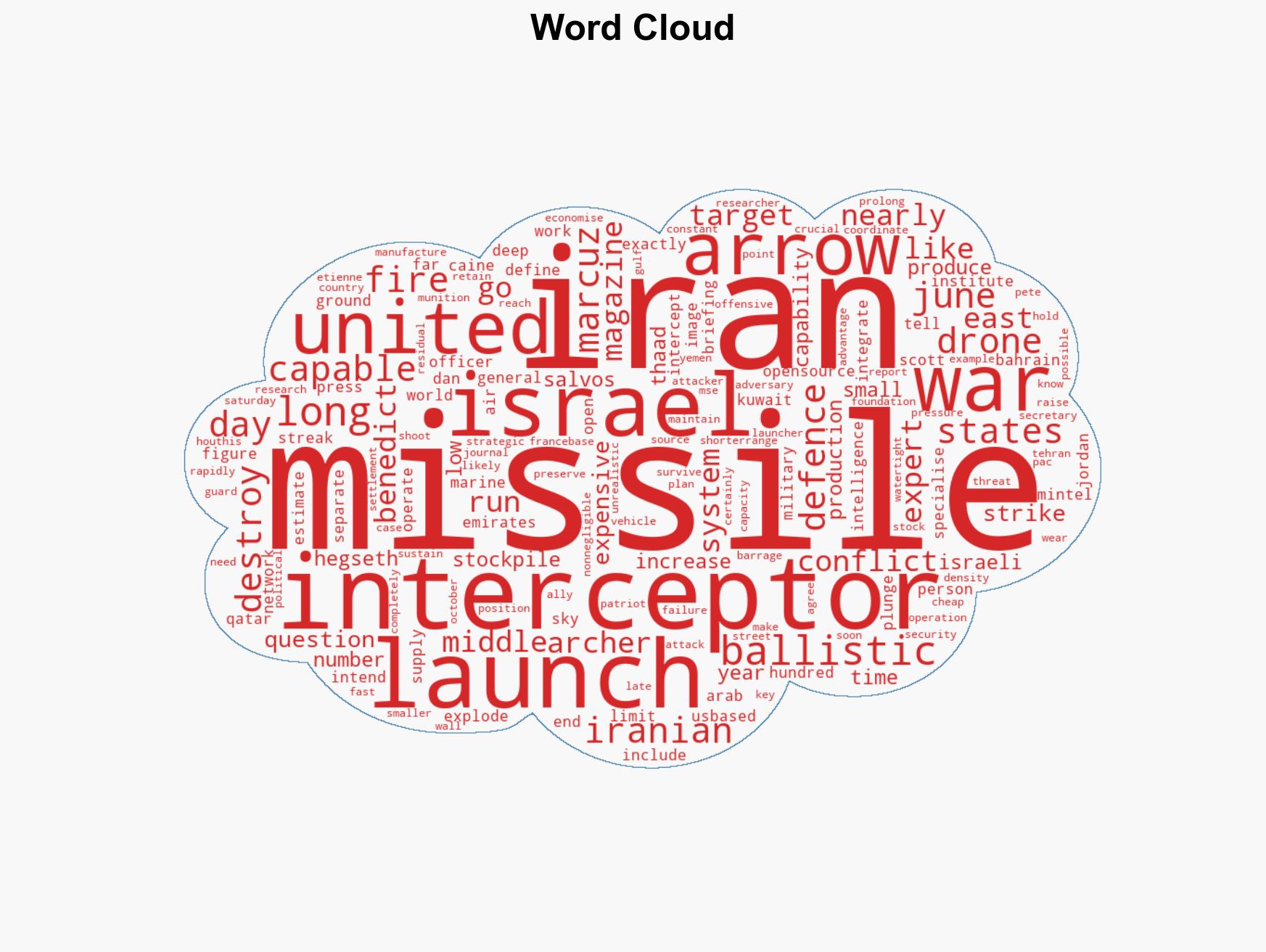
The ongoing conflict between Iran and regional adversaries is characterized by a strategic endurance race involving missile and drone attacks countered by interceptor defenses. The primary concern is the sustainability of interceptor supplies against Iran’s missile capabilities. The most likely hypothesis is that Iran is strategically conserving its missile stockpile to prolong the conflict and exhaust adversary defenses. This assessment is made with moderate confidence, considering the available data and existing uncertainties.
2. Competing Hypotheses
- Hypothesis A: Iran is conserving its missile stockpile to prolong the conflict and wear down adversary defenses. This is supported by the observed reduction in salvo sizes and the strategic advantage of exhausting interceptor supplies. However, uncertainties remain regarding Iran’s actual stockpile and production capabilities.
- Hypothesis B: Iran’s reduced missile salvos indicate a depletion of its offensive capabilities. This is contradicted by reports of increased missile production and the continued ability to breach defenses, suggesting that the reduction may be strategic rather than due to depletion.
- Assessment: Hypothesis A is currently better supported due to the strategic logic of conserving resources to outlast adversaries. Key indicators that could shift this judgment include verified intelligence on Iran’s missile production rates and stockpile assessments.
3. Key Assumptions and Red Flags
- Assumptions: Iran has a significant missile stockpile; interceptor supplies are limited; Iran’s strategic goal is to prolong the conflict.
- Information Gaps: Accurate data on Iran’s current missile stockpile and production capacity; detailed assessments of interceptor inventory levels.
- Bias & Deception Risks: Potential overreliance on open-source intelligence; risk of Iranian misinformation regarding its capabilities and intentions.
4. Implications and Strategic Risks
The endurance race between Iranian offensive capabilities and regional interceptor defenses could lead to prolonged conflict with significant regional destabilization. The outcome will depend on resource sustainability and strategic adaptations by both sides.
- Political / Geopolitical: Potential for escalation if Iran’s strategy succeeds in depleting adversary defenses, leading to increased regional tensions.
- Security / Counter-Terrorism: Increased threat environment as depleted defenses could embolden Iranian and allied proxy actions.
- Cyber / Information Space: Potential for increased cyber operations targeting missile defense systems and critical infrastructure.
- Economic / Social: Prolonged conflict could strain regional economies and exacerbate social tensions due to security concerns.
5. Recommendations and Outlook
- Immediate Actions (0–30 days): Enhance monitoring of Iranian missile production and stockpile; assess interceptor supply chain vulnerabilities.
- Medium-Term Posture (1–12 months): Develop resilience measures for missile defense systems; strengthen regional partnerships for coordinated defense strategies.
- Scenario Outlook:
- Best: Diplomatic resolution reduces conflict intensity.
- Worst: Iran successfully depletes defenses, leading to significant regional instability.
- Most-Likely: Prolonged conflict with intermittent escalations as both sides manage resource constraints.
6. Key Individuals and Entities
- Scott Benedict, Middle East Institute
- General Dan Caine, US Military
- Pete Hegseth, US Defence Secretary
- Etienne Marcuz, Foundation for Strategic Research
- Not clearly identifiable from open sources in this snippet.
7. Thematic Tags
regional conflicts, missile defense, Middle East conflict, Iran strategy, regional security, military endurance, geopolitical tensions, drone warfare
Structured Analytic Techniques Applied
- Causal Layered Analysis (CLA): Analyze events across surface happenings, systems, worldviews, and myths.
- Cross-Impact Simulation: Model ripple effects across neighboring states, conflicts, or economic dependencies.
- Scenario Generation: Explore divergent futures under varying assumptions to identify plausible paths.
- Network Influence Mapping: Map influence relationships to assess actor impact.
Explore more:
Regional Conflicts Briefs ·
Daily Summary ·
Support us