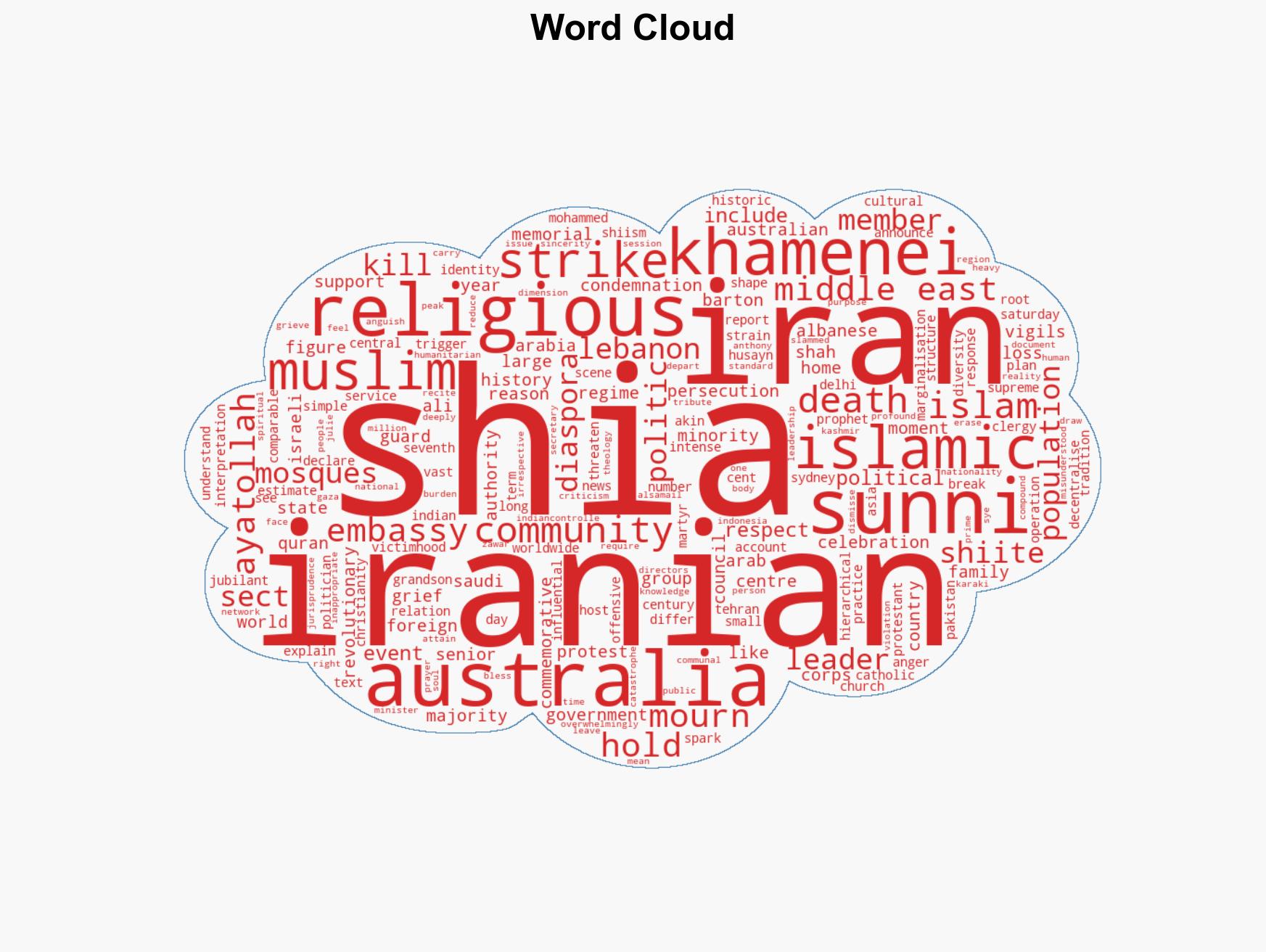
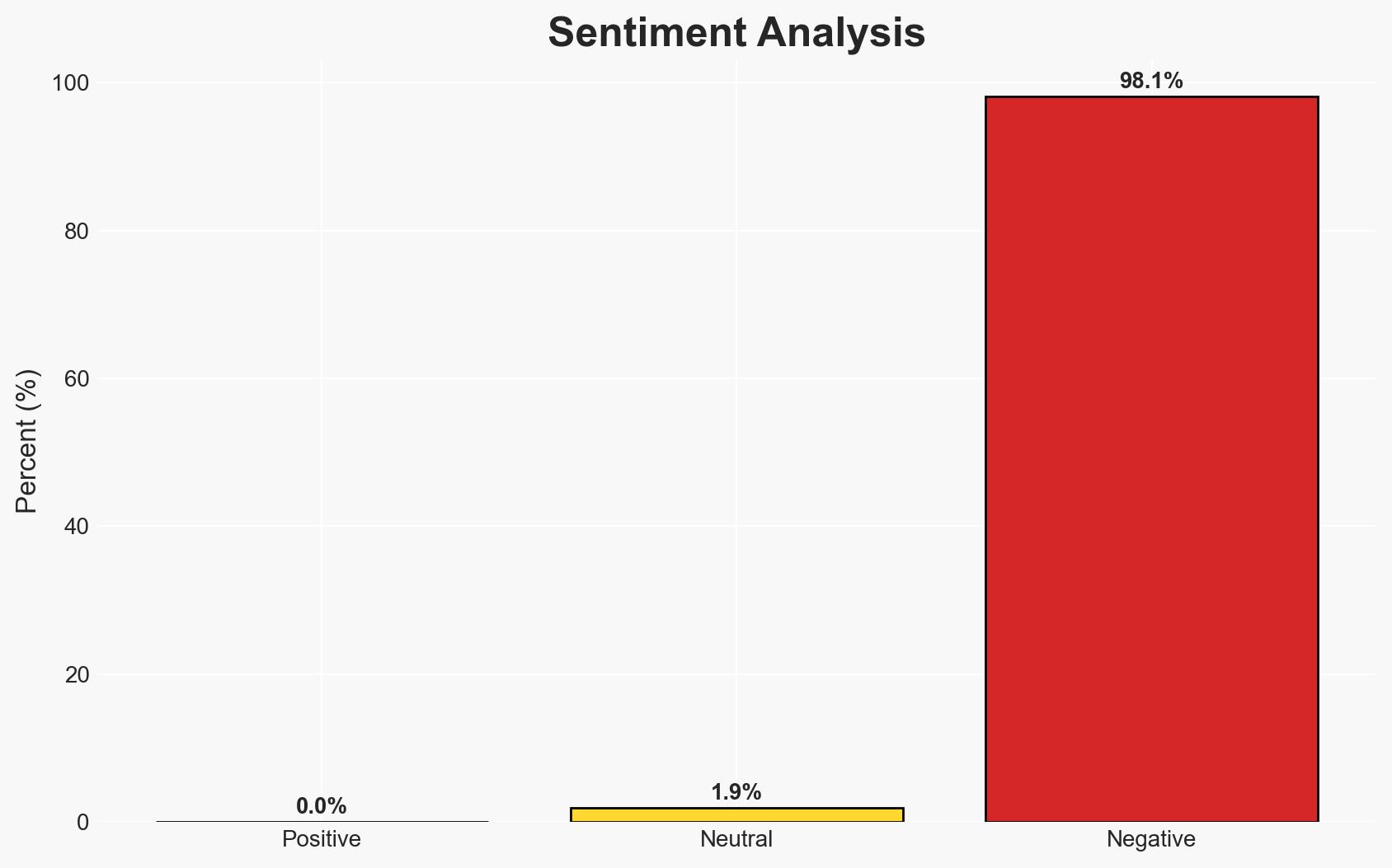
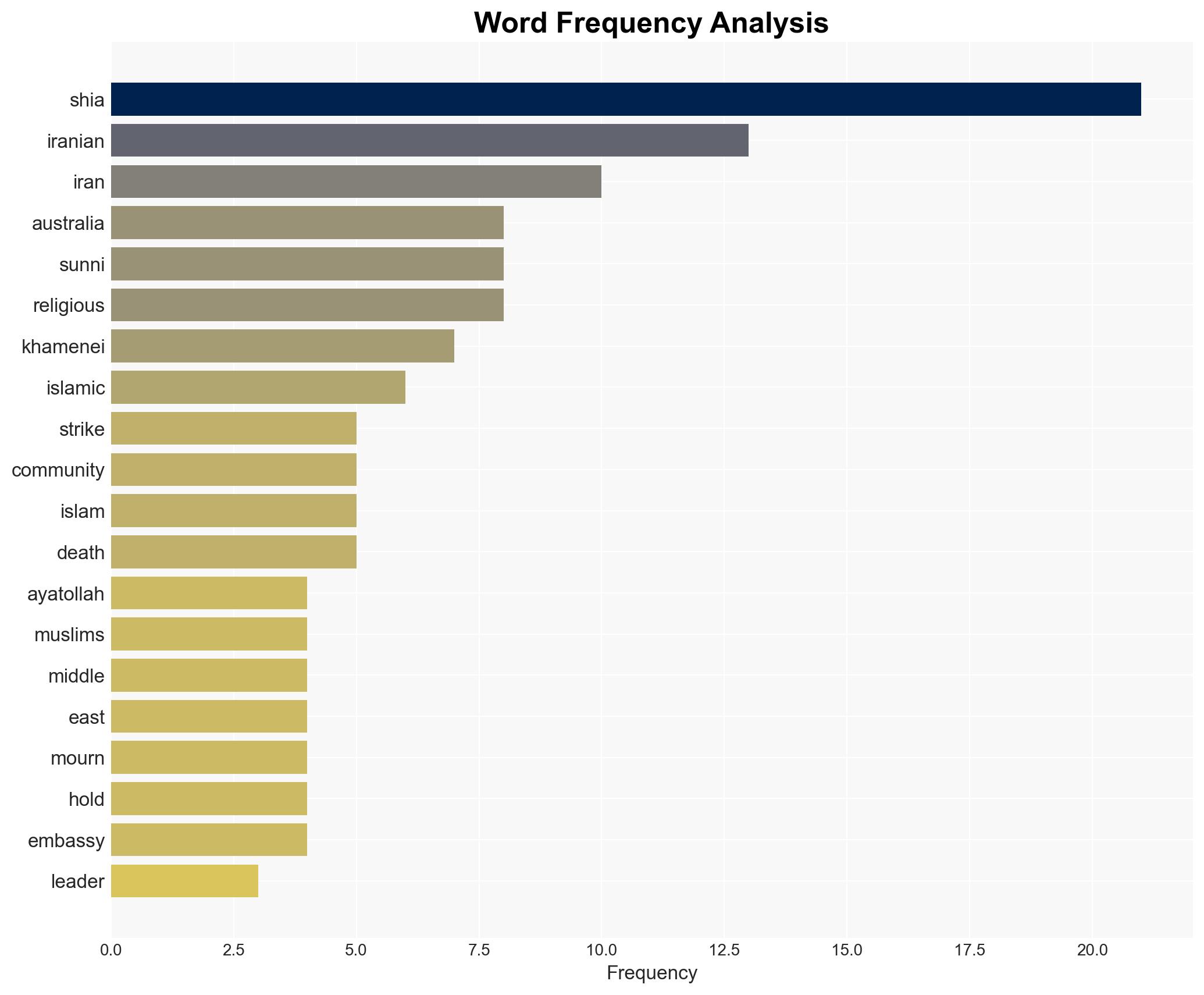
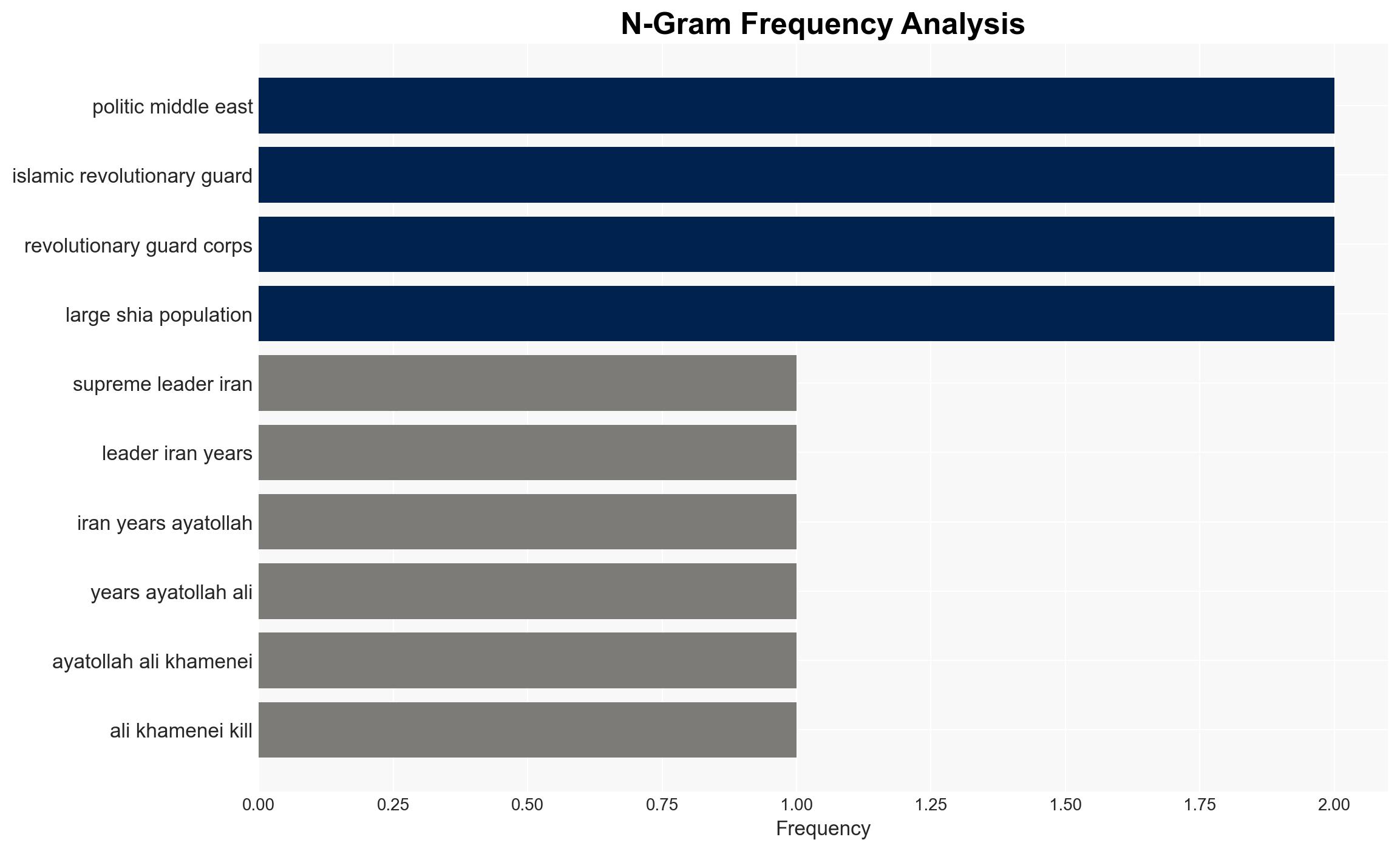
Shia Muslims’ Mixed Reactions to Ayatollah Khamenei’s Death: Mourning Amidst Celebrations
Published on: 2026-03-05
AI-powered OSINT brief from verified open sources. Automated NLP signal extraction with human verification. See our Methodology and Why WorldWideWatchers.
Intelligence Report: Why are some Shia Muslims mourning Ayatollah Khamenei
1. BLUF (Bottom Line Up Front)
The death of Ayatollah Ali Khamenei has elicited mixed reactions globally, with some Shia Muslims mourning due to religious and cultural ties, while others celebrate due to political grievances. The most likely hypothesis is that mourning is driven by religious reverence and identity politics within Shia communities. This situation affects geopolitical stability in regions with significant Shia populations. Overall confidence in this assessment is moderate, given the complexity of religious and political dynamics.
2. Competing Hypotheses
- Hypothesis A: Mourning is primarily driven by religious reverence for Khamenei as a spiritual leader within Shia Islam. Supporting evidence includes statements from Shia leaders and the organization of memorials in Shia communities worldwide. Contradicting evidence includes the political nature of some protests and the involvement of state actors.
- Hypothesis B: Mourning is politically motivated, reflecting opposition to US and Israeli actions and solidarity against perceived Western aggression. Supporting evidence includes protests against US and Israeli strikes and political statements from Iranian authorities. Contradicting evidence includes the religious framing of mourning by Shia leaders.
- Assessment: Hypothesis A is currently better supported due to the emphasis on religious identity and reverence in public statements and actions. Key indicators that could shift this judgment include increased political rhetoric in mourning activities or evidence of state-directed mobilization.
3. Key Assumptions and Red Flags
- Assumptions: Shia mourning practices are primarily religious; Khamenei’s influence is significant across Shia communities; geopolitical tensions influence public mourning behaviors.
- Information Gaps: Detailed motivations of individual mourners; extent of state influence on mourning activities; impact of mourning on intra-Shia sect dynamics.
- Bias & Deception Risks: Potential bias in reporting from Iranian and Western media; risk of state propaganda influencing public perception; cognitive bias towards viewing religious actions as politically motivated.
4. Implications and Strategic Risks
The mourning of Ayatollah Khamenei could exacerbate sectarian tensions and influence geopolitical dynamics in the Middle East and beyond. The situation may evolve with potential impacts on regional alliances and internal stability in countries with significant Shia populations.
- Political / Geopolitical: Potential for increased sectarian tensions and realignment of alliances in the Middle East.
- Security / Counter-Terrorism: Risk of retaliatory actions by Shia militias or state actors against perceived aggressors.
- Cyber / Information Space: Potential for increased cyber operations targeting entities perceived as hostile to Shia interests.
- Economic / Social: Possible impact on social cohesion in multicultural societies with significant Shia populations, affecting local economies.
5. Recommendations and Outlook
- Immediate Actions (0–30 days): Monitor Shia community activities and rhetoric; engage with community leaders to understand motivations; prepare for potential security incidents.
- Medium-Term Posture (1–12 months): Strengthen partnerships with regional allies; enhance intelligence capabilities to monitor sectarian dynamics; develop resilience measures for potential cyber threats.
- Scenario Outlook:
- Best: Mourning remains peaceful, fostering dialogue between Shia and non-Shia communities.
- Worst: Sectarian violence escalates, destabilizing regional security.
- Most-Likely: Continued peaceful mourning with sporadic political protests.
6. Key Individuals and Entities
- Ayatollah Ali Khamenei
- Islamic Revolutionary Guard Corps
- Shia National Network of Australia
- Prime Minister Anthony Albanese
- Syed Zawar Shah
- Ali Alsamail
- Julie Karaki
7. Thematic Tags
regional conflicts, Shia Islam, geopolitical tensions, religious identity, sectarian dynamics, Middle East politics, counter-terrorism, cyber threats
Structured Analytic Techniques Applied
- Causal Layered Analysis (CLA): Analyze events across surface happenings, systems, worldviews, and myths.
- Cross-Impact Simulation: Model ripple effects across neighboring states, conflicts, or economic dependencies.
- Scenario Generation: Explore divergent futures under varying assumptions to identify plausible paths.
- Network Influence Mapping: Map influence relationships to assess actor impact.
Explore more:
Regional Conflicts Briefs ·
Daily Summary ·
Support us