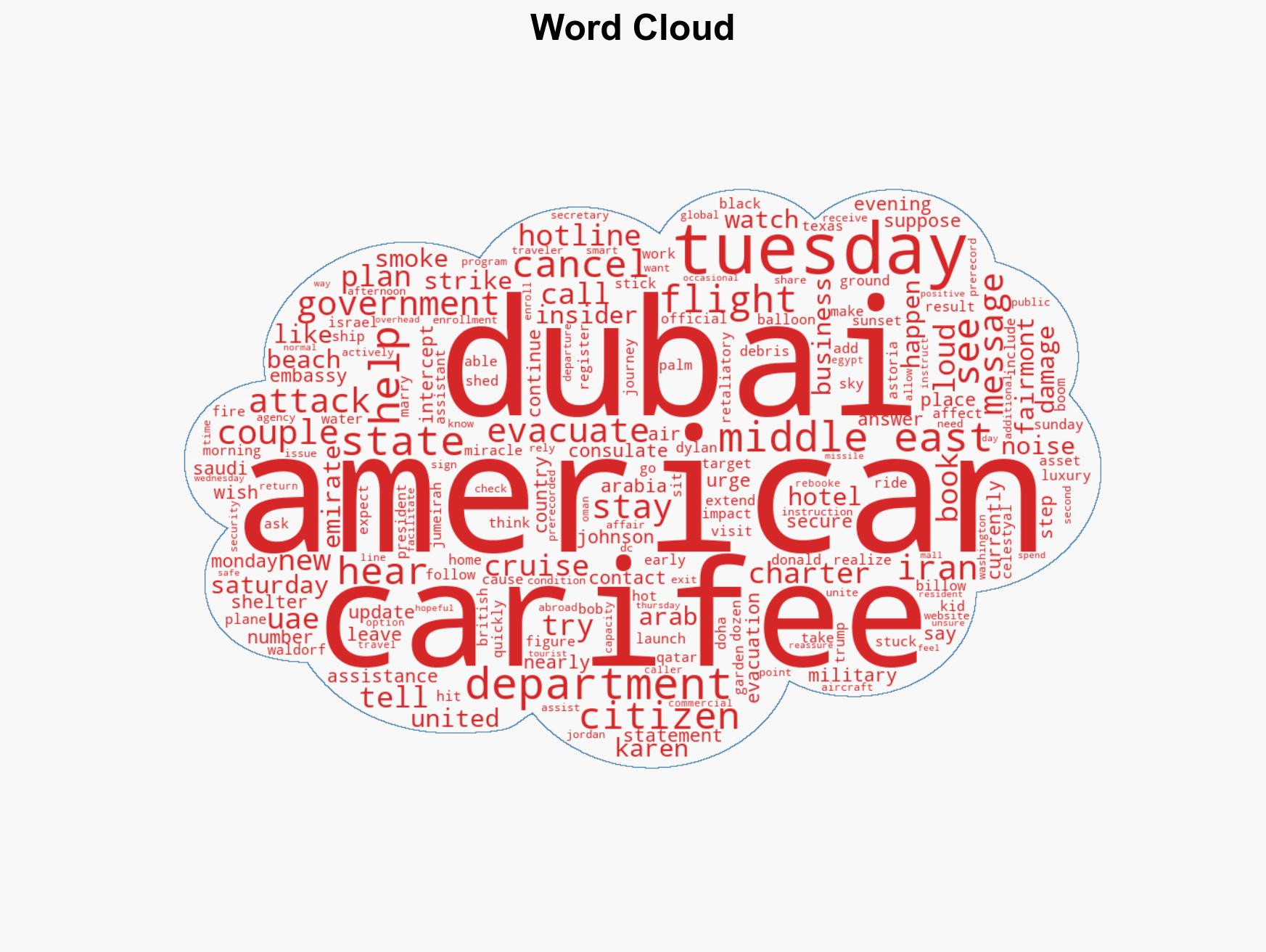
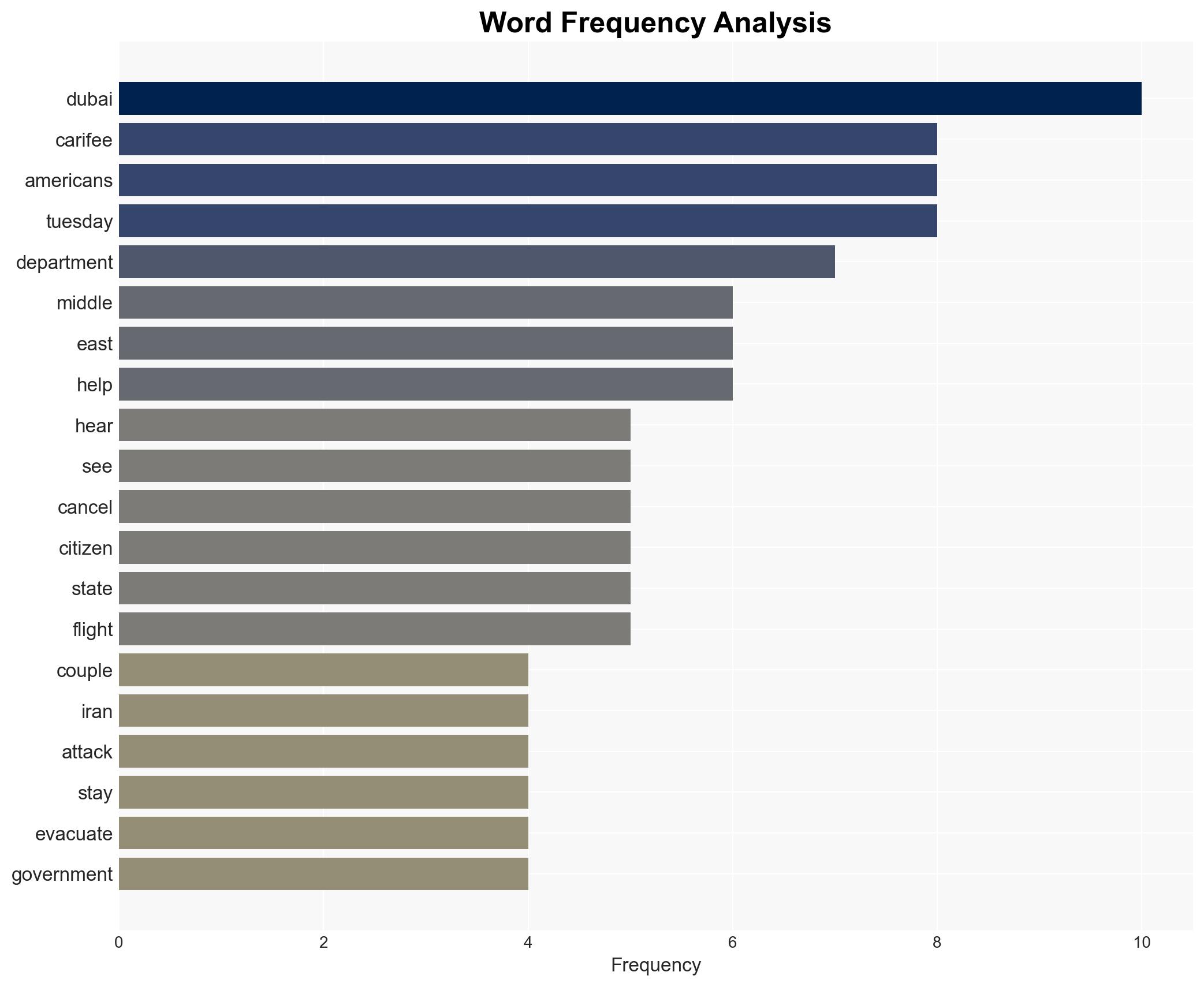
Texas couple stranded in Dubai after cruise cancellation amid regional tensions seeks US assistance for exit…
Published on: 2026-03-04
AI-powered OSINT brief from verified open sources. Automated NLP signal extraction with human verification. See our Methodology and Why WorldWideWatchers.
Intelligence Report: Texas couple stuck in Dubai after cruise was canceled says they can’t get help from US ‘I want to know an exit plan’
1. BLUF (Bottom Line Up Front)
The situation involving a Texas couple stranded in Dubai highlights the broader challenges faced by American citizens in the Middle East following recent geopolitical tensions. The U.S. government is struggling to provide timely evacuation assistance, raising concerns about its crisis response capabilities. This assessment is made with moderate confidence, as the situation is fluid and information is still emerging.
2. Competing Hypotheses
- Hypothesis A: The U.S. government is overwhelmed by the rapid escalation of regional tensions, leading to delays in evacuation efforts. Supporting evidence includes the reported lack of assistance from U.S. embassies and consulates, and the State Department’s ongoing efforts to secure evacuation flights. Key uncertainties include the actual capacity and readiness of U.S. evacuation resources.
- Hypothesis B: The U.S. government is prioritizing military and strategic assets over civilian evacuations, resulting in delayed assistance for American citizens. This is supported by the focus on securing military aircraft and the lack of immediate civilian evacuation plans. Contradicting evidence includes public statements indicating efforts to assist civilians.
- Assessment: Hypothesis A is currently better supported due to the immediate logistical challenges and communication issues reported by affected citizens. Key indicators that could shift this judgment include successful large-scale civilian evacuations or clear evidence of prioritization of military assets over civilians.
3. Key Assumptions and Red Flags
- Assumptions: The U.S. government has the capacity to evacuate citizens but is facing logistical and communication challenges; regional tensions will continue to affect civilian safety; U.S. citizens are relying on government assistance for evacuation.
- Information Gaps: Detailed plans of U.S. evacuation capabilities and timelines; the extent of coordination between U.S. and allied countries for civilian evacuations.
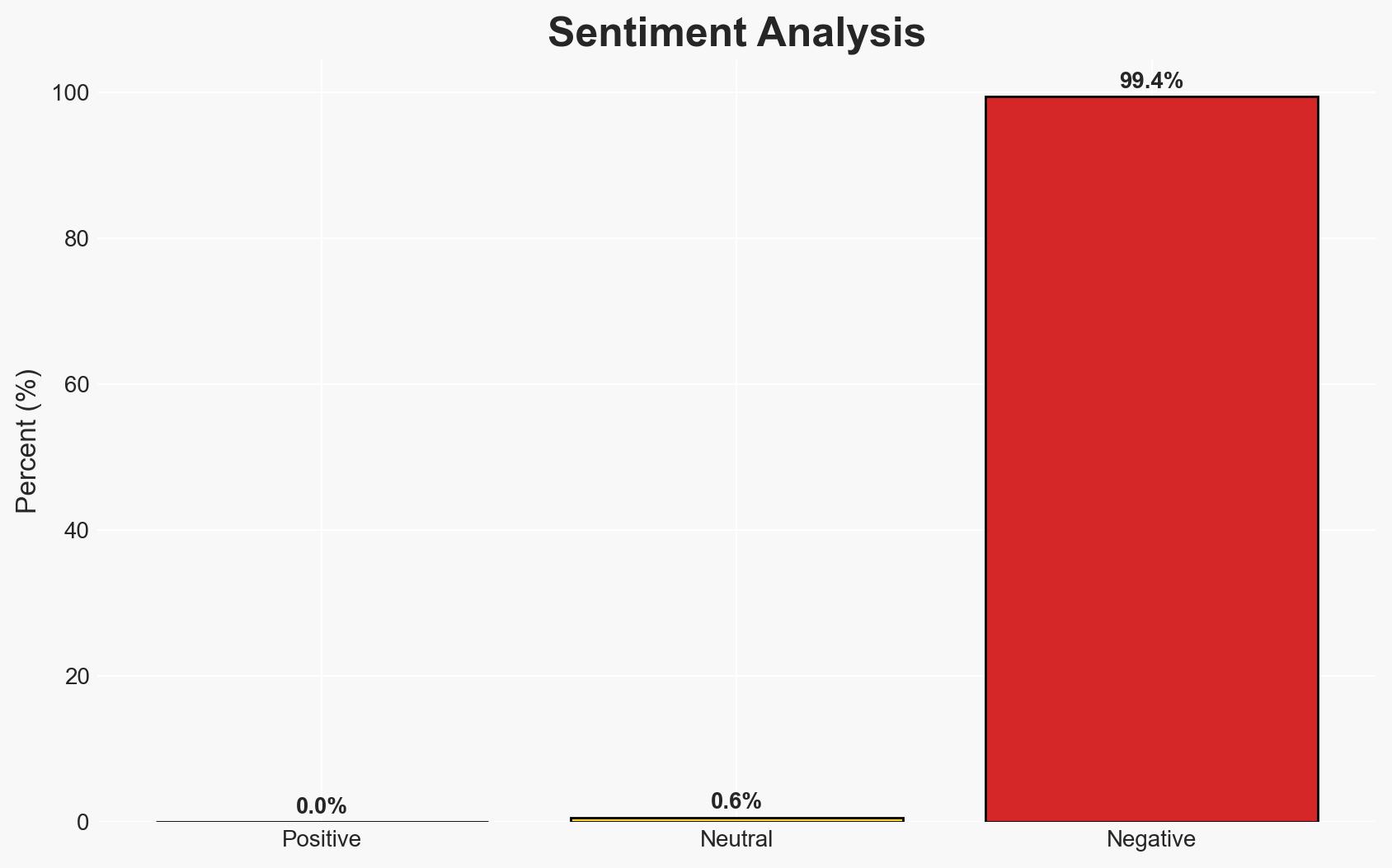
- Bias & Deception Risks: Potential bias in reporting from affected individuals seeking assistance; possible underreporting of U.S. government efforts due to communication breakdowns.
4. Implications and Strategic Risks
The ongoing situation could exacerbate U.S. diplomatic relations in the region and affect its global image regarding crisis management.
- Political / Geopolitical: Potential for increased anti-U.S. sentiment if citizens feel abandoned, affecting diplomatic relations with Middle Eastern allies.
- Security / Counter-Terrorism: Heightened risk of targeting U.S. assets and citizens in the region as tensions escalate.
- Cyber / Information Space: Potential for misinformation campaigns exploiting the situation to undermine U.S. credibility.
- Economic / Social: Disruption to tourism and business travel in the region, impacting local economies and U.S. economic interests.
5. Recommendations and Outlook
- Immediate Actions (0–30 days): Enhance communication channels with U.S. citizens in the region; expedite coordination with allies for evacuation efforts; monitor regional developments closely.
- Medium-Term Posture (1–12 months): Develop comprehensive evacuation plans for U.S. citizens in high-risk regions; strengthen diplomatic engagements to mitigate tensions.
- Scenario Outlook:
- Best: Successful evacuation of U.S. citizens with minimal diplomatic fallout.
- Worst: Escalation of regional conflict leading to increased threats to U.S. citizens and assets.
- Most-Likely: Gradual resolution of evacuation challenges with ongoing regional instability.
6. Key Individuals and Entities
- Karen and Bob Carifee – U.S. citizens affected
- U.S. State Department – Responsible for evacuation efforts
- Dylan Johnson – Assistant Secretary of State for Global Public Affairs
- Not clearly identifiable from open sources in this snippet – Other key individuals and entities
7. Thematic Tags
regional conflicts, evacuation, U.S. foreign policy, Middle East tensions, crisis management, diplomatic relations, civilian safety
Structured Analytic Techniques Applied
- Causal Layered Analysis (CLA): Analyze events across surface happenings, systems, worldviews, and myths.
- Cross-Impact Simulation: Model ripple effects across neighboring states, conflicts, or economic dependencies.
- Scenario Generation: Explore divergent futures under varying assumptions to identify plausible paths.
Explore more:
Regional Conflicts Briefs ·
Daily Summary ·
Support us