Texas Resident Arrested for Attempting to Provide Explosive Materials to ISIS
Published on: 2025-12-31
AI-powered OSINT brief from verified open sources. Automated NLP signal extraction with human verification. See our Methodology and Why WorldWideWatchers.
Intelligence Report: Texas Man Charged With Allegedly Trying to Supply Bomb Materials to ISIS
1. BLUF (Bottom Line Up Front)
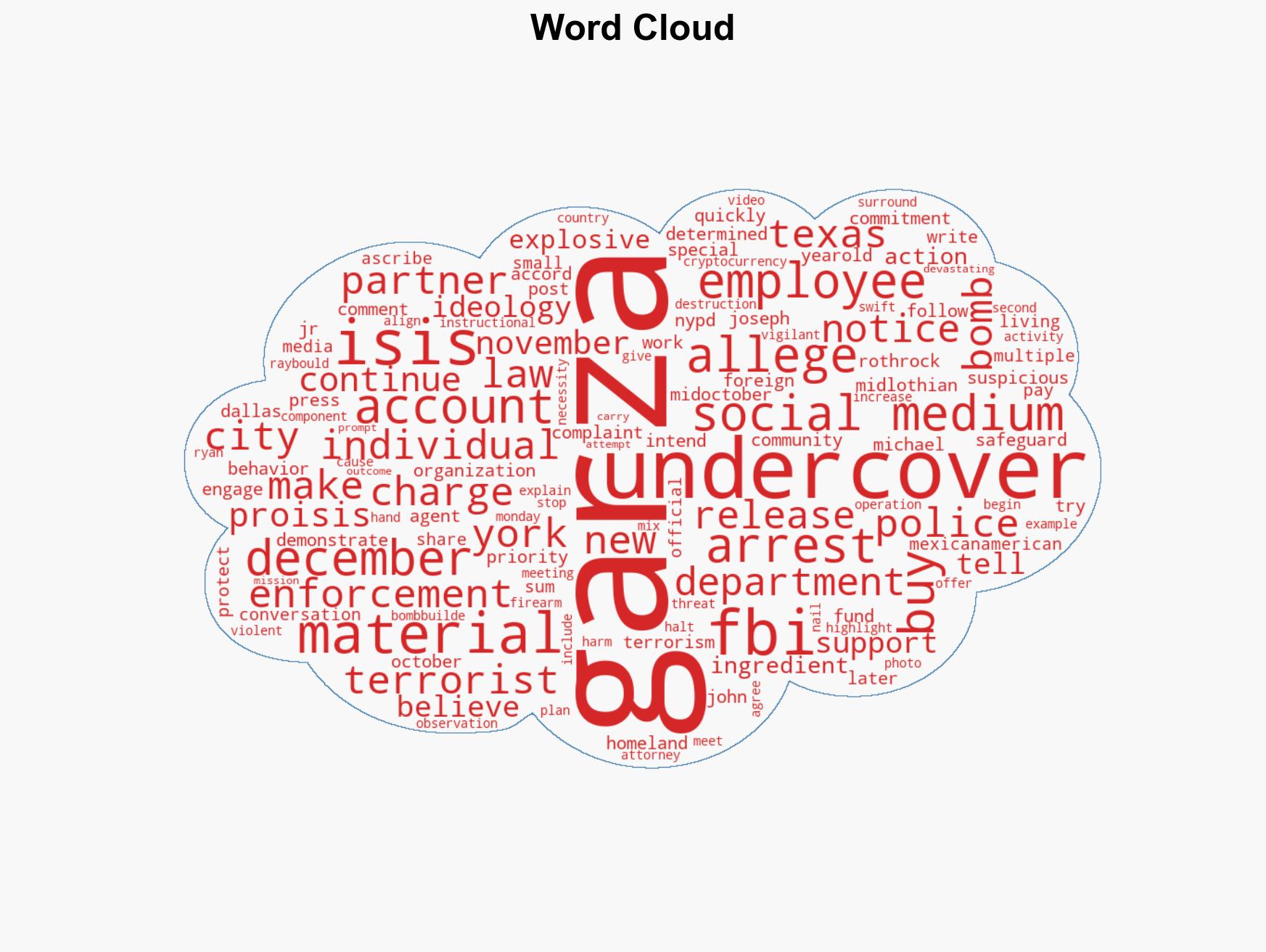
John Michael Garza, Jr., a Texas resident, has been charged with attempting to supply bomb-making materials to ISIS. This incident highlights ongoing domestic radicalization and the threat posed by individuals supporting foreign terrorist organizations. The case underscores the need for vigilant monitoring of online activities. Overall confidence in this assessment is moderate.
2. Competing Hypotheses
- Hypothesis A: Garza was a genuine supporter of ISIS and intended to aid their operations by supplying bomb materials. This is supported by his interactions with an undercover officer, his financial transactions, and the provision of explosive components. However, the extent of his operational capability and connections to ISIS are uncertain.
- Hypothesis B: Garza’s actions were primarily driven by personal motivations or a desire for notoriety rather than genuine support for ISIS. This could be contradicted by his consistent engagement with pro-ISIS content and financial support, but the lack of direct communication with ISIS operatives raises questions.
- Assessment: Hypothesis A is currently better supported due to the evidence of Garza’s ideological alignment and material actions. Indicators such as direct communication with ISIS or further operational planning could shift this judgment.
3. Key Assumptions and Red Flags
- Assumptions: Garza’s online behavior accurately reflects his intentions; the undercover operation was conducted without entrapment; Garza acted independently without a broader network.
- Information Gaps: Details on Garza’s potential connections to other ISIS supporters or operatives; the full extent of his radicalization process; verification of his claimed intentions.
- Bias & Deception Risks: Potential bias in interpreting online behavior as indicative of intent; risk of deception by Garza in overstating his capabilities or intentions.
4. Implications and Strategic Risks
This development could signal a trend of increased domestic radicalization influenced by online propaganda, impacting national security and counter-terrorism efforts.
- Political / Geopolitical: Potential for increased scrutiny on domestic counter-terrorism policies and international cooperation against ISIS.
- Security / Counter-Terrorism: Heightened alert for similar cases of domestic radicalization and lone-wolf actors.
- Cyber / Information Space: Emphasizes the role of social media in radicalization and the need for enhanced digital monitoring.
- Economic / Social: Possible public concern over safety and increased pressure on law enforcement resources.
5. Recommendations and Outlook
- Immediate Actions (0–30 days): Enhance monitoring of online platforms for extremist content; increase community outreach to prevent radicalization.
- Medium-Term Posture (1–12 months): Strengthen partnerships with tech companies for early detection of extremist activities; develop resilience measures against lone-wolf attacks.
- Scenario Outlook:
- Best: Successful disruption of similar plots, reducing domestic terrorism threats.
- Worst: Increase in lone-wolf attacks inspired by online propaganda.
- Most-Likely: Continued sporadic attempts by individuals to support terrorist activities, requiring sustained vigilance.
6. Key Individuals and Entities
- John Michael Garza, Jr. – Charged individual
- FBI – Lead investigative agency
- New York City Police Department – Provided undercover operative
- ISIS – Targeted terrorist organization
7. Thematic Tags
Counter-Terrorism, domestic radicalization, online extremism, law enforcement, ISIS, bomb-making, cybersecurity
Structured Analytic Techniques Applied
- ACH 2.0: Reconstruct likely threat actor intentions via hypothesis testing and structured refutation.
- Indicators Development: Track radicalization signals and propaganda patterns to anticipate operational planning.
- Narrative Pattern Analysis: Analyze spread/adaptation of ideological narratives for recruitment/incitement signals.
Explore more:
Counter-Terrorism Briefs ·
Daily Summary ·
Support us