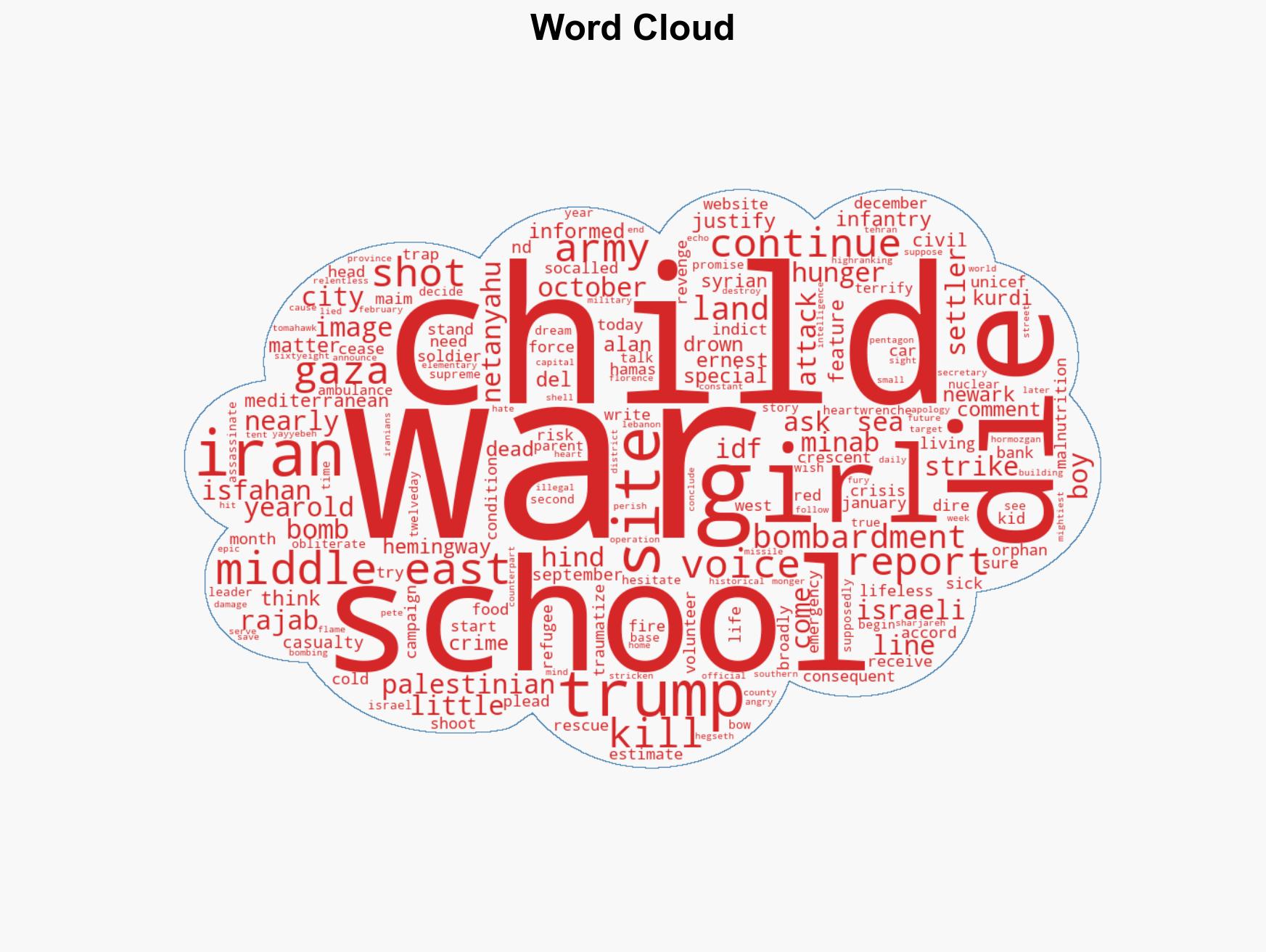
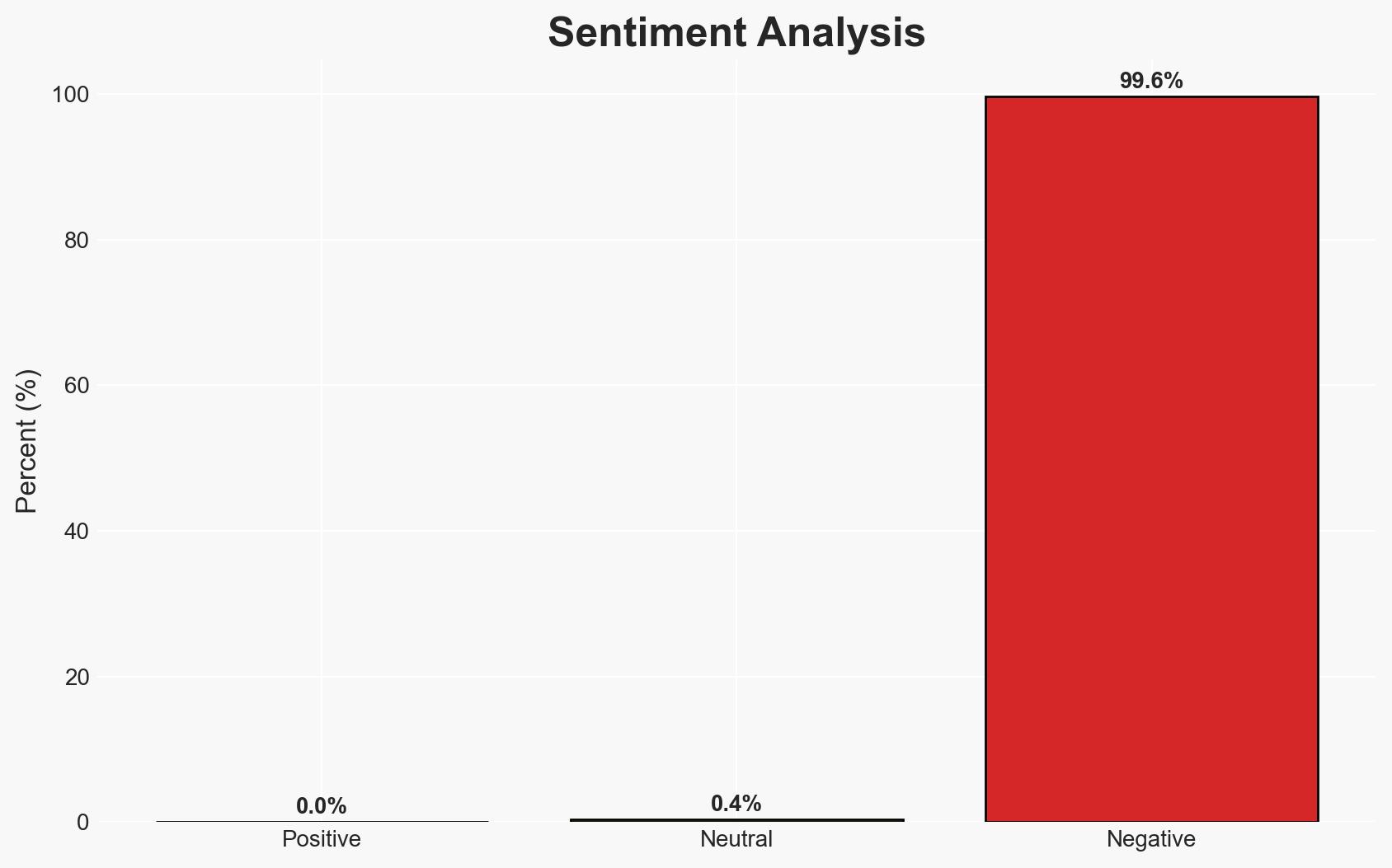
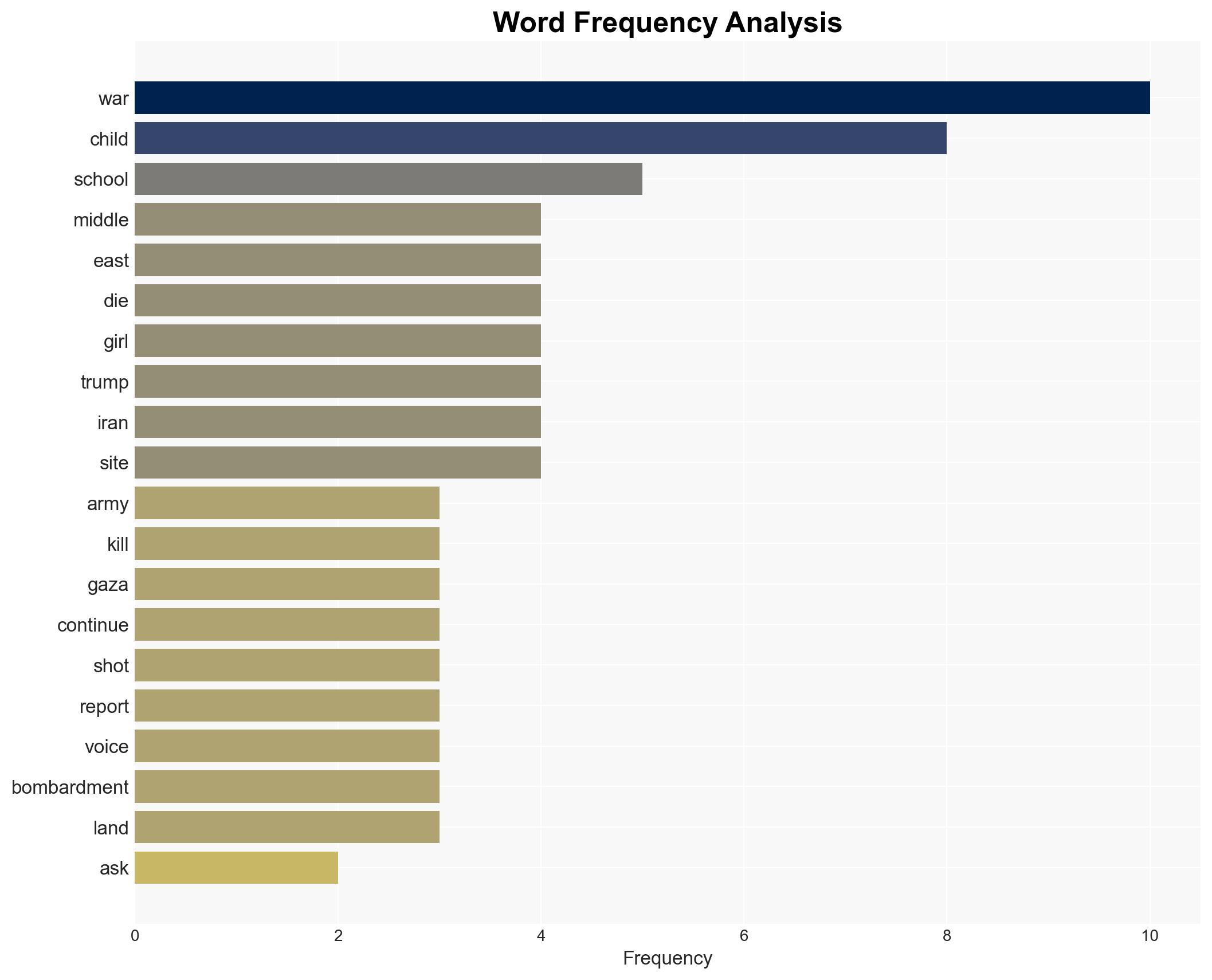
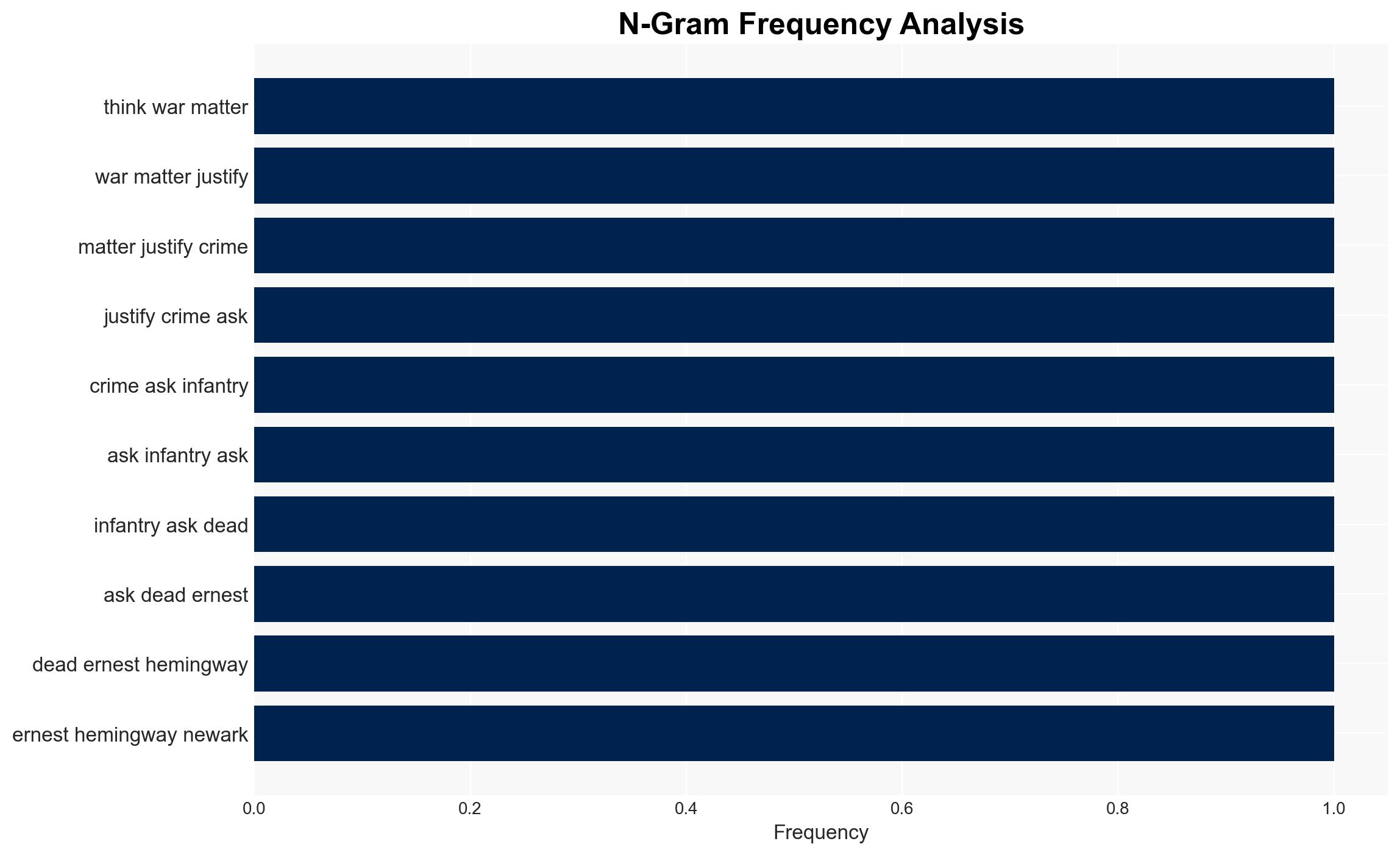
The Toll of Conflict: Thousands of Children Killed in Ongoing Gaza Violence
Published on: 2026-03-16
AI-powered OSINT brief from verified open sources. Automated NLP signal extraction with human verification. See our Methodology and Why WorldWideWatchers.
Intelligence Report: Children of War
1. BLUF (Bottom Line Up Front)
The ongoing conflicts in the Middle East, notably involving Israel, Palestine, and Iran, have resulted in significant civilian casualties, particularly among children. The escalation following the Israeli military actions and U.S. involvement in Iran has heightened regional instability. The most likely hypothesis is that these actions will continue to exacerbate humanitarian crises and geopolitical tensions. Overall confidence in this judgment is moderate due to incomplete data and potential biases in reporting.
2. Competing Hypotheses
- Hypothesis A: The reported high civilian casualties, particularly children, are a result of indiscriminate military actions and a lack of precise intelligence. Supporting evidence includes reports of targeted civilian areas and historical patterns of conflict. Key uncertainties involve the accuracy of casualty figures and the intent behind military targeting.
- Hypothesis B: The high casualty figures are exaggerated or manipulated for propaganda purposes by involved parties. This hypothesis is supported by potential biases in reporting and historical use of information warfare. Contradicting evidence includes consistent reports from multiple sources and humanitarian organizations.
- Assessment: Hypothesis A is currently better supported due to corroborating reports from reputable humanitarian organizations and the historical context of conflict in the region. Indicators that could shift this judgment include verified intelligence reports or independent investigations confirming or refuting the casualty figures.
3. Key Assumptions and Red Flags
- Assumptions: Military actions are primarily driven by strategic objectives; casualty figures reported by humanitarian organizations are accurate; regional actors are motivated by long-standing geopolitical goals.
- Information Gaps: Detailed intelligence on military decision-making processes; independent verification of casualty figures; insights into the internal deliberations of involved governments.
- Bias & Deception Risks: Potential bias in casualty reporting due to political agendas; risk of manipulation of public opinion through selective information release; cognitive biases in interpreting conflict data.
4. Implications and Strategic Risks
The continuation of military actions and high civilian casualties could further destabilize the Middle East, leading to increased refugee flows and international condemnation. The situation may also embolden non-state actors and exacerbate regional rivalries.
- Political / Geopolitical: Heightened tensions between Israel, Iran, and their allies, potentially drawing in additional regional and global powers.
- Security / Counter-Terrorism: Increased recruitment and radicalization opportunities for extremist groups exploiting the humanitarian crisis.
- Cyber / Information Space: Potential for increased cyber operations targeting state and non-state actors, alongside intensified information warfare campaigns.
- Economic / Social: Strain on regional economies due to conflict-related disruptions and humanitarian aid requirements; potential for social unrest in affected areas.
5. Recommendations and Outlook
- Immediate Actions (0–30 days): Enhance intelligence collection on military operations and casualty verification; engage in diplomatic efforts to de-escalate tensions; increase humanitarian aid to affected regions.
- Medium-Term Posture (1–12 months): Strengthen partnerships with regional allies to promote stability; develop resilience measures against potential cyber threats; support conflict resolution initiatives.
- Scenario Outlook:
- Best: Successful diplomatic interventions lead to a sustained ceasefire and reduction in hostilities.
- Worst: Escalation into a broader regional conflict involving multiple state and non-state actors.
- Most-Likely: Continued low-intensity conflict with periodic escalations, maintaining high humanitarian costs.
6. Key Individuals and Entities
- Not clearly identifiable from open sources in this snippet.
7. Thematic Tags
regional conflicts, conflict, humanitarian crisis, Middle East, military operations, geopolitical tensions, information warfare, regional instability
Structured Analytic Techniques Applied
- Causal Layered Analysis (CLA): Analyze events across surface happenings, systems, worldviews, and myths.
- Cross-Impact Simulation: Model ripple effects across neighboring states, conflicts, or economic dependencies.
- Scenario Generation: Explore divergent futures under varying assumptions to identify plausible paths.
Explore more:
Regional Conflicts Briefs ·
Daily Summary ·
Support us