Top War on the Rocks Articles of 2025: Insights on Global Conflicts and Military Innovations
Published on: 2025-12-31
AI-powered OSINT brief from verified open sources. Automated NLP signal extraction with human verification. See our Methodology and Why WorldWideWatchers.
Intelligence Report: Most Read War on the Rocks Articles of 2025
1. BLUF (Bottom Line Up Front)
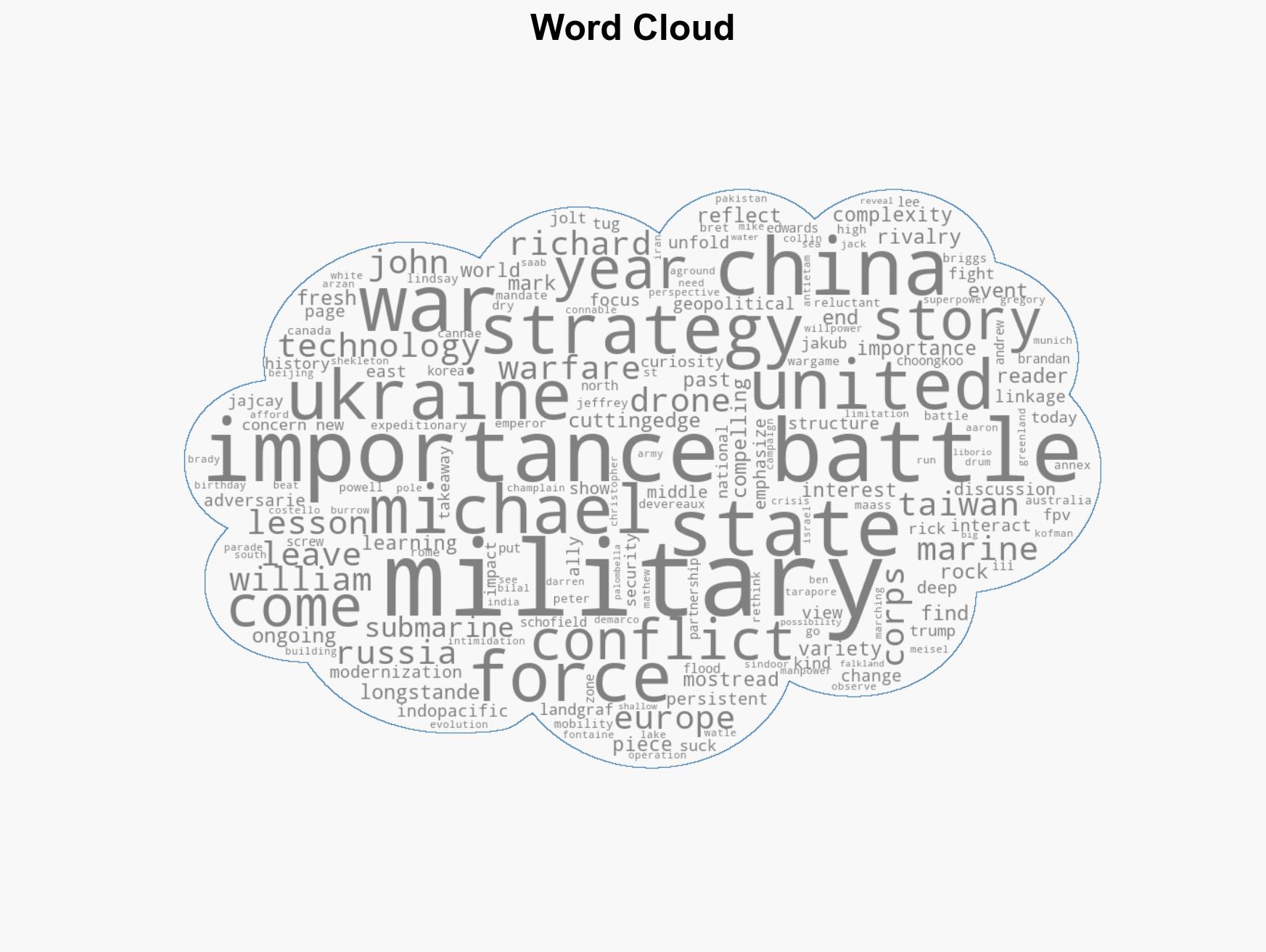
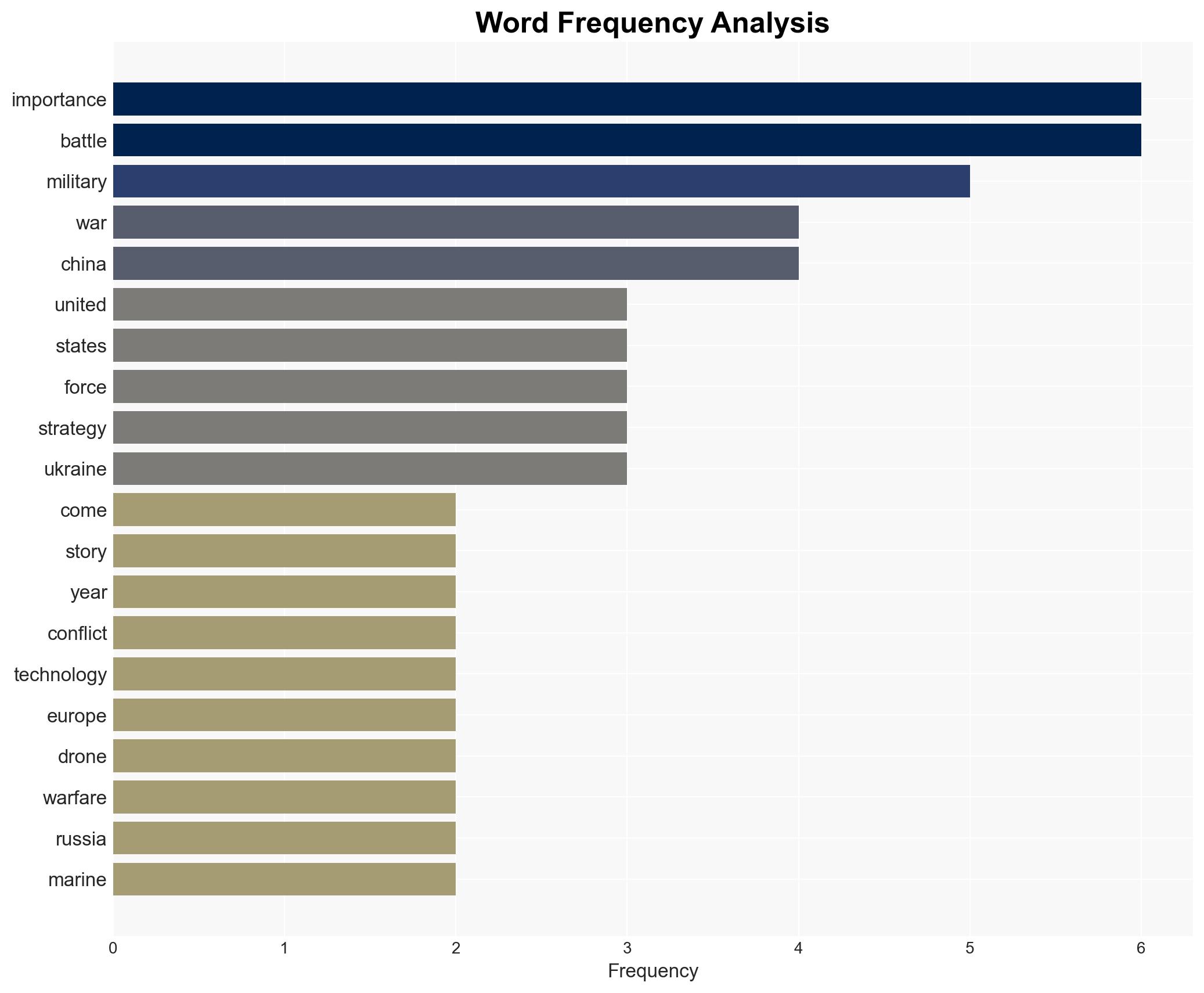
The most-read articles on War on the Rocks in 2025 reflect a heightened interest in geopolitical conflicts and military strategy, particularly in the Indo-Pacific, Europe, and the Middle East. The focus on military modernization and historical analysis indicates a strategic shift in how nations perceive threats and opportunities. The most likely hypothesis is that these interests are driven by ongoing conflicts and strategic realignments. This assessment is made with moderate confidence due to limited specific data on the readership’s motivations.
2. Competing Hypotheses
- Hypothesis A: The readership interest is primarily driven by ongoing geopolitical conflicts and the need for strategic realignment. Supporting evidence includes the focus on articles about military strategy and geopolitical tensions. However, the specific motivations of readers remain uncertain.
- Hypothesis B: The interest is primarily academic, with readers seeking historical and theoretical insights into military strategy. This is supported by the popularity of articles on historical battles and theoretical military concepts, though it does not fully explain the focus on current geopolitical tensions.
- Assessment: Hypothesis A is currently better supported due to the alignment of article topics with ongoing geopolitical events and strategic concerns. Key indicators that could shift this judgment include a change in article focus or new data on reader demographics and motivations.
3. Key Assumptions and Red Flags
- Assumptions: Readers are primarily interested in current geopolitical events; military modernization is a critical concern for national security; historical analysis provides valuable insights for contemporary strategy.
- Information Gaps: Detailed demographic and motivational data on the readership; specific geopolitical events that influenced article popularity.
- Bias & Deception Risks: Potential bias in article selection reflecting editorial priorities; reader bias towards sensational or conflict-driven content.
4. Implications and Strategic Risks
The focus on geopolitical conflicts and military strategy suggests a potential shift in global power dynamics and an increased emphasis on military readiness. This could lead to heightened tensions and strategic competition.
- Political / Geopolitical: Increased focus on Indo-Pacific and European security could escalate regional tensions and influence alliances.
- Security / Counter-Terrorism: Emphasis on military modernization may alter threat perceptions and defense postures.
- Cyber / Information Space: Potential for increased cyber operations as part of broader strategic competition.
- Economic / Social: Military spending and focus on defense could impact economic priorities and social stability.
5. Recommendations and Outlook
- Immediate Actions (0–30 days): Monitor geopolitical developments in the Indo-Pacific and Europe; assess military modernization trends.
- Medium-Term Posture (1–12 months): Strengthen alliances and partnerships; enhance capabilities in cyber and information operations.
- Scenario Outlook:
- Best: Stabilization of geopolitical tensions with increased cooperation.
- Worst: Escalation of conflicts leading to military confrontations.
- Most-Likely: Continued strategic competition with periodic tensions.
6. Key Individuals and Entities
- Not clearly identifiable from open sources in this snippet.
7. Thematic Tags
national security threats, geopolitical conflicts, military modernization, strategic realignment, Indo-Pacific security, historical analysis
Structured Analytic Techniques Applied
- Cognitive Bias Stress Test: Expose and correct potential biases in assessments through red-teaming and structured challenge.
- Bayesian Scenario Modeling: Use probabilistic forecasting for conflict trajectories or escalation likelihood.
- Network Influence Mapping: Map relationships between state and non-state actors for impact estimation.
Explore more:
National Security Threats Briefs ·
Daily Summary ·
Support us