Trump Launches Military Operations Against Iran, Citing Threats to American Lives and National Security
Published on: 2026-02-28
AI-powered OSINT brief from verified open sources. Automated NLP signal extraction with human verification. See our Methodology and Why WorldWideWatchers.
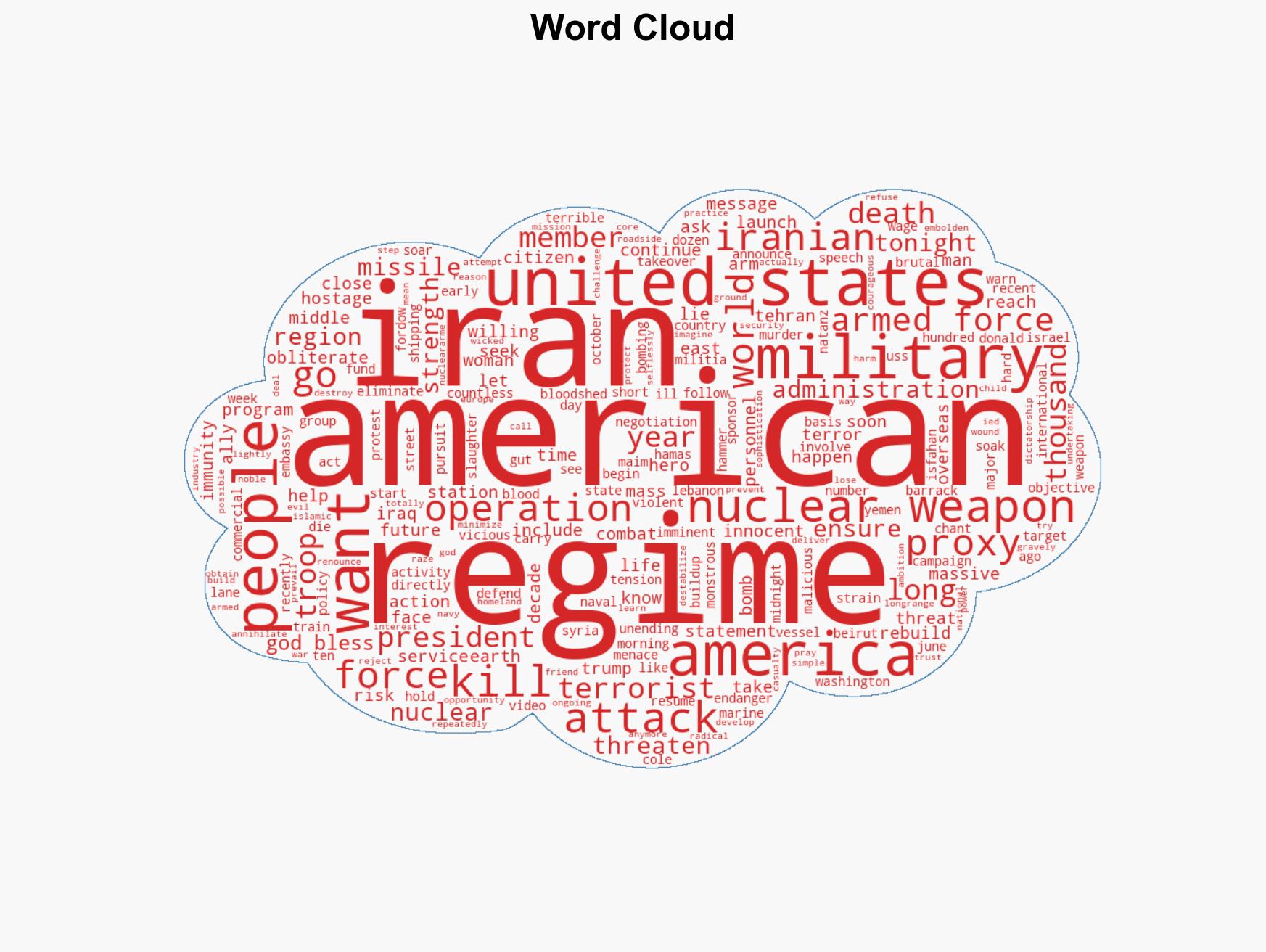
Intelligence Report: Read Trump’s full speech announcing strikes on Iran He warned ‘American heroes may be lost’
1. BLUF (Bottom Line Up Front)
The United States has initiated combat operations against Iran, citing defense against imminent threats as the primary objective. This escalation follows a period of heightened tensions and military buildup in the region. The most likely hypothesis is that this action aims to deter Iranian aggression and dismantle its nuclear capabilities. The affected parties include U.S. military personnel, Iranian forces, and regional allies. Overall confidence in this assessment is moderate due to significant information gaps and potential biases in the source material.
2. Competing Hypotheses
- Hypothesis A: The U.S. strikes are primarily intended to neutralize immediate threats from Iran and prevent nuclear proliferation. Supporting evidence includes the stated objective of defending against imminent threats and historical context of U.S.-Iran tensions. Contradicting evidence includes potential diplomatic solutions that may have been overlooked.
- Hypothesis B: The strikes are a strategic move to assert U.S. dominance in the Middle East and influence regional power dynamics. Supporting evidence includes the timing of the military buildup and historical U.S. policy in the region. Contradicting evidence includes the lack of explicit strategic objectives beyond immediate threat neutralization.
- Assessment: Hypothesis A is currently better supported due to the explicit focus on imminent threats and nuclear non-proliferation in the speech. Indicators that could shift this judgment include new intelligence on U.S. strategic objectives or changes in regional alliances.
3. Key Assumptions and Red Flags
- Assumptions: The Iranian regime poses an imminent threat to U.S. interests; military action will effectively neutralize these threats; diplomatic avenues have been exhausted.
- Information Gaps: Details on the specific nature of the threats posed by Iran; the extent of international support or opposition to U.S. actions; Iran’s potential retaliatory capabilities.
- Bias & Deception Risks: Potential cognitive bias in interpreting Iranian actions as uniformly hostile; source bias due to the political nature of the speech; possible deception in the portrayal of threat levels.
4. Implications and Strategic Risks
This development could lead to increased regional instability and potential escalation into broader conflict. The interplay with existing geopolitical tensions could exacerbate security challenges.
- Political / Geopolitical: Risk of escalation into a larger conflict involving regional and global powers; potential strain on U.S. alliances.
- Security / Counter-Terrorism: Increased threat of retaliatory attacks on U.S. and allied interests; heightened alert for terrorist activities.
- Cyber / Information Space: Potential for cyber retaliation by Iran; increased misinformation and propaganda efforts.
- Economic / Social: Disruption of oil markets; potential impact on global economic stability; social unrest in affected regions.
5. Recommendations and Outlook
- Immediate Actions (0–30 days): Enhance intelligence monitoring of Iranian military movements; strengthen cybersecurity defenses; engage with allies to coordinate responses.
- Medium-Term Posture (1–12 months): Develop resilience measures for potential economic impacts; explore diplomatic channels to de-escalate tensions; invest in regional partnerships.
- Scenario Outlook:
- Best Case: De-escalation through diplomatic engagement, leading to a reduction in hostilities.
- Worst Case: Full-scale conflict involving multiple regional actors, significant casualties, and economic disruption.
- Most Likely: Prolonged period of heightened tensions with sporadic skirmishes and cyber confrontations.
6. Key Individuals and Entities
- President Donald Trump
- Iranian regime (not specifically named in the snippet)
- U.S. military forces
- Iranian military forces
7. Thematic Tags
national security threats, military escalation, nuclear non-proliferation, U.S.-Iran relations, Middle East security, geopolitical strategy, cyber threats, economic impact
Structured Analytic Techniques Applied
- Cognitive Bias Stress Test: Expose and correct potential biases in assessments through red-teaming and structured challenge.
- Bayesian Scenario Modeling: Use probabilistic forecasting for conflict trajectories or escalation likelihood.
- Network Influence Mapping: Map relationships between state and non-state actors for impact estimation.
Explore more:
National Security Threats Briefs ·
Daily Summary ·
Support us