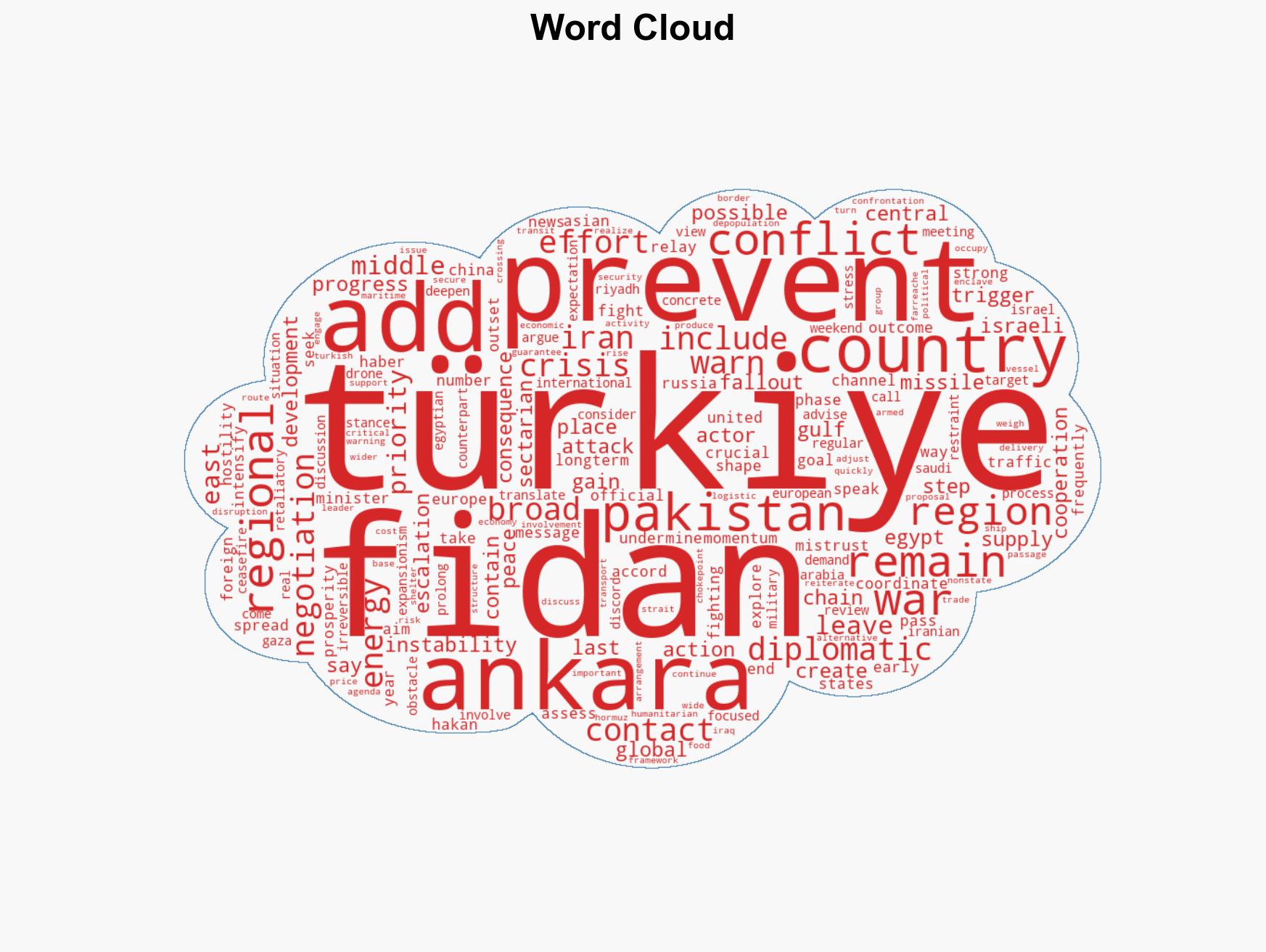
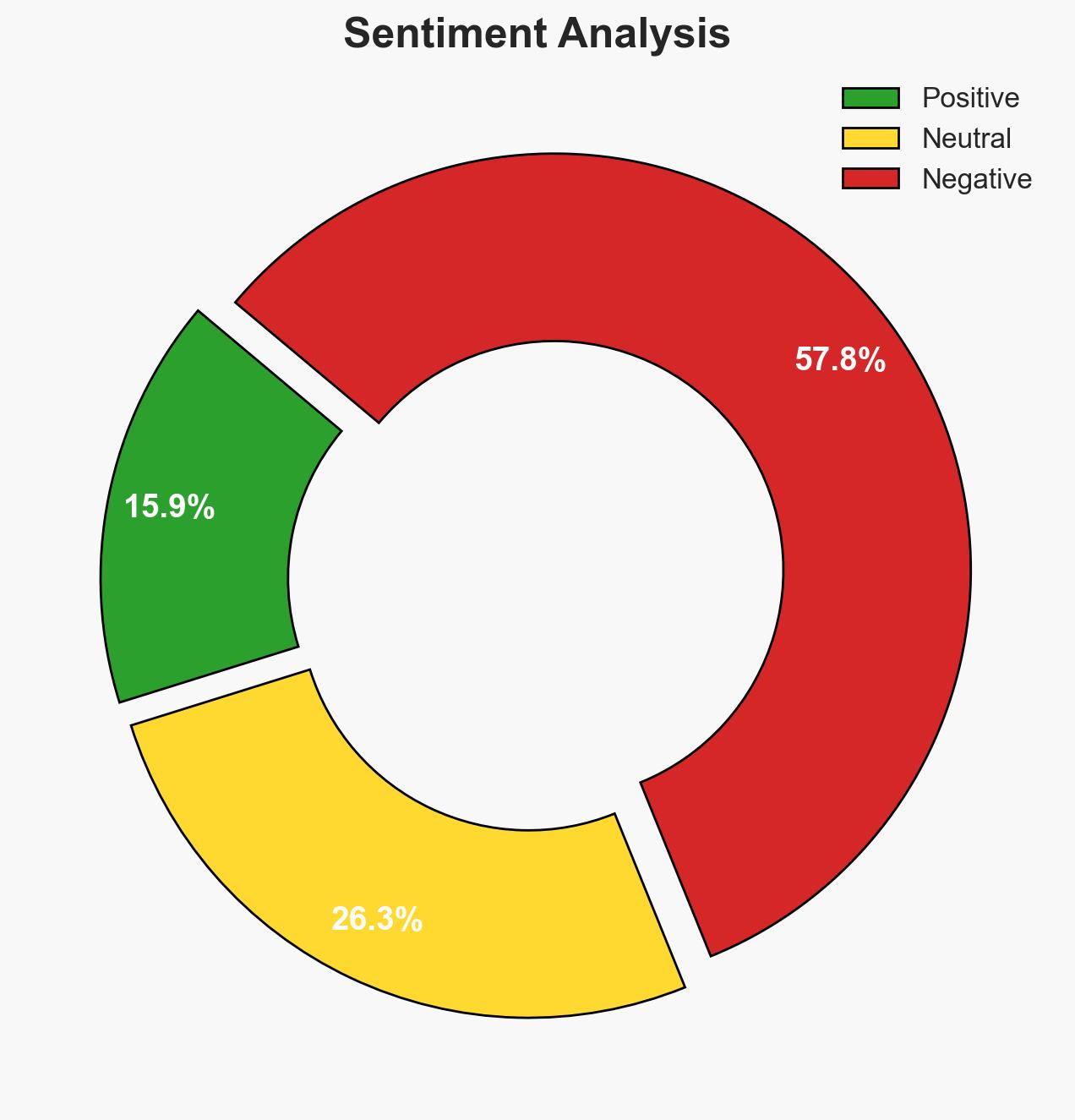
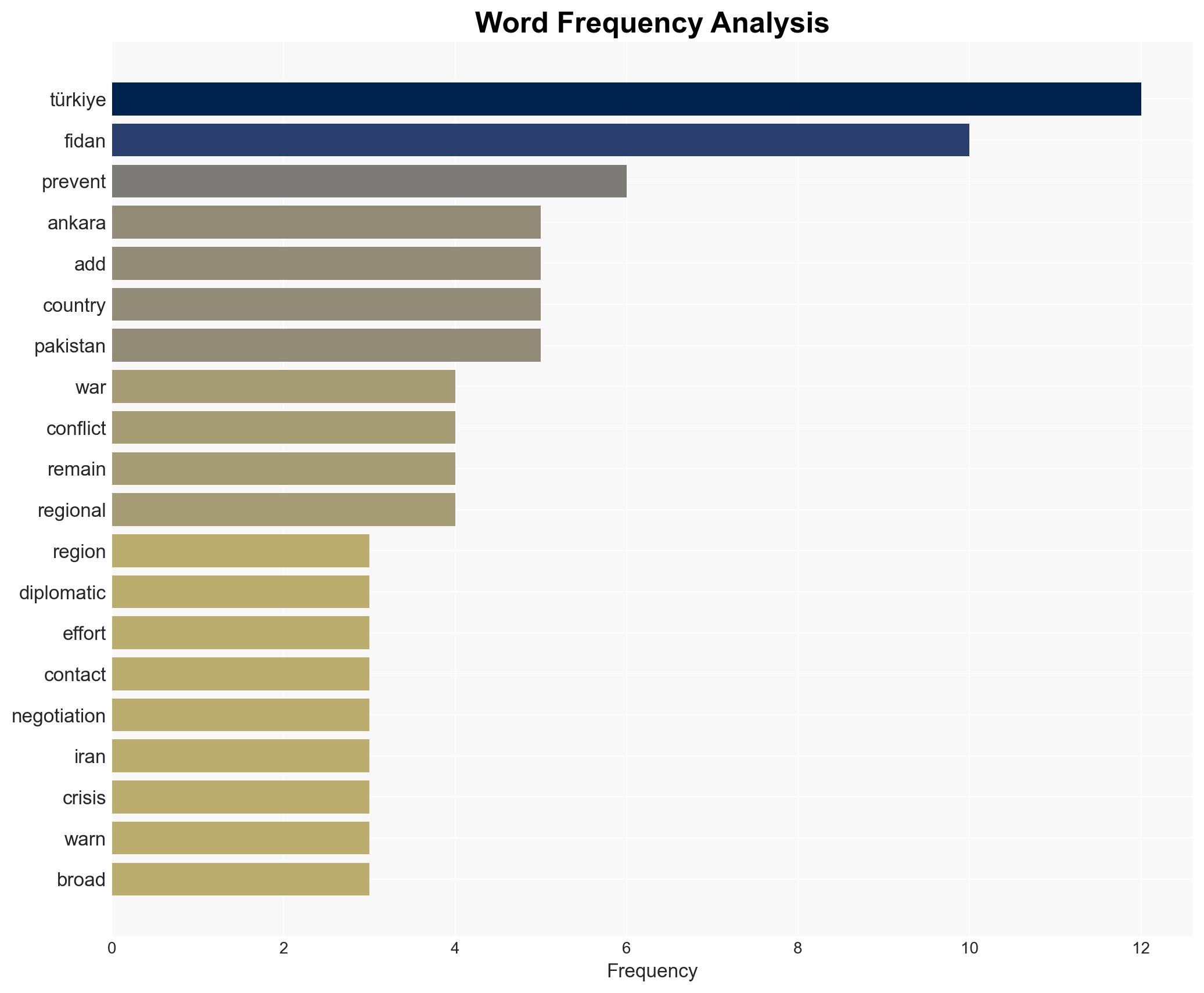
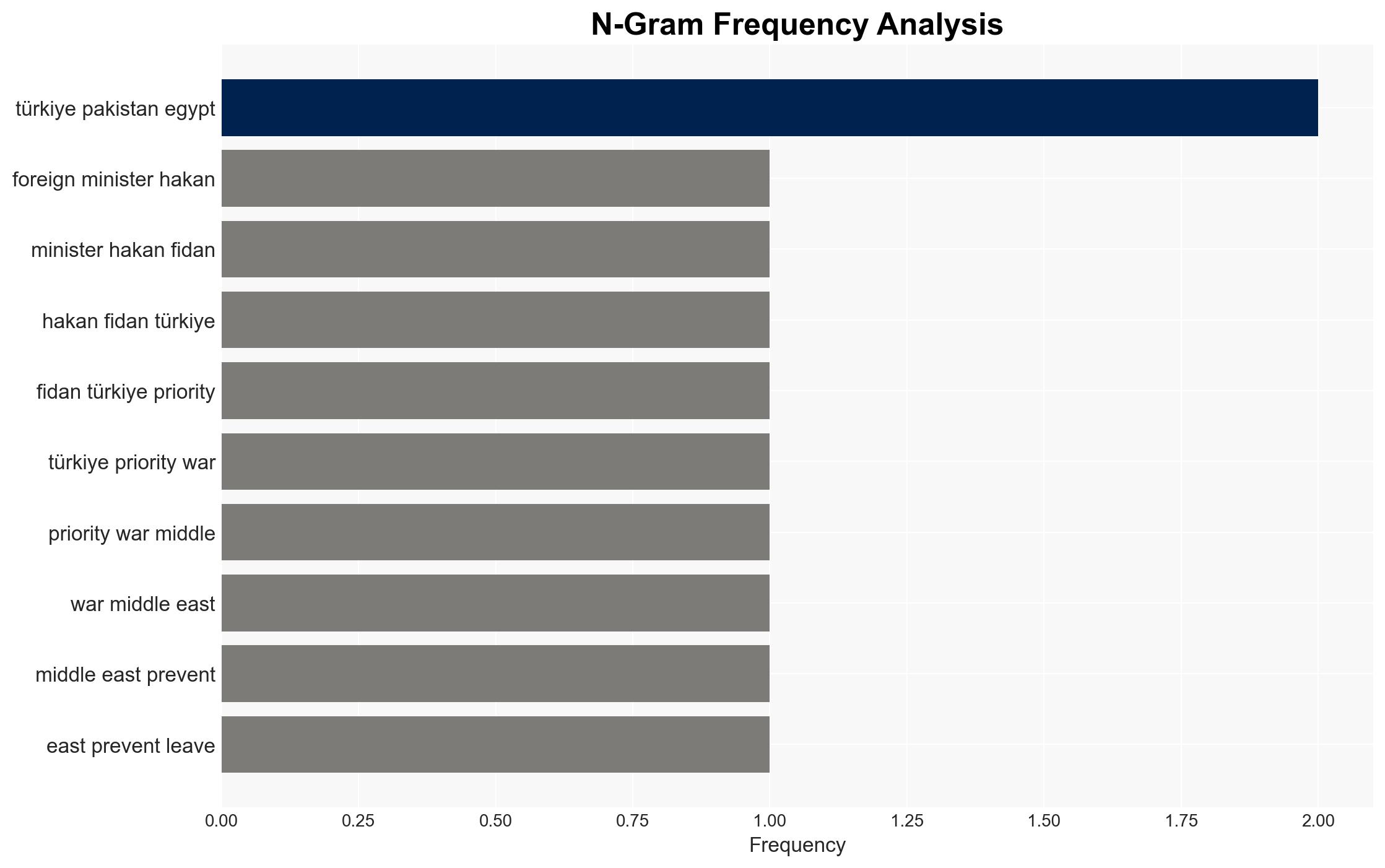
Türkiye’s Foreign Minister emphasizes urgency to avert prolonged conflict and instability in the Middle East
Published on: 2026-03-28
AI-powered OSINT brief from verified open sources. Automated NLP signal extraction with human verification. See our Methodology and Why WorldWideWatchers.
Intelligence Report: Fidan warns against lasting hostilities as Mideast war threatens region
1. BLUF (Bottom Line Up Front)
Türkiye is actively pursuing diplomatic efforts to halt the ongoing conflict in the Middle East, with a focus on preventing regional instability and sectarian escalation. The situation is complex, involving multiple international actors and potential for further escalation. Current assessment suggests moderate confidence in Türkiye’s ability to influence a ceasefire, given the involvement of key regional and global players.
2. Competing Hypotheses
- Hypothesis A: Türkiye’s diplomatic efforts, in coordination with international partners, will successfully lead to a ceasefire and prevent further regional destabilization. This is supported by the reported increase in diplomatic activity and international interest in negotiations. However, the lack of concrete steps and ongoing hostilities present significant uncertainties.
- Hypothesis B: Despite Türkiye’s efforts, entrenched positions, particularly from Israel and Iran, will lead to prolonged conflict and regional instability. This is supported by ongoing military actions and historical mistrust among involved parties. The potential for escalation remains high.
- Assessment: Hypothesis A is currently better supported due to the reported momentum in diplomatic negotiations and international coordination. However, key indicators such as changes in military posture or diplomatic breakthroughs could shift this judgment.
3. Key Assumptions and Red Flags
- Assumptions: Türkiye’s diplomatic channels remain open and effective; major powers are genuinely interested in de-escalation; regional actors are willing to compromise.
- Information Gaps: Specific details on the content and outcomes of diplomatic negotiations; the stance of key regional actors like Israel and Iran.
- Bias & Deception Risks: Potential bias in reporting from involved parties; risk of strategic deception by actors seeking to manipulate diplomatic outcomes.
4. Implications and Strategic Risks
The ongoing conflict and Türkiye’s diplomatic efforts could lead to significant shifts in regional alliances and power dynamics. The outcome of these efforts will have broad implications for regional stability and international relations.
- Political / Geopolitical: Potential realignment of regional alliances; increased influence for Türkiye if successful in brokering peace.
- Security / Counter-Terrorism: Risk of increased terrorist activity if conflict persists; potential for spillover into neighboring regions.
- Cyber / Information Space: Increased cyber operations targeting regional actors; potential for misinformation campaigns.
- Economic / Social: Prolonged conflict could disrupt regional trade and economic stability; potential for humanitarian crises.
5. Recommendations and Outlook
- Immediate Actions (0–30 days): Enhance intelligence collection on diplomatic negotiations; engage with regional partners to support de-escalation efforts.
- Medium-Term Posture (1–12 months): Develop resilience measures for potential economic disruptions; strengthen regional partnerships to support stability.
- Scenario Outlook: Best: Successful ceasefire and diplomatic resolution; Worst: Escalation into broader regional conflict; Most-Likely: Prolonged negotiations with intermittent hostilities.
6. Key Individuals and Entities
- Hakan Fidan (Foreign Minister of Türkiye)
- Not clearly identifiable from open sources in this snippet.
7. Thematic Tags
regional conflicts, Middle East conflict, diplomacy, regional stability, ceasefire negotiations, international relations, sectarian tensions, geopolitical dynamics
Structured Analytic Techniques Applied
- Causal Layered Analysis (CLA): Analyze events across surface happenings, systems, worldviews, and myths.
- Cross-Impact Simulation: Model ripple effects across neighboring states, conflicts, or economic dependencies.
- Scenario Generation: Explore divergent futures under varying assumptions to identify plausible paths.
Explore more:
Regional Conflicts Briefs ·
Daily Summary ·
Support us