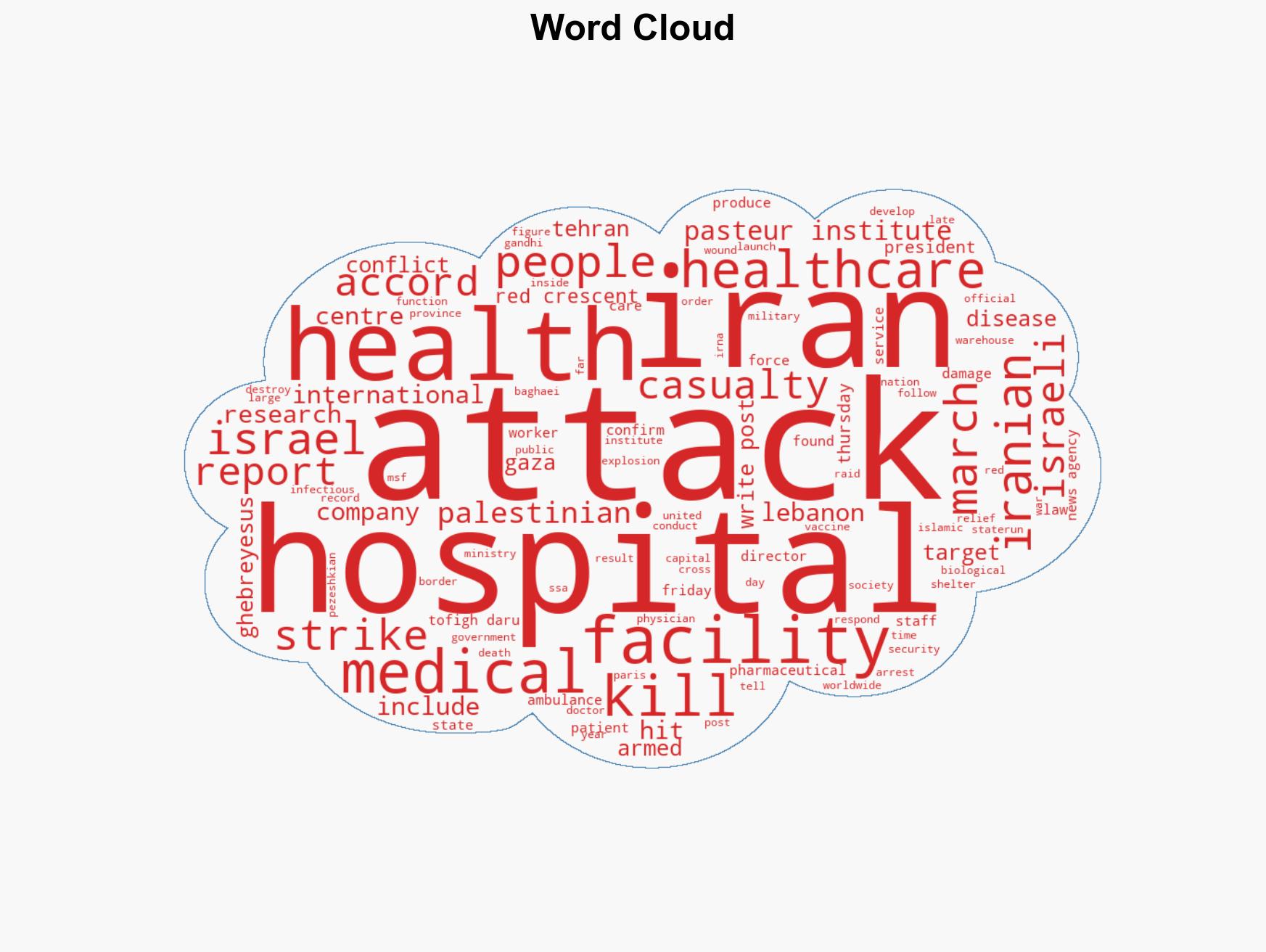
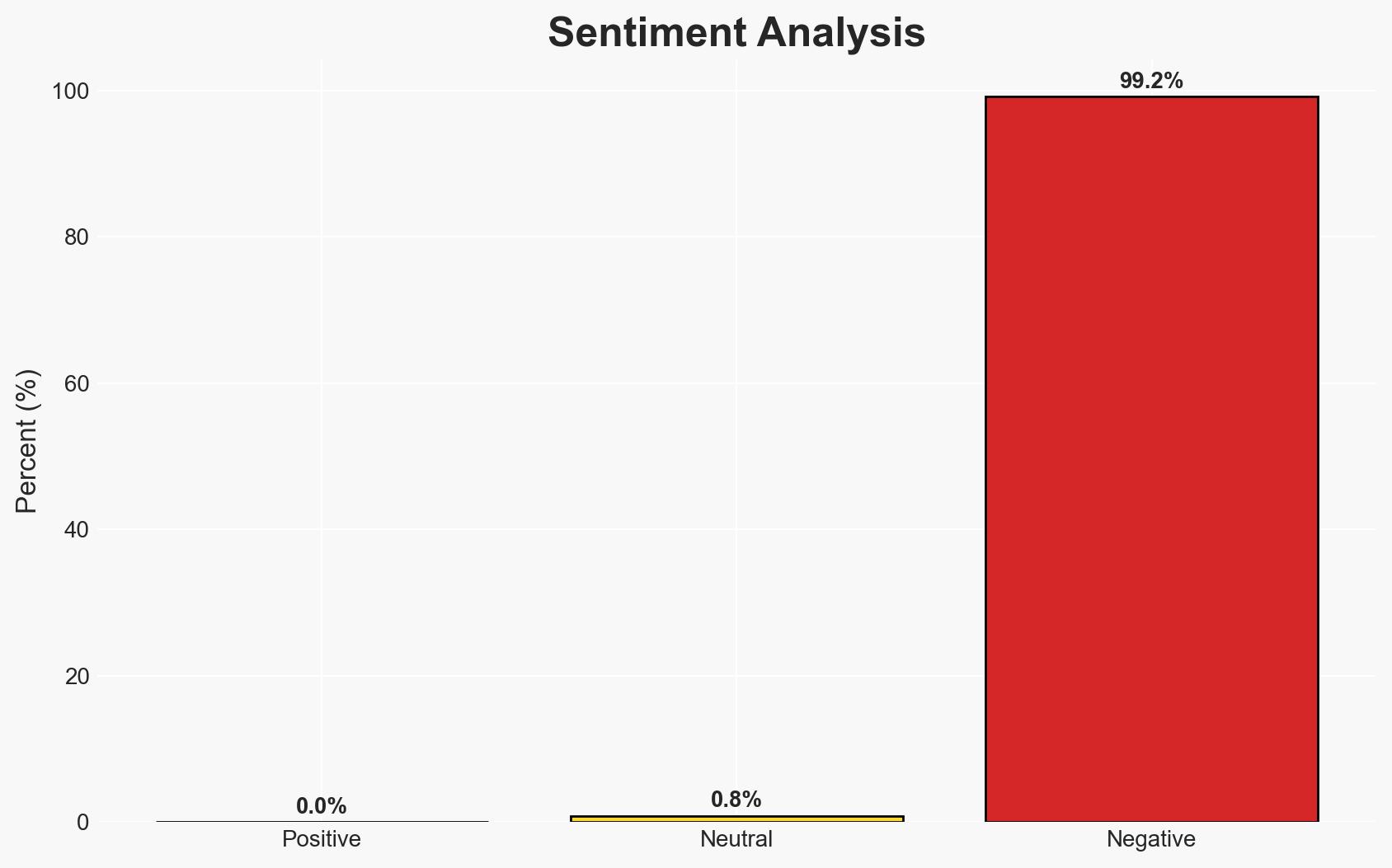
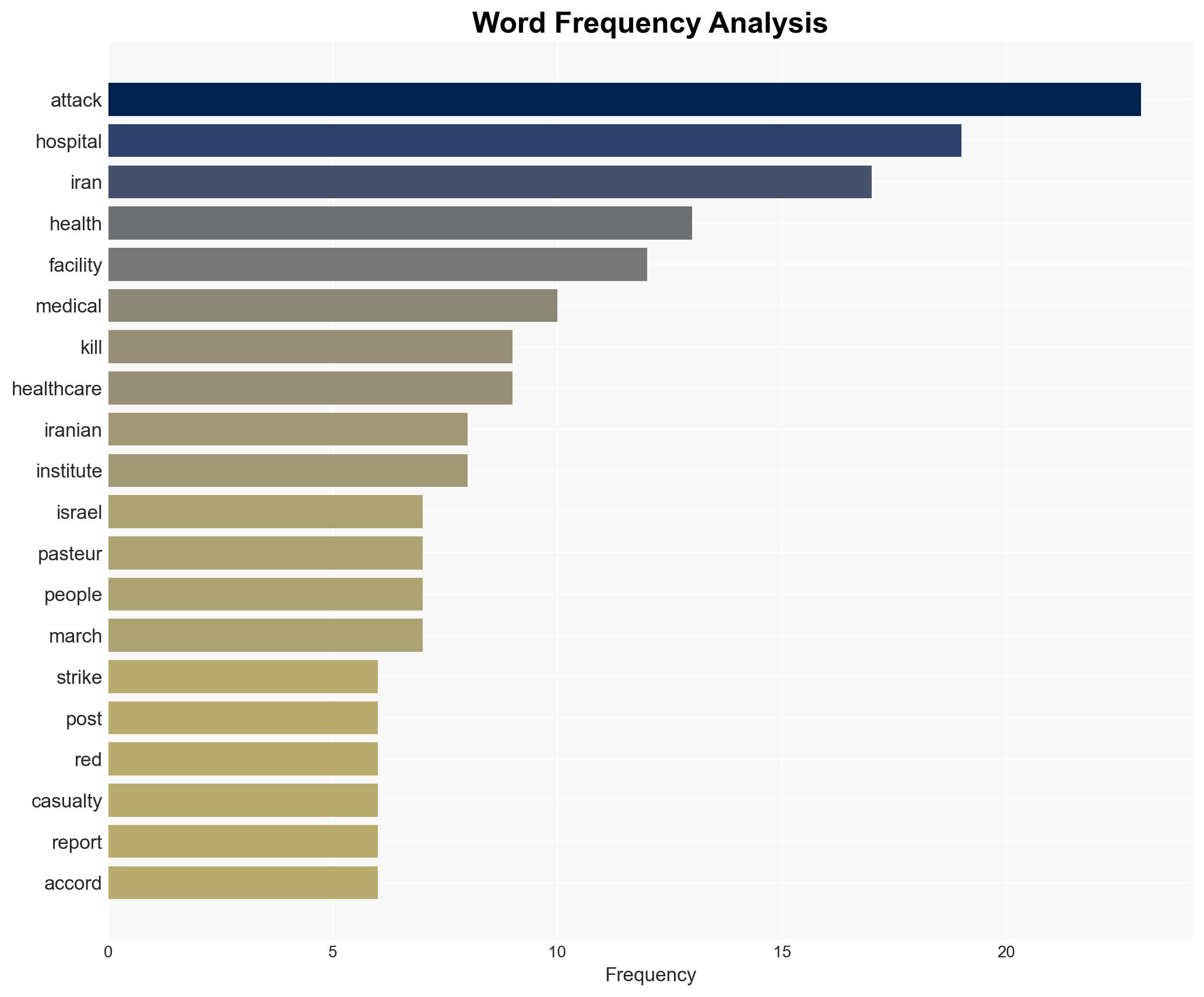
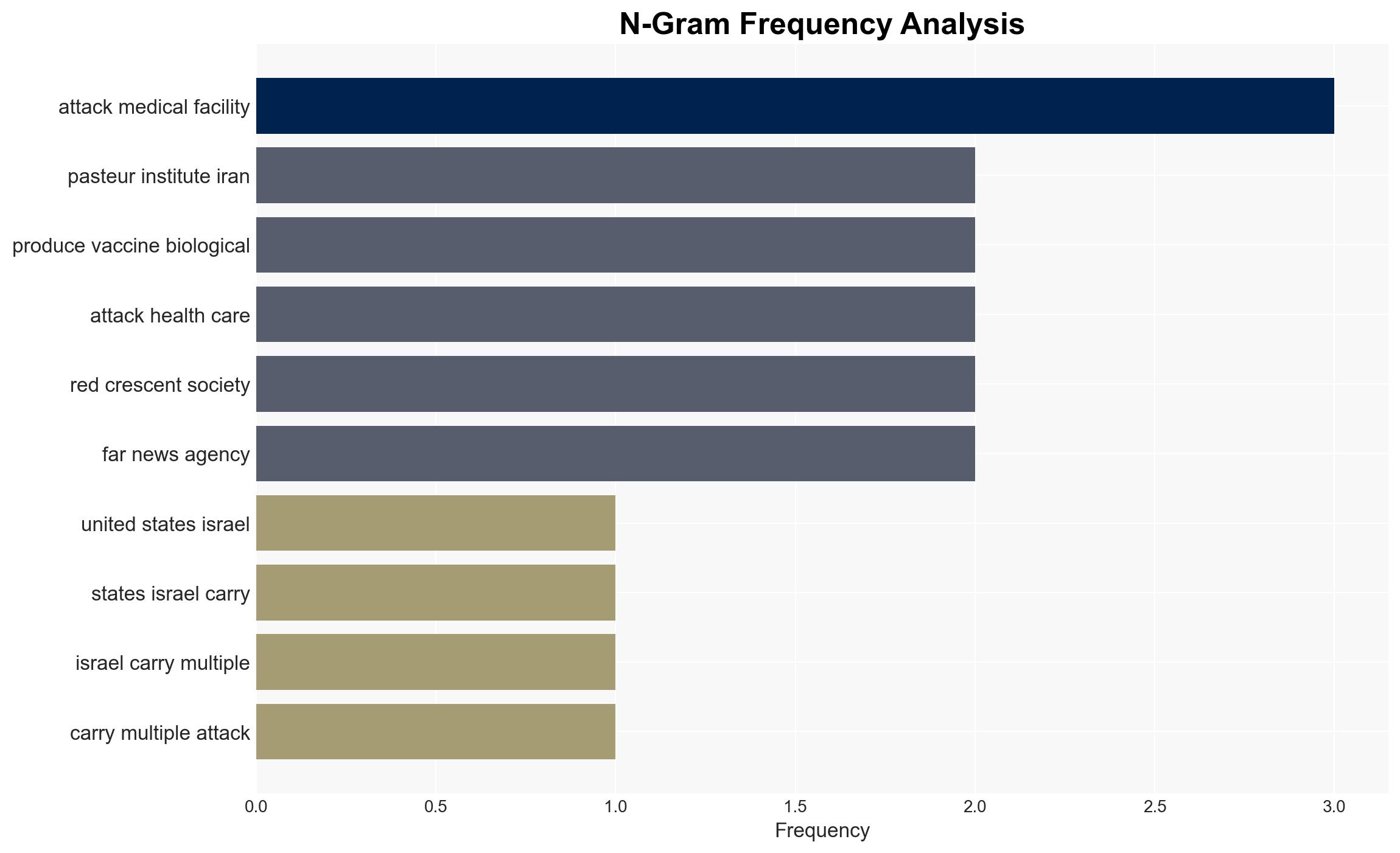
US and Israel Target Iran’s Healthcare System Amid Ongoing Conflict, Prompting International Outcry
Published on: 2026-04-03
AI-powered OSINT brief from verified open sources. Automated NLP signal extraction with human verification. See our Methodology and Why WorldWideWatchers.
Intelligence Report: How the US and Israel are waging war on Irans medicines vaccines
1. BLUF (Bottom Line Up Front)
The reported attacks on Iranian medical facilities by the US and Israel are likely part of a broader strategic effort to undermine Iranian capabilities. These actions have significant humanitarian and geopolitical implications, potentially escalating regional tensions. The most likely hypothesis is that these attacks aim to weaken Iran’s public health infrastructure as part of a broader pressure campaign. Overall confidence in this assessment is moderate due to limited corroborative evidence and potential bias in reporting.
2. Competing Hypotheses
- Hypothesis A: The US and Israel are targeting Iranian medical facilities to weaken Iran’s public health infrastructure and exert pressure on its government. This is supported by the reported attacks on key institutions like the Pasteur Institute. However, there is a lack of independent verification of these claims, raising uncertainties about the extent and intent of the attacks.
- Hypothesis B: The reported attacks are exaggerated or misrepresented by Iranian officials to garner international sympathy and support, potentially as a counter-narrative to justify their own actions or deflect from internal issues. This hypothesis is less supported due to the lack of explicit evidence of misinformation but remains plausible given historical context.
- Assessment: Hypothesis A is currently better supported due to the specificity of the reported attacks and the strategic value of targeting health infrastructure. Key indicators that could shift this judgment include independent verification of the attacks and further evidence of misinformation campaigns.
3. Key Assumptions and Red Flags
- Assumptions: The US and Israel have the capability and intent to conduct such operations; Iranian reports are partially accurate; international health organizations are neutral actors.
- Information Gaps: Independent verification of the attacks, detailed casualty reports, and motivations behind the alleged strikes.
- Bias & Deception Risks: Potential bias in Iranian reporting, risk of confirmation bias in interpreting data, and possible strategic deception by involved parties.
4. Implications and Strategic Risks
The continuation of such attacks could exacerbate regional instability and provoke retaliatory actions, potentially escalating into broader conflict.
- Political / Geopolitical: Increased tensions between Iran and Western allies, potential for diplomatic fallout, and strain on international health diplomacy.
- Security / Counter-Terrorism: Heightened risk of asymmetric retaliation by Iran or its proxies against US and Israeli interests.
- Cyber / Information Space: Potential for cyber operations targeting healthcare infrastructure and information warfare to influence international opinion.
- Economic / Social: Disruption of healthcare services could lead to public health crises, affecting social stability and economic conditions in Iran.
5. Recommendations and Outlook
- Immediate Actions (0–30 days): Increase monitoring of regional military activities, engage with international health organizations for independent assessments, and prepare for potential retaliatory actions.
- Medium-Term Posture (1–12 months): Strengthen diplomatic channels to de-escalate tensions, enhance cyber defenses for healthcare infrastructure, and foster international dialogue on protecting medical facilities in conflict zones.
- Scenario Outlook:
- Best: De-escalation through diplomatic engagement and international mediation.
- Worst: Escalation into broader military conflict with significant regional destabilization.
- Most-Likely: Continued low-intensity conflict with sporadic attacks and international condemnation.
6. Key Individuals and Entities
- Masoud Pezeshkian, Iranian President
- Esmaeil Baghaei, Iranian Foreign Ministry Spokesman
- Tedros Adhanom Ghebreyesus, WHO Director-General
- Pasteur Institute of Iran
- United States Government
- Israeli Government
7. Thematic Tags
regional conflicts, geopolitical tensions, healthcare infrastructure, regional conflict, international diplomacy, information warfare, public health, strategic pressure
Structured Analytic Techniques Applied
- Causal Layered Analysis (CLA): Analyze events across surface happenings, systems, worldviews, and myths.
- Cross-Impact Simulation: Model ripple effects across neighboring states, conflicts, or economic dependencies.
- Scenario Generation: Explore divergent futures under varying assumptions to identify plausible paths.
Explore more:
Regional Conflicts Briefs ·
Daily Summary ·
Support us